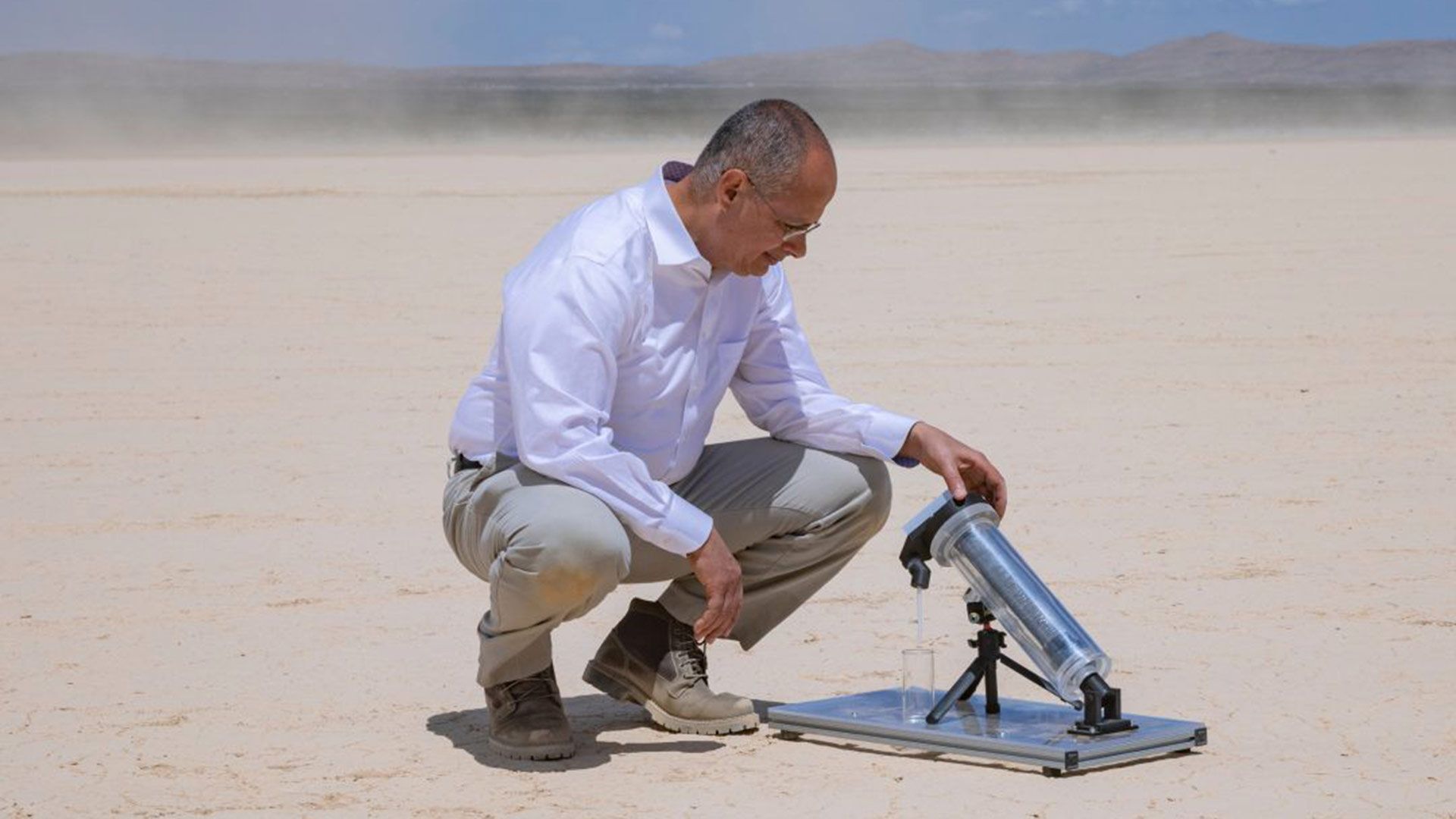
cross-posted from: https://lemmy.zip/post/59925291
The system can function in air with 20% humidity or less. But these 1,000 liter a day machines are not small, at around shipping container size.
Finally, I can achieve my dreams of becoming a moisture farmer.
Hope you enjoy a whiny nephew
I swear to god if that kid brings up the academy one more time, just kill me
But crying about not getting to go to Tashii station is okay?
Shut the FUCK up we have a shed literally full of power converters, your friends are absolute trash anyway and come on what kind of name even is “Biggs Darklighter” it sounds like his parents were from a Flash Gordon ripoff
Not the power converters we were looking for. https://www.youtube.com/watch?v=rpUkokRx3-k
power converters over there are pretty mediocre anyway
What
In Star Wars, Luke Skywalker was raised by Anakin’s step brother, Owen Lars, who was a moisture farmer on Tatooine. That made him Luke’s step uncle. We’re all referencing Star Wars quotes.
You know the kid with the unhealthy obsession with womp rats
Little psychopath just bull’s-eyeing 'em all day long in his T-16
His name is Wormie.
He gets it from his father
Peaceful living as a smoldering skeleton
Where’s my blue milk?
Tosche station
deleted by creator
Gonna head to Tashi Station every week?
Lisan al-Gaib!
We need to harness Desert Power!
Came here to say this but knew in my heart that it had already been brought in.
That water was in its way to somewhere, though. What is that other area gonna look like now that this device intercepts the water?
Sounds like that other area needs to pull up on those bootstraps and make a water machine for its needs then.
This comment is brought to you by the sigma water machine, buy yours today and lock your grindset on hydration!
(Hopefully obvious but /s)
Are you on the Temu or the Amazon so that I can get some good boot straps and choke myself to ejaculation?
Eventually all that dry air will end up above the ocean and absorb more water to balance the system. I don’t think it’s really an issue, we weren’t getting rain clouds from the Sahara anyway.
Dooooom
Someone is going to drink it then sweat it back into the air. I doubt its going to get bottled and shipped somewhere else.
It’ll probably be used to grow cash crops which are then shipped somewhere else.
That’s how most water gets exported.mmm desert water
same could be said about every shower you take and every toilet you flush
🎶And every bond you break, every step you take
I’ll be watching you!!🎵
They won’t probably export the water to europe or something.
I mean it’s not Nestle.
Atoco harnesses the power of AI to bridge the gap between scientific discovery and real-world implementation, transforming innovative research into scalable solutions. By integrating machine learning and AI with reticular chemistry, we dramatically reduce the time needed to develop, optimize and scale our novel nano-engineered reticular materials for carbon capture and atmospheric water harvesting.
Bruh.
This is likely not the Generative AI, LLM-slop type of AI you’re thinking of.
I hate generative AI. But other forms of AI and machine learning have been used for much longer and haven’t facilitated the building of ecologically harmful datacenters.
For example, AlphaFold, which is an AI program that can predict how proteins fold and is an incredibly useful tool.
I expect that the use of AI here would be similar: something trained for a specific purpose, not just generic generative AI tech like ChatGPT
I sure hope so, the website just reads like generic corporate slop
Reading that felt like my brain was trying to chew glue
AAAAAAAAAAAAAAAAAAAAAAAAAAAAAAAAAAAAAAAAAAAAAAAAAAAAA
IIIIIIIIIIIIIIIIIIIIIIIIIIIIIIIIIIIIIIIIIIIIIIIIIIIIIIIIIIIIIIIIIIIIIIIIIIIIIIIIIIIIIIIIIIIIIIIIIIIIIIIIIIIIIIIIIIIIIIIIIIIIIIIII
That’s what it said.
I was researching ai before llms for a gen ed class, this isn’t the sensationalized type of ai, ai in medicine and sht is pretty cool. Hospitality ai is getting too good too fast tho. Robot hotels and restaurants would not be suprising.
https://hms.harvard.edu/news/new-ai-tool-pinpoints-genes-drug-combos-restore-health-diseased-cells
You’re conflating LLMs with Machine Learning and the broader industry of AI which have been solving real problems really well for a good long time.
Yet again, nobody seems to be giving a thought what this means to organisms that are living in the desert. This water is necessary for life and we’re taking it.
As someone who has thought about it, could you provide the data that you used to come to the conclusion that the amount of water being extracted from the air has any appreciable effect on local life?
From my thinking…
Death Valley covers 7800km^2.. Atmospheric moisture is typically contained in the first 10km of air. So there is somewhere around 2.5 quadrillion cubic feet of air containing 114 billion gallons of water.
The average Atmospheric Water Vapour Residence Time is around 8 days The median is 5 days and Death Valley’s topography is a valley which would trap more moisture, but we’ll use the average instead.
This represents a moisture turnover rate of about 625,000 Liters/second (or 1.45x10^10 gallons/day).
So, one of these devices would consume .000185% of the moisture that enters Death Valley every day.
https://scitechdaily.com/america-is-sinking-28-major-cities-are-slowly-going-under/
Given enough people and time, we have a track record of messing stuff up.
ground water is a completely different beast. This device harvests moisture from the air.
You are assuming that there will only be one device used by a careful and considerate individual.
I can think of many companies that would 100000% set up a moisture farming complex if it was financially feasible. Who gives a fuck about the environment? It’s basically free water from nothing, right?
Nobody is deploying these at scale to harvest water to sell, it’s way too expensive. Probably even more so than desalination.
These kinds of devices would be useful in areas where they didn’t have access to preexisting infrastructure. There the comparison would be between operating one of these devices or air lifting water in by helicopter. The fact that it’s expensive isn’t as much a concern when the alternative is to pay for airlift delivery.
You say that like this is news to me. 🙄
If you plan on drinking the water, or cooking with the water, it’s going right back into the air after you pee or sweat and the water evaporates. Literally no damage done.
You cannot make the water actually disappear unless you use it in some kind of chemical reaction, and even then it may end up returning to water eventually.
I would think that ripping 1000L of water out of an environment in a day is going to have more immediate impacts than you eventually pissing on a cactus is going to fix…
Sure, the water isn’t “destroyed”, but it is being removed from an ecosystem that has evolved to use every last bit of water it can find to survive. It may not be immediately obvious, but it sounds just as damaging as removing 1000L of water a day from a lake and thinking the ecosystem will be fine because you’re going to sweat next to the dry lakebed.
I would think that ripping 1000L of water out of an environment in a day is going to have more immediate impacts than you eventually pissing on a cactus is going to fix…
Well… It all depends on what you do with the water. Are you sequestering it in some way or are you releasing it? I mean, if the community drank 1000 liters of water, then their next piss is 100% going to fix it. Even watering crops is just releasing the water.
just as damaging as removing 1000L of water a day from a lake and thinking the ecosystem will be fine because you’re going to sweat next to the dry lakebed.
Again, if you’re going to sweat 1000 liters, then go for it, I fully endorse this plan. Use as much water as you want, it’s fine unless you’re shipping it out.
deleted by creator
Well the damage is done and now we need that water.
You can’t really consume water especially if you take it out of the air. Worst case you temporarily barrow it till it evaporates again it’s not like the water is suddenly gonna be pumped out to the ocean or something.
Do you think they are condensing 1000L of water to then just splash it on the ground where it was farmed? That water is going to people (or more likely companies) that are going to leave the ecosystem.
At how expensive it would be to get the water it wouldn’t make sense to ship the water off to somewhere else that already has water.
Yes, they are going to fly away in a penis shaped rocket with all the water on board.
Wow.
I used to work for a company making a similar device, the chemistry behind the technology is actually a well researched topic, and there are many kinds of various chemistries that can achieve a similar effect. Silica gel packets are the most common, a cheap solution that extracts moisture from the air, but is non-reusable.
These MOF compounds are useful because they have a fundamentally different method of collecting the water molecules. The framework traps the molecules inside, which can be later released with heat. Thermal solar power is free, but does require careful management of the rest of the device such that the material can get hot enough (usually around 100c), which also providing another surface to condense the vapour. I spent alot of time designing and testing such panels. They do work! I can post pictures of fishtanks of water later.
There truly couldn’t be much of a downside to these technologies. The real alternative is desalination, which produces hyper concentrated salt pools, or well water extraction, which is also bad…
The reason these technologies is usually due to the cost effectiveness to produce the material, and to build the enclosure around the material. The panels have to scale very large to get any reasonable about of solar power, plus the condensing and collecting mechanisms also add weight and cost. Water is not an expensive product, so at the end of the day, the economics don’t always work out favourably.
Happy to answer any questions about the technology.
Here’s a picture of one of our tests generating water from air! We got 21kg from a large-ish panel.

I can’t show much else but I can guarantee we did harvest the water from the air.
Well… There would also have to be water to actually collect from the air. Thunderfoot made a really good video about these dehumidifiers when yet another one popped up on Kickstarter claiming to end water shortages.
You’re absolutely correct that there has to be water in the air. However part of the trick to these panels is that they’re not steady state. They have a day cycle and a night cycle. During the night is where they do most of the work of absorbing the water from the air. Over a number of cycles I have overseen, the humidity in the air rises dramatically during the night. This helps these panels in terms of air extraction, since they work on a humidity basis, rather than a total-air-water-content. Think dilution or osmosis when it comes to the actual absorbtion mechanism.
When you do the math, it also doesn’t really seem like there’s alot of water in the air. Only something like 10-40 grams of water, especially depending on the outdoor temperature. We ran indoor tests with a panel a few sqm in size, and even in a small indoor warehouse, it was not able to dehumidify the warehouse to any significant levels. Maybe at most 5% humidity delta. However air is not static, and wind is always blowing, even when it seems really weak. There’s a huge amount of atmosphere above the ground, and unless the panels can absorb the water from the clouds too, the localized de-humidification that happens isn’t going to be significant. It’s like trying to suck up all water on a beach. The waves are going to replace it shortly enough.
So the one practical limit of these panels that is most frequently missed is the solar aspect. The MOF materials are like a sponge. You can absorb all the water in the air, but you still need to take the water of the MOF. The limit depends on the sensible and latent heat of the water, while in the sponge. MOF doesn’t actually really change the boiling point of water at all, so you’re really essentially creating a water distillation tower. In 1sqm of land, the most irradiance you’re going to get is about 1kw/sqm. 1kwh can boil about 10 liters of water. Taking that into account, over a 8 hour solar day. That means at most a single square meter of solar panel could generate 80 liters of water per day. It’s alot, but considering solar losses, glass loss, and thermal loss, more practical limits would probably be like 40 liters. The MOF material also required sensible heat as well, so already a huge portion of incoming solar energy is gone to heating the environment and raising temperature.
In all, you’d have to cover a huge amount of acres before this would dent the atmosphere in terms of humidity. The 1000 liters a day can really only happen when you have a large solar collection area, plus absorbtion surface area to back it up.
There truly couldn’t be much of a downside to these technologies.
What you mean to say is “We don’t know what the downside will be untill these technologies are implemented and used for a long time and then studied.” Otherwise you sound like the well-intentioned-but-unhinged chemist that accidentally starts the zombie apocalypse at the beginning of the movie.
There’s two impacts these panels could have. There’s the solar irradiation aspect, and the air humidity aspect of them.
In the solar irradiance balance, you have a net energy in, most of which goes directly to heating the ground. A panel would aim to absorb as much as that energy as you can, most of which would go towards a phase change of the material to release the water bonds. MOFs are extremely clean in terms of their re-usability, and don’t release any other compounds into the steam when released. Think of it like a condensation system, but without having to collect any water from any ground based source.
The air humidity is the other balance. In theory you could “absorb all the water out of the air”. In most business cases, these need to be deployed to more coastal regions, not literally smack in the middle of the desert. But in such cases, the atmosphere is highly dynamic and more or less equalizes total air water content in a certain microclimate. It makes it very renewable since the sun evaporates massive amounts of water from water bodies, which can be returned via either rain, or through water harvested through water-from-air chemistry.
The industry will want to buy water regardless of where they are, so when evaluating technologies, these provide much lower impact to the environment than any existing groundwater based system.
At mass scale, could taking enough moisture out of the air affect local weather patterns?
Technically yes! To put it in perspective, there’s about 2.5kg of water in the atmosphere per m^2 of earth surface area. If you put enough panels across the earth, you could probably do a decent job at taking some of the water out of the air.
We have to look at another factor affecting the water in the air. As we take water out of the air, it’s not really a finite resource. Most water in the air generally comes from the sun evaporating the oceans. If we take the water out of the air, the sun will put the water back. There’s always a balance of humidity and quantity evaporated. When the humidity is lower, the sun would have an easier time evaporating more water due to the osmosis of the water from the source (ocean) going into the air. Osmosis is a kind of log graph, so even if the humidity is lower, the exponential tail means the solar evaporation and humidity pretty much balances out at the end of the day.
It’s similar thing to taking water from a river. If we take all the water from a river, can we dry up downstream? Yes! But considering the height of the atmosphere, it’s like standing at the edge of the river trying with a bucket and trying to scoop everything up. Unless these water-from-air harvesters can reach all the way to the clouds, we probably won’t dry anything up.
Not that I think your device has the same danger because water captured from the air will likely quickly be released again into the same air, but I think this is not a very good example of the safety of your device:
It’s similar thing to taking water from a river. If we take all the water from a river, can we dry up downstream? Yes!
We can and we do. The Colorado and the Yellow river no longer consistently reach the ocean.
The comparison I was trying to make is that we do have the power to capture 100% of a river. This isn’t good, for obvious reasons. Humidity capture is a much different process, since we can’t just capture 100% of the humidity from a panel either. You could have 80% humidity going in, but actually still 50% relative humidity going out. And that would be maximum absorbtion performance!
Thanks for your answer! I feel like that makes sense on a global scale, but mightn’t local and regional scales be more impacted? We already know that the transpiration from forests affects rain patterns, and the forests don’t need to be huge either.
Also, some ecosystems might be particularly vulnerable. For example, redwood trees actually absorb most of their water through their leaves from fog and mist. Could a local humidity harvesting plant potentially pull enough water from the air that the osmotic pressure is reduced below what redwoods need to absorb water? I suspect the answer is actually no for this particular examole, but my point is that powerful technologies like these must be thought through, especially if someone is claiming zero side effects. The time is long past for humanity to learn a little caution with potential climate changing technologies.
As for local or regional scales, yes there could be impacts. I’m not quite as well versed in how trees affect the environments, but I suspect a local water-from-air farm would have some impacts on a local scale. If we had some data on how redwood trees absorb based on the different environmental conditions, I could run some numbers to figure out the differences and see how it would be affected.
Agreed on the impacts though, this isn’t a zero impact technology, but compared to the direct competitors it is trying to replace (groundwater harvesting or desalination), it is an improvement. A mindset I like to apply is that humanity will need water regardless of how they get it. New technologies should provide a solution that is lower impact, along with a financial incentive (cost).
What is the current and mass scale potential price for this? Hundreds or thousands of dollars?
MOFs and other types of materials are actually a highly well researched topic. They’ve been around for decades! However in the current state of things, it’s kinda like battery technologies we see. It depends on the scale of manufacturing that these researchers can scale up production to.
Alot of time, the processes researchers do to manufacture small batches to produce a small prototype don’t work well when scaling up. The team I was working with had lots of trouble with it, but eventually settled into producing batches that would fill approximately a construction bucket worth at a time. Not a huge amount, but definitely a starting spot. It not mpossible to assembly line something like a millions of buckets a day, but at the same time your manufacturing costs go up alot.
There are many different competing kinds of water-from-air materials. These researchers use MOFs, but since they use metals, the cost to manufacture goes up significantly. Polymer based materials are a bit more “secret sauce” depending on the formulation, but they’re simpler in the sense you can use specific kinds of salts. The cost difference is something like 10x, so MOF really needs to produce 10x more value, otherwise it’s not worth it.
Since water is such a commoditized product, commercial prices are somewhere around a few dollars per cubic meter of water. When you design something that has to compete with existing products, you have to have a cost at, or less than existing prices. Either your panel has to be super cheap, or your water production has to be off the charts.
Let’s say a commercial water-from-air solar farm lasts for 30 years. Each day, 1sqm of panel produces 1 cubic meter of water. You’re only selling that water for $3 (approximate commercial rates). Over the lifetime of the panel, your income is 30years * $3 = $32850. It’s a big number! A realistic current figure for water production at best would hit 0.01 cubic meters of water. Holey cow! Now you’re actually making 1% of our original target, which is 3 cents per day, or $330 over it’s lifetime.
Selling anything that’s 1m^2 for only that price point is a crazy feat to achieve. I designed a number of systems that would try to enable that, but you must also factor in everything including installation and maintenance costs.
There’s billions of dollars thrown around to invest in these technologies. The only thing stopping it are the unit economics. You have to compete in an industry that is centuries old. But these can succeed, they can easily replace every single water filter in the world.
Thanks! Very cool tech
Happy to help! It is really a cool technology, but with alot of nuances. It certainly can do what they claim, but for now only in controlled environments. I got pretty close to testing a real cost effective solution, but I couldn’t see it through due to extraneous circumstances.
MOF’s sound like normal dehumidifier with extra steps. The way I see it and from what I understand from reading this.
Put MOF outside so it absorbs water from air.
Heat MOF up to boiling( 100C) to get the water out. ( as something lime squeezing it would probably destroy it, though would be cool)
Cool the water vapor back down using normal dehumidifier means.
Why spend the energy to heat the MOF up. Just cool the air down using normal dehumidifier means. It take a ton of energy to heat water up. Edit: and cool it down but why not skip the heat up part.
MOF behaves like a sponge, but wouldn’t feel like a sponge. Squeezing it would be nice, and could definitely eliminate the hassle of having to heat it up.
As for the energy, the thermodynamics of dehumidification basically requires an external energy source. To cool the air, you have to have a heat engine which removes the active ambient thermal energy out of a system. Such a system would look like a traditional dehumidifier hooked up to solar panels. The issue with that is the associated capital expenditure costs to build up such a system, as that already costs significantly more than “some random metal sponge” (assuming we could make it at scale).
For now, the only ways to cool the air down would be to use traditional refrigeration techniques, or peltier coolers. Peltier coolers are super inefficient, and traditional heat pumps require alot of energy. When in a low humidity environment, the coefficient of performance for heat pumps goes way down because the outdoor temperature could be very high, and the humidity very low. To reduce the air temperature to below dew point would mean cooling the air to near 0c, which is pretty much putting a freezer in a desert.
Solar energy is free, but absorbing it and converting it into useful work takes a good bit of engineering effort to make happen. What MOFs and similar materials can take advantage is being able to be left out in the sun like a sun dried tomato and covered in a black painted cover. Couldn’t be simpler!
Now from this it sounds like a fancy dew collector with extra steps.
Why most certainly there is some niche uses for it and every situation is different. I highly doubt it has a real would massive scale use and when people promise the world( like pulling drinking water out of air) I think they are nothing more than a pipedream.
I stand by a post I made here elsewhere. It would be cheeper to load up a truck with water and move it to where you need it, or better yet build a pipeline. MOF while, like I have their uses, we already have very efficient ways yo clean and move water and no supper SciFi techno babal will replace what we already use. It the same thing as data centers in space.
Actually, this isn’t quite as simple as a dew catcher. For MOFs specifically, there’s a fundamental physical chemistry principle going into it which is able to capture the water. At the molecular level, the MOF structures are super porous, which allows the water in the air to become trapped inside. The difference between that and dew catchers is dew catchers aren’t able to actually harvest gasseous H2O. They only harvest what is able to be deposited in liquid form. Water from air technology is a real thing, and there are at least decades of research on it.
You may have some experience with a slightly different form of vapor harvester, silica gel packets! Those use a chemical based methodology to bond with water molecules in the air instead. There are two major difference between those and MOFs is that MOFs are reusable, and silica gels are not quite reusable. The other difference is in the holding capacity of MOFs. They can hold significantly more water than silica based gels.
The economics of the emerging MOF field is definitely uncompetitive in it’s current form. The current price to performance ratio isn’t something that can currently compete with existing technologies, whether it is trucking water, or desalination. The industry knows this, and knows it must get the price down to competitive levels. However the reason why it is nobel prize winning this time is that now the performance is in a ballpark where it could be commercially viable. It would be more environmentally friendly to setup some solar water harvesters one time, rather than to be constantly trucking or piping in water from elsewhere. Extremely remote communities would be more self reliant if they don’t have to be paying exorbitant amounts of money each time for new water delivery.
I still think it’s a pipedream. The energy needed vs what you get in return doesn’t add up for me.
I would imagin they are similar to molecular sieves. They are very porous and that’s how they trap the water. If it was easy to get out then it wouldnt trap water very well. To pull that water back out you have to really heat it up to force it to find its way out like a maze. If you where to say used black plastic, I have doubts you could get anywhere near boiling so it might be free an easy you wouldn’t be putting enough energy in to get enough water out. So you would need an external power source. No matter where (magic solar panels).
If your going to use an external power source might as well use it to put a pump on a pipe and I would guess move an infinite more amount of water for the power used.
While trucking water would be expensive. I would imagen these would be even more so. You have to buy them move them set them up and im sure do some sort of maintains. And if you want a long term solution look no further than Las Vegas. Where a big pipe is cheap and easy, well compared to what I would imaging what this would cost at the same scale.
Also to my understanding many places do have some form of water but its not safe to drink. I would rather spend the money on a filter/ purification system of water than try to pull it out of the air that would still probably need to be filtered, dust is crazy.
easy, use the salt pool to create salt batteries, now youre several step away from creating an energy plant in the middle of nowhere!
Haha yes salt pools are fun, but wouldn’t always be the right kinds of salts required to create batteries. Unfortunately real chemical processes require very high purity raw ingredients, and using the reject water from an desalination plant probably wouldn’t cut it. Although if someone figured out how to make a battery out of that, that could have big potential! You’d get all the water and energy storage you would need.
This has been debunked before. To get 1000liter of water out of the air, the air needs to hold that much water.
This is a bit more serious than the old, frequently-debunked “dehumidifier in the desert” stuff, because it doesn’t depend on cooling the air to get the water out, but using a molecular sponge. If you pump enough air over that, you’ll eventually fill it up, and you can drive the water out by heating it up.
The guy behind this is a serious organic chemist, and his Nobel prize was actually for pioneering and developing these molecules, so it’s not a case of “Nobel prize winner does daft stuff about a subject he’s not an expert in”, either.
I’m still reserving judgement on whether this will be economically sensible, but I’m not dismissing it immediately, either.
By gods. It doesn’t matter what technique you use, it’s still just a dehumidifier! The immediate limitation is the humidity of the air, and deserts aren’t known for being very humid!
https://www.science.org/doi/full/10.1126/science.aam8743 It really does work better than refrigeration or zeolite based systems.
Here’s some of the discussion in the article:
Two-thirds of the world’s population is experiencing water shortages (1). The water in the form of vapor and droplets in the atmosphere, estimated to be about 13 thousand trillion liters (2), is a natural resource that could address the global water problem. Although there has been interest in dewing (3–6) from moist air and fog capture (7–9), these processes require either the frequent presence of 100% relative humidity (RH) or a large amount of energy and thus are not viable solutions for the capture of water from air. Ideally, a water-harvesting system should operate with a material that can take up and release water with minimum energy requirements and that is powered by low-grade energy sources, such as sunlight, in order to potentially allow its deployment in households, especially those located in sunny regions. Here, we demonstrate water harvesting by vapor adsorption using a porous metal-organic framework {microcrystalline powder form of MOF-801, [Zr6O4(OH)4(fumarate)6]} (10) in ambient air with low RH typical of the levels found in most dry regions of the world (down to a RH of 20%). We also report a device based on this MOF that can harvest and deliver water (2.8 liters of water per kilogram of MOF per day at 20% RH) under a nonconcentrated solar flux less than 1 sun (1 kW m–2), requiring no additional power input for producing water at ambient temperature outdoors. Porous materials, such as zeolites, silica gels, and MOFs, can harvest water from air by adsorption over a wide range of humidity values (11–13). However, conventional adsorbents (e.g., zeolites and silica gels) suffer from either low uptake of water or requiring high energy consumption to release water. Although MOFs have already been considered in numerous applications—including gas storage, separation, and catalysis (14–16); heat pumps (17, 18); and dehumidification (19)—the use of MOFs for water harvesting has only recently been proposed (10). The flexibility (20–22) with which MOFs can be made and modified at the molecular level, coupled with their ultrahigh porosity, makes them ideally suited for overcoming the challenges mentioned above.


My aunt and uncle
Double suns
And sippin’ blue milk.Not a drop to split
Not a drop to SPIT
WTF, it was right there!!
cmon…
deleted by creator
Well, unless he sells the patent to Nestle, it’s COMMUNISM. Water is private property. /s
It’s a dehumidifier. There’s nothing to patent that hasn’t already been patented.
Oh no, the same scam again, when will people realize that putting dehumidifiers in the desert, where there is little to none humidity in the air does not produce significant quantities of water.
You can claim that your solution produces thousands of liters of water, but in practice its obvious that you cannot extract more water than what’s already im the air, once you extract it, there is nothing left, it may work at first, but is not going to work continuously forever.
This is another example of a promised technology scam, pay me for the development and once it doesn’t work, disappear with the money. People keep falling for it for some reason.
I’m always extremely skeptical of stuff like this
As you should be
Until the device is deployed in at least a few real live locations
There have been so many of these devices promoted in Kickstarter, dragons den, etc.
I’m highly sceptical, as so far scientists have told me there simply isn’t that much moist in the desert air to get even one liter of clean water per day. You simply cannot create water out of nothing.
I live in Phoenix. When I first moved here, I lived in a shitty apartment that didn’t maintain my air conditioning, and the condenser drain clogged and started leaking, so I had to put out buckets to catch the water. I could easily squeeze a gallon out of the air in a few hours, and that was just a 750 sqft apartment…
So… Another dehumidifier… We’ve been over this before.
Many times.
Many many times.
It’s wild that people keep falling for this same scam.
It really is. I’ve seen at least a handful of these on Kickstarter before, and before Kickstarter was a thing I’m pretty sure I saw something about “revolutionary new technology” like this in a TV documentary.
Hardly a scam. There’s nothing to insert money into.
This is just empty hype
You don’t think they’re going to try to sell these? You’re falling for the scam already.
The scam where I buy a shipping container at some point?
The one where you are scientifically illiterate and can’t spot a scam to stop it and possibly allow public funds to it. So, yeah maybe you will be chipping in for that shipping container.
you are scientifically illiterate
Because I’m not buying an overpriced humidifier?
So you do know is a scam… Geez what was the point of all that? Thanks for wasting my time.
How many times do we have to fall for this garbage. Well I guess if your doing it to scam dumb rich people be my guest, but this shit is dumb.
shipping container size
That’s far smaller than I expected. I also don’t imagine it will be cheap. If they manage to make it less than $100,000 then I’ll be baffled. Less than $500,000 and I’ll be excited for the possibilities in my lifetime.
$500,001
“booooring”
I mean, a little. It’s far easier to sell someone on less than half a million than on more than half a million.
Considering the amount of water it produces, I imagine it would be a community rather than an individual that buys it.
Frankly, I was imagining ultra-wealthy preppers. 1000 liters is less than the average household uses per day in the US, according to the most commonly repeated stat. That feels wildly inflated, but I have nothing to dispute it with other than my own household usage, which is far lower.
Yea it seems like a lot! But I assume it would be for communities that are already in the desert, they’re manageing with water, but barely, and one or two of these machines would help rounding things.