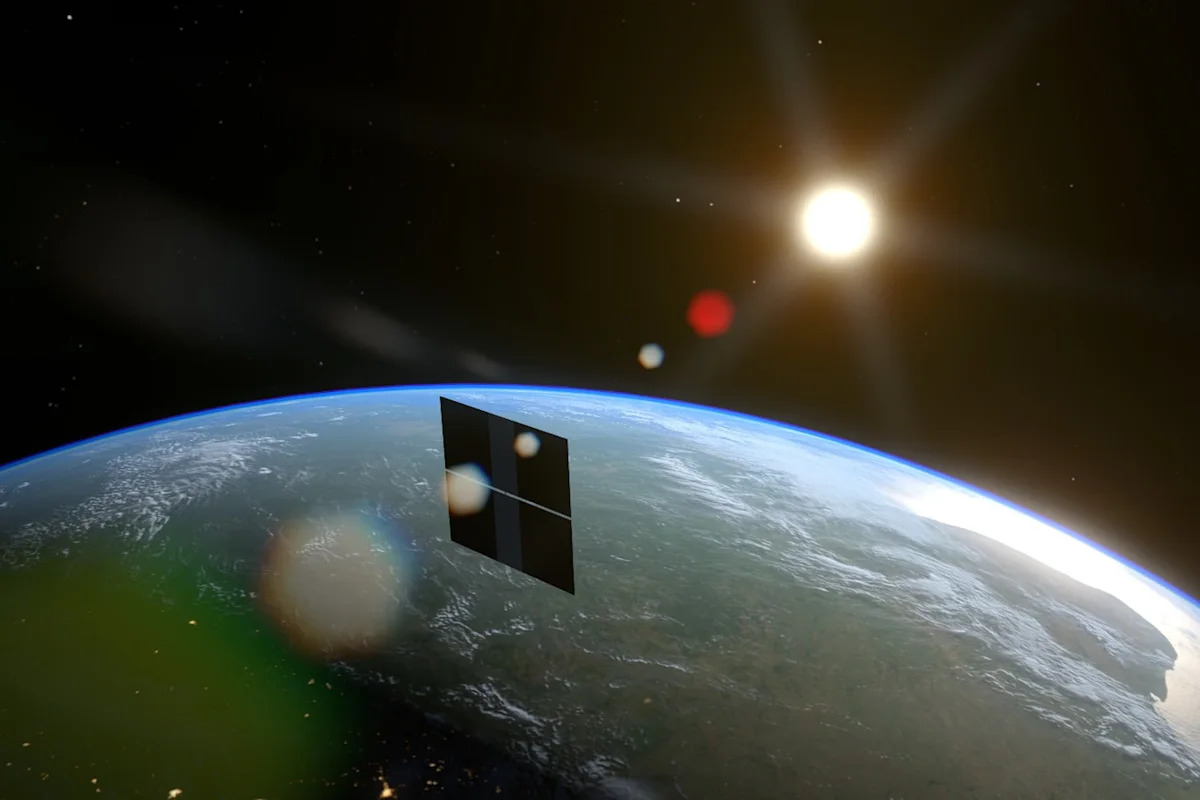
My new supervisor, the day I met him, was talking about how space data centers are a great idea (“because it’s so cold up there!”) and will be amazing when they’re online. That’s the moment I realized he was breathtakingly stupid. He may not believe in thermodynamics, but thermodynamics believes in him.
I guess I shouldn’t have expected much given that he has a degree in finance and has worked in consulting for 10 years.
I felt exactly the same way about Elon Musk back in 2018(?) when he went on the Late Show with Stephen Colbert, and said the easiest way to terraform Mars was to just nuke the polar ice caps…and voila…instant atmosphere.
I don’t think I’ve ever palm-slapped my forehead that hard in my life. All of a sudden I knew he was just another fuckin’ moron with way too much money to burn.
Mars doesn’t even have a magnetosphere, any atmosphere you create would fuck right off into space
And even if it worked (and it would take a LOT of nukes to work) … well, congrats: now Mars has an atmosphere – a highly radioactive atmosphere.
Thanks to Mars’s lack of a magnetic field, high radiation levels are already a concern. Adding even more radiation into the mix really isn’t going to help any of your terraforming goals.
And that’s why we should just drop a few million cockroaches on Mars and let them figure it out! /s
Great. And now a few years later, Earth is being invaded by highly advanced mutant cockroaches from Mars.
I wouldn’t mind if they weren’t fucking ugly

A person of culture! Kookiburi!
If you make it fast enough it will stick around for a while. “A while” in planetary terms can be a few hundred thousand or million years. So it’s possible you could produce sufficient atmosphere to make it breathable, and it would remain so for longer than human civilization up to now. Of course, by possible, I mean with the right tools and the resources to support that, which would be substantial. Feel free to find out how many comets you would have to impact into Mars to get that.
Our only hope would be to find a way to melt the core probably and a LOT of energy
He has no imagination, at least in any way that matters.
What I’d like to see is what would happen if thermonuclear devices were detonated at or very near the core, directionally like a shaped charge to get the core a bit hotter but more importantly moving faster. What impact would that have on the magnetic field of the planet?
I think you may either be overestimating the effectiveness of nukes or underestimating the thickness of planets.
Project Plowshare envisioned using nukes to dig holes on the order of hundreds of meters, not thousands of kilometers.
I’m doing neither one, but it’s pretty clearly not an idea for this time. We lack an awful lot to be able to pull off a project at that scale, but frankly that makes me more curious not less.
Saying it’s a matter of scale is an understatement. You need mass to keep the core molten, along with the right combination of elements to produce a working magnetic field that doesn’t fade over time. Mars has neither of those things going for it.
If you want to terraform Mars, you would have to rebuild it from scratch…basically creating a whole new planet with the right core composition and size. Even if you could pull all that material into one location and guide it all into a stable orbit, it would then take hundreds of millions of years to cool and set into something we could even hope to live on.
I don’t think human beings will ever be capable of that level of geoengineering. It’s just not realistic given the alternatives.
Even not underestimating the scale, I’m not sure it would work because all the debris would need to be ejected from the thousands-of-kilometers-deep hole. And then you’d also have to have a solution to stop the walls from caving in before the next bomb had a chance to arrive. It’s almost as if you not only need thousands of extremely powerful (even for nukes) bombs, but also need to deliver them in a continuous stream to keep the blast pressure up and the hole open.
I feel like, at that point, the easier strategy to accomplish your goal would be redirecting a large asteroid to impact the planet, or something like that.
And we would fuck that up and alter the orbit of Mars.
Oh, I don’t care about the surface viability. An asteroid capable of altering the core would probably liquefy a significant portion of the planet though which is also not desirable.
The goal of the thought is to give the planet a magnetosphere closer to that of earth, anywhere between would be a success. The general idea is to get the core somewhat hotter and moving much more, which probably also means it needs a more beefy moon than it has to maintain the change for any significant amount of time.
idk it’s just an idea I like to kick around sometimes.
Why would you try creating a molten core for a planet when you could just put a big magnet at L1 and call it a day?
Isn’t that the plot of the movie, “The Core”?
I’ve successfully avoided that movie so far so I don’t know 😆
You have to see it at least once. It’s one of those, “So bad it’s nearly good”, movies.
If you like yelling at your screen, I recommend.
He may not believe in thermodynamics
How does thermodynamics make this a bad idea? Is it because the heat generated can’t escape?
Yeah. The only way to cool things in space is to radiate it away with fins, or the more destructive approach of jettisoning material.
How do the fins help if there’s no hot material being jettisoned? Are we assuming there is some atmosphere that will absorb the heat through (I’m guessing) convection?
Radiation is the part you are missing. The three ways of dissipating heat are: conduction, convection, and radiation which is what the “fins” do.
Doesn’t it work out to something like a full kilometer of the things in order for it to work? The idea is pure madness.
Oh lord yes. Its why its stupid.
Depends on density. I think Scott Manley’s analysis is probably correct. SpaceX knows how to deal with a few thousand watts of heat per satellite from starlink.
Then the question is whether a few kilowatts is enough compute per node to be worth the trouble.
No. In the vacuum of space there is no convection. The only maintenance free(ish) method of discharging waste heat is to radiate it as infrared, which is not terribly effective compared to terrestrial heat management systems where we have the benefit of a big old atmosphere to dump heat into.
Radiative cooling into space is seriously weaksauce. The amount of heat an object can dissipate in such a manner is described by the Stefan-Boltzmann Law. It would take nearly a square meter (0.84 m2 according to my admittedly possibly shaky math) of perfectly ideal thermally conductive black body radiator material to dissipate the 640 watts of waste heat from just one datacenter style GPU at 70° C.
A square meter of heatsink. For one GPU.
Your radiator heat sink can’t be shaped like a terrestrial one, either, with stacked fins providing a high surface area in a small volume. That’s because a black body radiator is not only an ideal emitter of heat into a vacuum, such as it is, but also an ideal receiver. Your heat sinks will have to be wide and flat so they don’t radiate most of their heat right back into other parts of themselves, and this also precludes putting your equipment near other pieces of equipment so they don’t radiate their heat into each other.
A single server rack in an AI data center will consume and thus have to dissipate something like 80 killowatts, i.e. 80,000 watts, which even if you had access to some type of physics-experiment-land totally ideal radiator material with an emissivity of exactly 1 would require a 102 square meter radiator just to dissipate that same 70° C. And no part of it could be baking in the sun, nor be influenced thermally by any adjacent servers. In reality it’d have to be even larger, because such a perfectly ideal material does not exist.
TL;DR: Getting rid of heat in space is extremely difficult and in fact is one of the biggest challenges of spacecraft design. Thus putting massive heat generating computers in space is a self-evidently moronic idea as cooling them would be effectively impossible.
Thanks for the thorough answer. I guess I’ll just scrap this orbital data centre I was building.
One day we will figure out how to capture and store waste heat more effectively.
No idea when tho
And do what with it? You can’t use heat to do work without there being temperature differential in the system. Maintaining that differential requires keeping your cold side cold, which means it still must dissipate its heat. In space you would have exactly the same problem doing that as just radiating that heat in the first place. Once your system reaches equilibrium between its hot and cold sides, no work could be done with that heat energy. It’s just a radiator with extra steps.
If capturing heat energy to do something with it did not require sinking the waste heat from that selfsame process someplace, every satellite in orbit would already be covered in Peltiers or similar.
What if i just want to warm my hands or boil water
The short version is - if you’ve ever heard of infrared cameras that can see heat, that’s because everything glows based on heat. When things are very hot the glow is visible, but even cool things emit light outside of the visible spectrum. And emitting light takes energy, which means blackbody radiation (as this is called) takes energy (heat) away.
Jesus Christ, how do you think the Sun works? How are people this clustering ignorant!!??
That and the fact that space is not just extremely cold but also extremely hot, depending on what’s between the subject and the sun.
AI as a cultural phenomenon has been truly exceptional at revealing the extent to which the privileged are just literally mouth breathing thumb sucking mental invalids.
We should be laughing in their faces, when they say shit this stupid. We should be pointing out that they must have failed highschool physics, mocking them, to their faces, with a little bit of accidental spittle to drive it home.
We literally have to shame these fucking morons or they will destroy human civilization.
I love it when they bring up the dangers of AGI. Dude, what about the dangers right now? Cognitive offloading, psychosis, environmental damage, financial bubble, mass layoffs (I know it’s mostly a pretense for that one)…
Yeah, maybe at some point it’ll be capable to destroy us, but right now it looks like we’re going to do that before it’ll get there.
As someone with actual experience working in datacenters, this shit needs constant maintenance and repair. You can’t afford to pay for my travel expenses to reboot a server.
There’s a bunch of sealed underwater data centres and they found reliability went right up (see Project Natick). Underwater has the benefit of actually having cooling though …
Yet Microsoft abandoned the idea because it was so fraught with commercialisation issues. Which is exactly what the experts are saying
Can’t maintain, can’t upgrade, can’t repair, it pollutes the environment with abandoned shit and it doesn’t scale
Reliability probably went up because of the extra expense put into making sure it won’t immediately fail and need to be repaired
I’m not saying the space data centres are a good or even viable idea, just saying you can improve the reliability significantly if you try. The space data centre planis a non starter, there’s nowhere for the heat to go.
Yes, investing in reliability will increase reliability
You can radiate the heat with a biiiig long radiator but it doesn’t solve any of the other problems or improve commercial scalability
You may note that this thread is talking about data centre reliability …
Also you can’t radiate heat in space …
You can ONLY radiate heat in space…
Yeah I’ll pay that, you can’t radiate it effectively enough for data centre applications though.
The ISS has 475m^2 of ammonia filled radiators that like to disagree with you. https://en.wikipedia.org/wiki/External_Active_Thermal_Control_System
Sure. What did it cost? How many flights to get it up there? How many human spacewalk missions to maintain it?
The whole EATCS radiates 70kW, so less than one modern data centre rack. Helpful!
Hypothetically, a relatively stationary (not doing a lot of accelerating and decelerating) “Space Datacenter” would be a perfect test bed for something like Curie point radiators. Might help with the size of radiator needed to produce the same effect, but that’s probably the least difficult problem with that environment. The radiation shielding you would need would be… well astronomical.
Yeah, I’ve been wondering why there’s such a push against the feasibility of space data centers on a lack of cooling when it’s in a vacuum where we have already solved temperature regulations. Are there good arguments for why this doesn’t work for data centers in space? I mean I imagine other concerns will definitely make it difficult but this argument hasn’t seemed accurate to me. I mean also I’m against data centers in general so ya know fuck them but from a reality pov like isn’t that argument incorrect?
Also you can’t radiate heat in space …
How does the Sun work?
Mostly emitting ungodly amounts of photons and radiations, as far as the earth is concerned. Is that actually cooling it though ?
Right, I’m sure the hard radiation will help with that as well.
You can’t reboot a server remotely? My vast experience having been in one collocation once made me think that surely in big datacentres each server has a remotely controllable switch on its power source, like something that comes integrated with the rack itself? Is that not a thing?
You can’t remotely replace hardware.
Did I say “replace”? Oh, sorry, I meant “reboot”. Must have been distracted when I typed that. Silly me.
From experience, the remote “reboot” actuators sometimes they need to be rebooted themself
Well then you add a remote reboot switch for the reboot switch. Duh!
Everyone hyped on AI data centers is forgetting there’s no air in space with which to conduct the heat away. A comparatively “tepid” human body could take over 24 hours to freeze solid in space because the only option is for the heat to radiate.
Than there’s the part where disposable rockets and satellites like starlink are literally destroying the ozone CFC style.
They’re just going to have kilometers wide radiator panels 🧐🤪
That shit was actually funny to see in one of the AI slop white papers.
There are probably solutions, but pumping fluid kilometers there and back is a freaking sell
pumping fluid kilometers
https://en.wikipedia.org/wiki/Space_elevator
Not saying this would work but your comment made me think of it and by itself space elevators are a cool idea.
nobody actually cares … nobody wants the damn things… they can fuck off to space where they can blow up.
they can fuck off to space where they can blow up.
That’s also a problem, if you like having an ozone
Donald Kessler would like to have a word about that.
You do know launching a rocket is kinda polluting the world right? We kinda ok with it because it’s not a common thing to launch a rocket into space.
nobody wants the damn things he says as he types on a website hosted in a data centre, protected by cloudflare one of the biggest data centre users in the world
you don’t like data centres but people sure love youtube and facebook which comes out of them

The bottom panel is vastly different from the top
He’s saying cars should have seat belts and the other guy wants to improve society
She could improve her situation (and society) by simply not buying headphones made by slaves, there are plenty of options out there, she has made a conscious choice to buy slave headphones and now has the audacity to complain?
Both the car driver and peasant had no choice about their situations
She isn’t wearing headphones. She lives in a world where enough people don’t care about the things she cares about to keep the system going
it’s really irrelevant, the situations are completely different
one is a safety feature, the other is a worker demanding rights, she is complaining about a product she doesn’t have to buy
they could make the cartoon relèvent by having a worker in the apple slave factory complaining but then that would ruin the strawman
woosh
I think it is a great idea so long as the billionaires go there to stay with the data centres for maintenance purposes. They are the only geniuses who can do it!
Meanwhile China already has data centers in the ocean. Almost anything they do you can bet it’s a good idea [economically] because they’re not at the point to where they can waste billions and still come out on top like the US has done for decades.
Microsoft experimented with oceanic data centers too, and I don’t believe they actually abandoned that project either. It’s just Musk and his ilk are very loud and outsized loudness has a tendency to dominate public discourse.
It was concluded in 2024. MS called it a success but also discontinued research and expansion for reasons that don’t seem clear from what I can find.
Oh, shame to read that. It sounded like it had real potential.
Data centers on floating barges (or submerged just below the surface) makes so much more sense.
You’re still just heating the water.
True. But that’s unavoidable … assuming you’re dead set on having datacenters. Datacenters are always going to produce heat, and that heat has to go somewhere.
Better to just not build the data centers
The Yahoo!tech writers went on a deep dive and watched a YouTube video.
Never heard of this. But even if you could connect to them, how would you cool it?
Edit: never mind, that’s exactly what the article is about.
Experts do not argue that. The video is actually solid and the white paper they reference definitely is slop.
This is there repost I’ve seen with the dumb headline. There is real critic and the rubes dumping money into AI slop inspired renders are bigger idiots but if you are just uncritically throwing ad homenens like this then it looks like you’re not living up to your potential either.
It’s cause they can do whatever they want with your data when it’s not ruled by earth laws.
But it is ruled by physical laws, and those say it’s a dumb idea, and anyone telling you otherwise is trying to scam you.
I know it’s most likely AI, but for some reason I imagine it’s for some popular FPS or RTS or MOBA, and some underhanded players are going to start sending over planes or something to block the satellite signal
oh fuck off… the point isn’t to get them into space… the point is to get them off this damn planet. nobody wants this bullshit grift but idiots who are already addicted to ai slop bullshit.
nobody cares if these datacenters can dissipate heat in space… because nobody wants these fuckin wastes of resources and water.
fuck em… throw them, and their ceo fucks into space.
So the solution to all those wasted resources is…to waste even more resources putting them in space? With literally zero actual benefit?
Lol! Ok.
Haven’t they wasted enough money on this crap? I’m sure blasting data centres into space will help with the exorbitant costs.
nobody cares if these datacenters can dissipate heat in space.
They can’t eh.
Like everyone going off about AI in space is glazing something we should have learned wouldn’t work in middle school science class.
“YOU HAVE AI PSYCHOISIS” yells the idiots frothing at the mouth with AI Psychosis.