"It really seems like anyone with some renders and a white paper written by someone being gassed up by an overly agreeable AI can get VC funding these days."
My new supervisor, the day I met him, was talking about how space data centers are a great idea (“because it’s so cold up there!”) and will be amazing when they’re online. That’s the moment I realized he was breathtakingly stupid. He may not believe in thermodynamics, but thermodynamics believes in him.
I guess I shouldn’t have expected much given that he has a degree in finance and has worked in consulting for 10 years.
I felt exactly the same way about Elon Musk back in 2018(?) when he went on the Late Show with Stephen Colbert, and said the easiest way to terraform Mars was to just nuke the polar ice caps…and voila…instant atmosphere.
I don’t think I’ve ever palm-slapped my forehead that hard in my life. All of a sudden I knew he was just another fuckin’ moron with way too much money to burn.
And even if it worked (and it would take a LOT of nukes to work) … well, congrats: now Mars has an atmosphere – a highly radioactive atmosphere.
Thanks to Mars’s lack of a magnetic field, high radiation levels are already a concern. Adding even more radiation into the mix really isn’t going to help any of your terraforming goals.
If you make it fast enough it will stick around for a while. “A while” in planetary terms can be a few hundred thousand or million years. So it’s possible you could produce sufficient atmosphere to make it breathable, and it would remain so for longer than human civilization up to now. Of course, by possible, I mean with the right tools and the resources to support that, which would be substantial. Feel free to find out how many comets you would have to impact into Mars to get that.
He has no imagination, at least in any way that matters.
What I’d like to see is what would happen if thermonuclear devices were detonated at or very near the core, directionally like a shaped charge to get the core a bit hotter but more importantly moving faster. What impact would that have on the magnetic field of the planet?
I’m doing neither one, but it’s pretty clearly not an idea for this time. We lack an awful lot to be able to pull off a project at that scale, but frankly that makes me more curious not less.
Saying it’s a matter of scale is an understatement. You need mass to keep the core molten, along with the right combination of elements to produce a working magnetic field that doesn’t fade over time. Mars has neither of those things going for it.
If you want to terraform Mars, you would have to rebuild it from scratch…basically creating a whole new planet with the right core composition and size. Even if you could pull all that material into one location and guide it all into a stable orbit, it would then take hundreds of millions of years to cool and set into something we could even hope to live on.
I don’t think human beings will ever be capable of that level of geoengineering. It’s just not realistic given the alternatives.
Even not underestimating the scale, I’m not sure it would work because all the debris would need to be ejected from the thousands-of-kilometers-deep hole. And then you’d also have to have a solution to stop the walls from caving in before the next bomb had a chance to arrive. It’s almost as if you not only need thousands of extremely powerful (even for nukes) bombs, but also need to deliver them in a continuous stream to keep the blast pressure up and the hole open.
I feel like, at that point, the easier strategy to accomplish your goal would be redirecting a large asteroid to impact the planet, or something like that.
Oh, I don’t care about the surface viability. An asteroid capable of altering the core would probably liquefy a significant portion of the planet though which is also not desirable.
The goal of the thought is to give the planet a magnetosphere closer to that of earth, anywhere between would be a success. The general idea is to get the core somewhat hotter and moving much more, which probably also means it needs a more beefy moon than it has to maintain the change for any significant amount of time.
idk it’s just an idea I like to kick around sometimes.
How do the fins help if there’s no hot material being jettisoned? Are we assuming there is some atmosphere that will absorb the heat through (I’m guessing) convection?
Depends on density. I think Scott Manley’s analysis is probably correct. SpaceX knows how to deal with a few thousand watts of heat per satellite from starlink.
Then the question is whether a few kilowatts is enough compute per node to be worth the trouble.
No. In the vacuum of space there is no convection. The only maintenance free(ish) method of discharging waste heat is to radiate it as infrared, which is not terribly effective compared to terrestrial heat management systems where we have the benefit of a big old atmosphere to dump heat into.
Radiative cooling into space is seriously weaksauce. The amount of heat an object can dissipate in such a manner is described by the Stefan-Boltzmann Law. It would take nearly a square meter (0.84 m2 according to my admittedly possibly shaky math) of perfectly ideal thermally conductive black body radiator material to dissipate the 640 watts of waste heat from just one datacenter style GPU at 70° C.
A square meter of heatsink. For one GPU.
Your radiator heat sink can’t be shaped like a terrestrial one, either, with stacked fins providing a high surface area in a small volume. That’s because a black body radiator is not only an ideal emitter of heat into a vacuum, such as it is, but also an ideal receiver. Your heat sinks will have to be wide and flat so they don’t radiate most of their heat right back into other parts of themselves, and this also precludes putting your equipment near other pieces of equipment so they don’t radiate their heat into each other.
A single server rack in an AI data center will consume and thus have to dissipate something like 80 killowatts, i.e. 80,000 watts, which even if you had access to some type of physics-experiment-land totally ideal radiator material with an emissivity of exactly 1 would require a 102 square meter radiator just to dissipate that same 70° C. And no part of it could be baking in the sun, nor be influenced thermally by any adjacent servers. In reality it’d have to be even larger, because such a perfectly ideal material does not exist.
TL;DR: Getting rid of heat in space is extremely difficult and in fact is one of the biggest challenges of spacecraft design. Thus putting massive heat generating computers in space is a self-evidently moronic idea as cooling them would be effectively impossible.
And do what with it? You can’t use heat to do work without there being temperature differential in the system. Maintaining that differential requires keeping your cold side cold, which means it still must dissipate its heat. In space you would have exactly the same problem doing that as just radiating that heat in the first place. Once your system reaches equilibrium between its hot and cold sides, no work could be done with that heat energy. It’s just a radiator with extra steps.
If capturing heat energy to do something with it did not require sinking the waste heat from that selfsame process someplace, every satellite in orbit would already be covered in Peltiers or similar.
You can warm your hands until you reach thermal equilibrium, and/or use the boiling water to cool your system by allowing the water vapor to escape into space!
The short version is - if you’ve ever heard of infrared cameras that can see heat, that’s because everything glows based on heat. When things are very hot the glow is visible, but even cool things emit light outside of the visible spectrum. And emitting light takes energy, which means blackbody radiation (as this is called) takes energy (heat) away.
AI as a cultural phenomenon has been truly exceptional at revealing the extent to which the privileged are just literally mouth breathing thumb sucking mental invalids.
We should be laughing in their faces, when they say shit this stupid. We should be pointing out that they must have failed highschool physics, mocking them, to their faces, with a little bit of accidental spittle to drive it home.
We literally have to shame these fucking morons or they will destroy human civilization.
I love it when they bring up the dangers of AGI. Dude, what about the dangers right now? Cognitive offloading, psychosis, environmental damage, financial bubble, mass layoffs (I know it’s mostly a pretense for that one)…
Yeah, maybe at some point it’ll be capable to destroy us, but right now it looks like we’re going to do that before it’ll get there.


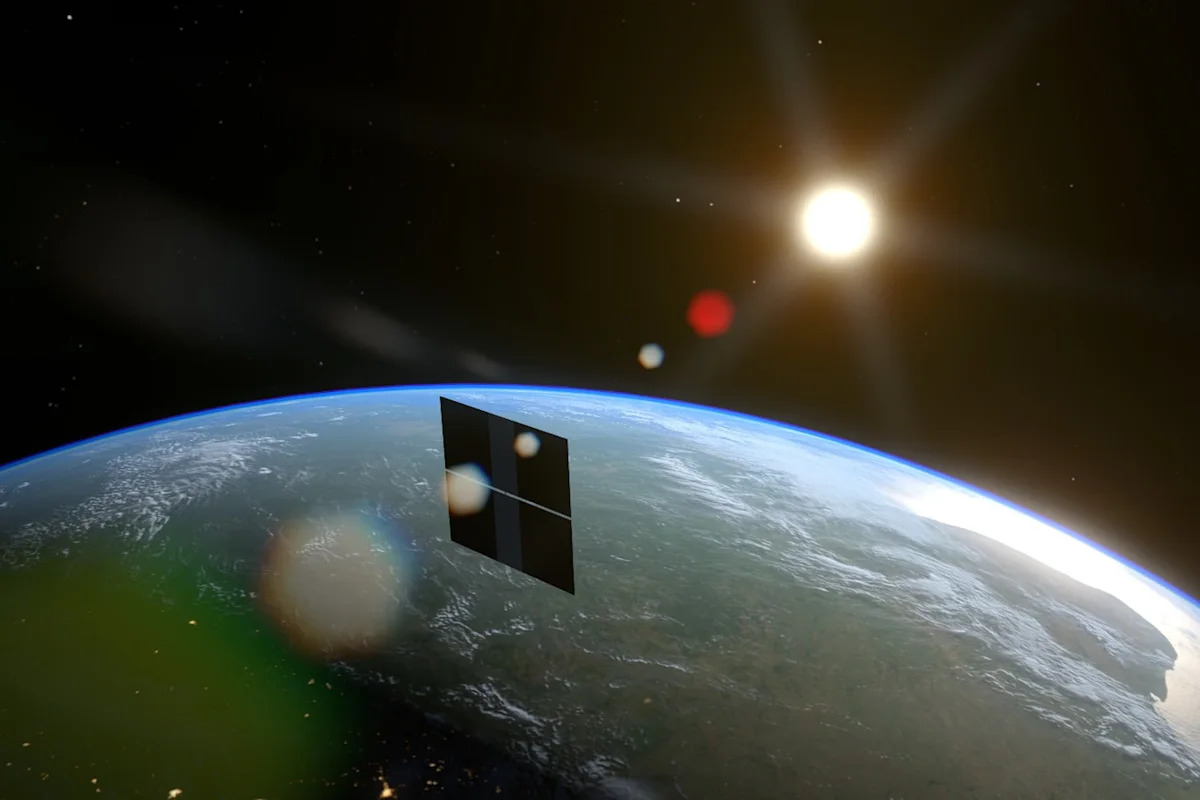
My new supervisor, the day I met him, was talking about how space data centers are a great idea (“because it’s so cold up there!”) and will be amazing when they’re online. That’s the moment I realized he was breathtakingly stupid. He may not believe in thermodynamics, but thermodynamics believes in him.
I guess I shouldn’t have expected much given that he has a degree in finance and has worked in consulting for 10 years.
I felt exactly the same way about Elon Musk back in 2018(?) when he went on the Late Show with Stephen Colbert, and said the easiest way to terraform Mars was to just nuke the polar ice caps…and voila…instant atmosphere.
I don’t think I’ve ever palm-slapped my forehead that hard in my life. All of a sudden I knew he was just another fuckin’ moron with way too much money to burn.
Mars doesn’t even have a magnetosphere, any atmosphere you create would fuck right off into space
And even if it worked (and it would take a LOT of nukes to work) … well, congrats: now Mars has an atmosphere – a highly radioactive atmosphere.
Thanks to Mars’s lack of a magnetic field, high radiation levels are already a concern. Adding even more radiation into the mix really isn’t going to help any of your terraforming goals.
And that’s why we should just drop a few million cockroaches on Mars and let them figure it out! /s
Great. And now a few years later, Earth is being invaded by highly advanced mutant cockroaches from Mars.
I wouldn’t mind if they weren’t fucking ugly
A person of culture! Kookiburi!
If you make it fast enough it will stick around for a while. “A while” in planetary terms can be a few hundred thousand or million years. So it’s possible you could produce sufficient atmosphere to make it breathable, and it would remain so for longer than human civilization up to now. Of course, by possible, I mean with the right tools and the resources to support that, which would be substantial. Feel free to find out how many comets you would have to impact into Mars to get that.
Our only hope would be to find a way to melt the core probably and a LOT of energy
He has no imagination, at least in any way that matters.
What I’d like to see is what would happen if thermonuclear devices were detonated at or very near the core, directionally like a shaped charge to get the core a bit hotter but more importantly moving faster. What impact would that have on the magnetic field of the planet?
I think you may either be overestimating the effectiveness of nukes or underestimating the thickness of planets.
Project Plowshare envisioned using nukes to dig holes on the order of hundreds of meters, not thousands of kilometers.
I’m doing neither one, but it’s pretty clearly not an idea for this time. We lack an awful lot to be able to pull off a project at that scale, but frankly that makes me more curious not less.
Saying it’s a matter of scale is an understatement. You need mass to keep the core molten, along with the right combination of elements to produce a working magnetic field that doesn’t fade over time. Mars has neither of those things going for it.
If you want to terraform Mars, you would have to rebuild it from scratch…basically creating a whole new planet with the right core composition and size. Even if you could pull all that material into one location and guide it all into a stable orbit, it would then take hundreds of millions of years to cool and set into something we could even hope to live on.
I don’t think human beings will ever be capable of that level of geoengineering. It’s just not realistic given the alternatives.
Even not underestimating the scale, I’m not sure it would work because all the debris would need to be ejected from the thousands-of-kilometers-deep hole. And then you’d also have to have a solution to stop the walls from caving in before the next bomb had a chance to arrive. It’s almost as if you not only need thousands of extremely powerful (even for nukes) bombs, but also need to deliver them in a continuous stream to keep the blast pressure up and the hole open.
I feel like, at that point, the easier strategy to accomplish your goal would be redirecting a large asteroid to impact the planet, or something like that.
And we would fuck that up and alter the orbit of Mars.
Oh, I don’t care about the surface viability. An asteroid capable of altering the core would probably liquefy a significant portion of the planet though which is also not desirable.
The goal of the thought is to give the planet a magnetosphere closer to that of earth, anywhere between would be a success. The general idea is to get the core somewhat hotter and moving much more, which probably also means it needs a more beefy moon than it has to maintain the change for any significant amount of time.
idk it’s just an idea I like to kick around sometimes.
Why would you try creating a molten core for a planet when you could just put a big magnet at L1 and call it a day?
Isn’t that the plot of the movie, “The Core”?
I’ve successfully avoided that movie so far so I don’t know 😆
You have to see it at least once. It’s one of those, “So bad it’s nearly good”, movies.
If you like yelling at your screen, I recommend.
How does thermodynamics make this a bad idea? Is it because the heat generated can’t escape?
Yeah. The only way to cool things in space is to radiate it away with fins, or the more destructive approach of jettisoning material.
How do the fins help if there’s no hot material being jettisoned? Are we assuming there is some atmosphere that will absorb the heat through (I’m guessing) convection?
Radiation is the part you are missing. The three ways of dissipating heat are: conduction, convection, and radiation which is what the “fins” do.
Doesn’t it work out to something like a full kilometer of the things in order for it to work? The idea is pure madness.
Oh lord yes. Its why its stupid.
Depends on density. I think Scott Manley’s analysis is probably correct. SpaceX knows how to deal with a few thousand watts of heat per satellite from starlink.
Then the question is whether a few kilowatts is enough compute per node to be worth the trouble.
No. In the vacuum of space there is no convection. The only maintenance free(ish) method of discharging waste heat is to radiate it as infrared, which is not terribly effective compared to terrestrial heat management systems where we have the benefit of a big old atmosphere to dump heat into.
Radiative cooling into space is seriously weaksauce. The amount of heat an object can dissipate in such a manner is described by the Stefan-Boltzmann Law. It would take nearly a square meter (0.84 m2 according to my admittedly possibly shaky math) of perfectly ideal thermally conductive black body radiator material to dissipate the 640 watts of waste heat from just one datacenter style GPU at 70° C.
A square meter of heatsink. For one GPU.
Your radiator heat sink can’t be shaped like a terrestrial one, either, with stacked fins providing a high surface area in a small volume. That’s because a black body radiator is not only an ideal emitter of heat into a vacuum, such as it is, but also an ideal receiver. Your heat sinks will have to be wide and flat so they don’t radiate most of their heat right back into other parts of themselves, and this also precludes putting your equipment near other pieces of equipment so they don’t radiate their heat into each other.
A single server rack in an AI data center will consume and thus have to dissipate something like 80 killowatts, i.e. 80,000 watts, which even if you had access to some type of physics-experiment-land totally ideal radiator material with an emissivity of exactly 1 would require a 102 square meter radiator just to dissipate that same 70° C. And no part of it could be baking in the sun, nor be influenced thermally by any adjacent servers. In reality it’d have to be even larger, because such a perfectly ideal material does not exist.
TL;DR: Getting rid of heat in space is extremely difficult and in fact is one of the biggest challenges of spacecraft design. Thus putting massive heat generating computers in space is a self-evidently moronic idea as cooling them would be effectively impossible.
Thanks for the thorough answer. I guess I’ll just scrap this orbital data centre I was building.
One day we will figure out how to capture and store waste heat more effectively.
No idea when tho
And do what with it? You can’t use heat to do work without there being temperature differential in the system. Maintaining that differential requires keeping your cold side cold, which means it still must dissipate its heat. In space you would have exactly the same problem doing that as just radiating that heat in the first place. Once your system reaches equilibrium between its hot and cold sides, no work could be done with that heat energy. It’s just a radiator with extra steps.
If capturing heat energy to do something with it did not require sinking the waste heat from that selfsame process someplace, every satellite in orbit would already be covered in Peltiers or similar.
What if i just want to warm my hands or boil water
You can warm your hands until you reach thermal equilibrium, and/or use the boiling water to cool your system by allowing the water vapor to escape into space!
*Rocket fuel and other launch costs not included.
The short version is - if you’ve ever heard of infrared cameras that can see heat, that’s because everything glows based on heat. When things are very hot the glow is visible, but even cool things emit light outside of the visible spectrum. And emitting light takes energy, which means blackbody radiation (as this is called) takes energy (heat) away.
Jesus Christ, how do you think the Sun works? How are people this clustering ignorant!!??
That and the fact that space is not just extremely cold but also extremely hot, depending on what’s between the subject and the sun.
AI as a cultural phenomenon has been truly exceptional at revealing the extent to which the privileged are just literally mouth breathing thumb sucking mental invalids.
We should be laughing in their faces, when they say shit this stupid. We should be pointing out that they must have failed highschool physics, mocking them, to their faces, with a little bit of accidental spittle to drive it home.
We literally have to shame these fucking morons or they will destroy human civilization.
I love it when they bring up the dangers of AGI. Dude, what about the dangers right now? Cognitive offloading, psychosis, environmental damage, financial bubble, mass layoffs (I know it’s mostly a pretense for that one)…
Yeah, maybe at some point it’ll be capable to destroy us, but right now it looks like we’re going to do that before it’ll get there.