Being an American wanting an electric car must be a nightmare!
Not many options, and all of them are too expensive, because competition is stifled by keeping competition out with insane tariffs.
In Europe we are spoiled with choice, lots of European brands with lots of models, and we even have American although we don’t want them, but we also have Chinese although they do have an EU import tax, to compensate for the Chinese subsidies.
But several Chinese brands are becoming quite popular, especially BYD and XPeng have become popular here in Denmark.
Yeah, it’s extremely frustrating here. The EV market actively sucks with limited options and inflated prices. I also bought a used Polestar 2 last year, so now I’m extra frustrated.
My guess, however, is that PS just didn’t care to deal with obtaining the waiver- the brand has sold poorly here in the US and they’ve been posturing to exit the market for a few years.
For some reason Polestar doesn’t seem to be doing as well as it deserves in many markets.
I hope you can have yours maintained as long as is required even if they leave the market.
If they’re priced the same as the US models, it’s little wonder they’re not selling well. MSRP for the P2 was ~70k USD which is a non-starter for most folks.
I got mine used at 4 years old with 74k miles on it (fortunately EVs generally tend to last towards 200k miles barring any other issues) for 20k, it’s the only reason I could afford to buy it. Otherwise I was probably going to go with an ID.4 which was at a similar price point. What did you end up going with?
Here in Denmark a Polestar 2 is just below $50,000 excluding VAT but including all other taxes.
Competition in USA is absolutely destroyed by crazy tariffs.
That’s still ridiculously high for a car. When my wife and I bought a new car a couple years ago we really stretched the bank to make a $35,000 car work.
Yes it is a expensive, it used to be way cheaper, in 2022 it was “only” $43,000 IDK why the price has increased, I suppose they have made improvements.
Here $35,000 ex vat is a bit below average, which is probably more like $40,000 USD. Which is the starting price of the ID.4 here in Denmark.
Our 4 year old VW ID.4 cost $32,000 IDK including VAT or $26,000 excluding VAT.
So here we have nearly a similar hit for a 4 year used car! I hope you got a nice car. 😀
I’m not sure how VAT equivocates to tax tag and title here in the US, but for $35,000 car it should still be less than $1000. I pay a bit less than the average person because I’m Native and I go through my tribe instead of the state I live in, but I don’t think the rate I get is less than like half the state rate. A few years ago the same car would’ve been in the $29,000 range. At the time we got the car things were so crazy in the used market that it actually was about $100 less per month for us to get the new car then to get a four year-old used car of the same model.
Thank you, we got a Mazda CX-50. It’s a lot nicer than my 2004 Chrysler Sebring was with 280k miles (~450600km)! I’m not the primary driver so as long as my wife is happy with it I’m happy.
Hopefully wages will start reflecting prices someday.
VAT is a sales tax, and traditionally prices in USA are stated without that, sales tax in USA is local to the state you are in.
Companies deduct sales tax, so for them it’s irrelevant except of course for their sales.
The new electric Mazda models we get here are mostly made in China, but being in USA, I bet yours isn’t.
I like Mazda and have had a couple many years ago.
We ended up with a 4 year old ID.4, 😋
We could have had a more powerful Polestar cheaper, except my wife didn’t want anything Chinese, and insurance was more than 50% more expensive on the faster Polestar.
But we got a nice ID.4 77 kWh battery, and with literally all the options included.
One of our neighbors however went with the Volvo, which is also very nice.
Driving electric is really nice IMO, it feels absolutely super luxury compared to a similar ICE car.
Absolutely agreed, I can’t imagine going back to an ICE car for my daily driver unless I absolutely have to.
I periodically have to rent a car for work (I travel a lot) and never realized how much noise engines make until it was conspicuously missing from car. The PS is also just super comfortable and feels great on the road, while my rentals rarely are/do.
The PS is also just super comfortable and feels great on the road,
If the seats are as good as in the Volvo, they are absolutely stellar. We have luxury seats in our ID.4, but the ones in our neighbors Volvo are even better.
We always had European style cars with very good driving capabilities, but I’m still impressed that the ID.4 as a CUV is able to match them, it is a good deal higher than what we are used to, but the low weight balance because of the batteries, makes it way better in road capability than it looks. 👍
One of the things I really can still enjoy, is when turning into a bigger road, that smooth quiet confident way the car handles.
But not having a manual gear is also a first for us with this car, so that is part of it, probably not much of a factor in USA.
Yeah, the seats are fantastic. I also know exactly what you mean about turning into the road with confidence- the ID.4 was the first EV I test drove and that feeling absolutely sold me on electric!
I never had the opportunity to drive a manual, so I don’t really know what I’m missing I guess. Automatic transmission is the de facto standard here. I don’t love the little gear shift on the PS and find having a separate parking button unintuitive, but it’s still miles ahead of the cars with weird buttons or dials for shifting. I didn’t mind the shifter on the ID.4 either, I learned to drive on a truck with a stalk gear shift like that.
When I borrowed a car recently for a few days, it had a manual stick. It was kind of a nostalgic feeling, and I understand Americans better now that enjoy driving manual ( To us Europeans it was the default before the EV ) . It’s hard to describe, but I guess it’s a bit like when people like Vinyl records to play music. It somehow feels like you are more in contact with it, and you are more in control.
Still the automatic is superior for comfort and convenience.
Regarding the park thing, I’ve been using that button on our ID.4 for more than half a year now, and only recently I found out I don’t even have to, it goes to park automatically when I open the door. 😋
I like how they placed the gear knob on the ID.4, I only have to move my hand a few centimeters to use it. But somehow I feel like they could have made it even better, so I didn’t have to move my hand behind the steering wheel, but a bit more flux to it.
But maybe that’s to avoid accidental gearshifts?
With all the automatics in this car, I’m sometimes flustered a bit that it can’t figure out to change into forward by itself after I’ve backed out of the garage. And why the door doesn’t open when I approach the car.
Some of the new Chinese cars open the door for you. 😎
The average price for a new EV in the US is much closer to $40-50k with a range from $25k to >$100k per this US News article. Most EVs are well outside any dream of affordability for the average American, but it makes sense given the ICE market is also increasingly more expensive every year.
Polestar isn’t an entry level or budget brand- they make luxury vehicles and price them as such. It doesn’t make the MSRP less insane and I question why anyone would pay that, but there’s clearly a market for luxury vehicles here given the popularity of BMW, Audi, and other luxury brands that sell ICE cars.
I wasn’t even aware they were selling in the US. I used to pay attention since they seemed to have compelling vehicles, but never here and never affordable
Yeah I absolutely love my P2, but they sold terribly in the US. Compared to a Tesla model 3 (which are unfortunately still super popular despite Musk), it was nicer but with les range and around twice the stocker price. Polestar struggled to really position themselves here successfully, imo, but they aren’t a particularly high volume brand in other places either.
It’s gets better. Even if you find an EV, the states tax you more than an ICE car. Texas has a $200 yearly fee to supposedly make up for lost gas tax revenue. But at 20c/gallon and assuming 30mpg,
I’d have to drive 30,000 miles to offset that cost (only drove about 8,500 miles per year).
And now they want to do the same at the Federal level with another $150 tax (federal taxes are 18c/gallon), which would be another 25,000 miles.
So I would be taxed $350/year to offset “gas tax losses”, which would only even out for me if I were to drive 55,000 miles in a year.
I heard about that, and that’s crazy. You gotta love all that freedom. 🤥
I don’t drive nearly that much either.
I understand the logic of the tax on gas to pay for roads, but here an EV is taxed less because it pollutes less. USA needs more of that.
Realistically we should be taxing by weight and miles driven as the former causes the most damage to the roads. At that point the propulsion type and efficiency don’t really matter. EVs actually would be taxed more given that they’re heavier, but it’d also proportionately tax trucks and larger vehicles correctly at that point.
You could easily implement it with a yearly odometer reading with your registration or inspection and every car has a GVWR registered with it.
How about just metering charging infrastructure and taxing by the kilowatt hr? Power consumed is directly proportional to the weight, distance, and rate of travel. A simple mandate that all home charging stations have to have a wireless or remote-readable meter attached, and all public fast-chargers are taxed by KWh. Easy, simple, and nearly frictionless.
If you watch that “Technology Connections” video that keeps going around Lemmy, you should not waste your money on a home charging station
technically you can charge at a standard outlet. It works for some people
I also have adapters for tool outlets, dryer outlets, rv outlets (a dryer outlet could charge as quickly as the charging stations where I work)
A home charging station is just a convenience. A really nice convenience that I highly recommend, but unnecessary
Power consumed is directly proportional to the weight, distance, and rate of travel
And if we’re trying to be fair, that’s really not true either. There’s a wide range of efficiencies for different vehicles. On the extreme end, if Aptera succeeds, those drivers would pay nothing. More importantly, this also gives them another opportunity to charge unfairly to defend ICE vehicles
Simple weight and miles, regardless of technology and efficiency, and recorded at annual inspection or purchase/sale - ideally also keep the gas tax to help pay for its impact on the environment
As far as the variety of efficiencies, I don’t see that as a downside. That just incentivizes higher efficiency systems if you assume the median efficiency for tax purposes.
That said you do make a valid point about non-standard charging set ups. I’m not entirely opposed to the odometer method, I just find most proposals for implementing it a barrier to adoption.
It’s already illegal to modify the odometer and many states have annual safety inspections where they could record such things
The strongest arguments against smreridinf the odometer are surveillance and safety react, but if you’re only recording it once a year or when sold, then you’re not losing privacy
See, annual inspections make it to visible. You get the bill for your road taxes all in one hit when you take your car in for maintenance, people are going to go a) Lose their minds at the price tag, b) Hit up black market solutions to “fix” their numbers. Being illegal is only a deterrence for getting caught breaking the law.
I understand the logic of the tax on gas to pay for roads
But even that doesn’t really hold up. Gas tax depending on state, generally covers less than half of road maintenance and is already unfair because of hybrids and other efficient vehicles.
And the bulk of the damage is probably from big trucks anyway
Hey just a friendly reminder those Chinese EVs are backdoored with an Elon style god mode like Tesla. Lots of modern cars have a similar issue but EVs get it bad. Tl;dr rip out your car’s modem.
I bet all the new cars are unfortunately, my VW is also constantly connected to VW.
We need to make that shit illegal. Until then we have to live with it, just as with our smartphones.
I know I can install AOSP and get rid of it, and I did use that for years, but I just want the hassle anymore.
I’m interested to see how the low-cost Chinese brands do on longer-term reliability. Their initial build quality is generally good, but their product cycles are so short that I don’t see how they can capture knowledge that leads to them correcting design defects. To me, it looks like too much churn. But maybe they’ll be fine. We’ll have to see.
This is absolutely an issue, having used many 2nd hand cars for decades, most of them Japanese but also French because they were cheap, I was extremely astounded when we bought a 14 year old German built Opel Vectra, we had it until it reached 20 with next to no repairs, before it finally gave in mostly because of a legal technicality.
When we had our new (used) car at the shop, and borrowed an only 8 year old mid range car, there was no doubt that compared to that, our 20 year old Vectra was still a way nicer car, faster, smoother, more powerful and better comfort, and also better looking IMO, and would absolutely be worth the repair that was only a sixth of what that 8 year old car cost on the free market!
Problem is that our old Vectra is $850 in taxes per year, because the fuel economy isn’t as good as newer cars. And that $850 per year tax kills the economy of keeping it.
Our new car that is heavier and way more powerful is only $100 in taxes per year!! Because it’s an EV.
There’s a lot of knowledge about how to build a car that doesn’t apply to EVs. Similarly there’s a lot that does and it will take a while to sort it out. cybertruk is a good example of what not to do on many levels while charging a premium
I’m happy they did try it, tried something very different even if it didn’t succeed.
But as much as Lemmy wants pickups and that is the most frequently bought vehicle in the US, perhaps that was a bad vehicle type to try. Pickup owners are also stereotypically conservative and excessively brand loyal: there a lot going against you in that market.
Look at Ford, also failing but with the opposite strategy. An EV truck trying to be identical to the existing ICE truck was also not the way to go. Their new strategy of an EV for smaller more affordable pickups seems like a winner to me, but we’ll see
While GM continues to sell their EV pickups following the ford strategy of exactly what they’re selling for ICE trucks, they can’t be making any money with how few they sell, anfpd they’ll never sell more with those prices
No it’s not, the extra tariff is absolutely to compensate for subsidies in China. When EU subsidized Electric vehicles, the subsidies were equal for cars made in all countries, also outside EU.
China has heavily subsidized both development and production of cars in China. European factories do not get such subsidies, here it was on the sales, and was equal no matter where the car is made. For instance Tesla, Hyundai, Geely, Xpeng too received these subsidies 100% equal to European electric cars sold here.
So why don’t you take that ignorant comment and shove it?
USA subsidizes American MADE cars sold in USA protecting their home market, and China subsidizes China made cars in general no matter where they are sold. And that is what EU tax extra. The tax is even adjusted on a per brand basis, so a manufacturer that has not enjoyed high subsidies is not taxed for it.
European car makers too profit from subsidies and they make worse e-cars for double, triple the price.
This is decidedly false, China is still catching up on several aspects, and the price is way more comparable if it’s considered on a level playing field.
Yes China has done extremely well in this segment as they have in others, but they are not better quality than European made cars. Especially not compared to German cars.
USA is different than EU with their tariffs on Chinese cars, both in that they are way higher with 125%, where EU tariffs have a base of 10% and an additional protective tariff ranging from ZERO to about 25%.
And I’d be fine with this, if it were temporary and if there were also measures to help legacy manufacturers turn it around. I wish legacy American manufacturers would be able to survive The Biden administration passed a comprehensive package to do that, and that’s basically what the legacy manufacturers wrote off as a loss
But the current situation is just exploiting Americans for higher profits on old technologies in the hope that global competition will help legacy manufacturers turn things around. I’m not seeing that. I’m just seeing them even more stuck on dead end technology, with no incentive to change. The excessive protectionism is permanent until we’re ready to bail out failing car manufacturers
I’m waiting to see if Slate can hit their crazy $24,950 target base price. With a 65kWh battery, that’s a pretty great price. That’s almost cheaper than buying batteries alone. I’m wondering if it will be able to do home backup power.
Just looked it up, GM claims it has a 65 kWh battery, and 150 kW DC charging rate. That’s not bad.
But it’s only 1 option. Where in Denmark we have 16 options below $25,000.
I get this, but european Brands lobbied to not implement or stifle the supply chain transparency laws, soooo… none of them guarantee “no slave labor” either. Actually, given their opposition to the laws, it’s reasonable to assume they indeed use slave labor too. So what does that leave the end buyer with?
Also they are mobile surveillance devices for the chinese government. Unlike american cars which are rolling surveillance devices for the lowest bidder.
While it could be better. There’s a lot of great deals on used EVs around 20k. Plus we have Lucid, which has the longest range of any ev in the world afaik.
If we had the Chinese EVs then the prices would be a lot more reasonable.
The Mercedes-Benz EQS 450+ Sedan. Thanks to a massive 122 kWh (usable) battery pack and ultra-aerodynamic design, it achieves up to 926 km (575 miles) of range on the WLTP cycle.
But IDK for sure, because they use different measurements.
AFAIK Slate auto is a cheap piece of crap. But AFAIK it’s not available yet, so we don’t really know.
In Denmark we have 16 car models available below $25k USD. None of them as ugly as the Slate.
16 fully electric BEV car models all below $24,500 USD. 5 of them from China.
Denmark is traditionally a pretty expensive country to buy anything, we have the highest average price index in EU.
So I bet other European countries have even better prices.
I sure hope you have better options then. IDK what country you are in, but it’s weird that it’s more expensive than here.
Maybe it’s because sales of EV is low, when inventory moves slower it makes products more expensive.
Maybe dealerships should just parallel import the cars? It is a free market after all, anyone that wants to can do it.
It’s Czech Republic and no, there are probably not any cheaper EVs here. I’m not counting Dacia Spring ($16,5k pre-tax) as it’s Chinese car in disguise and it’s just too small and weak I’d hardly consider it a proper car anyway. Some other “cheap” non-Chinese choices are Hyundai Inster for $21,5k, Fiat Grande Panda for $22k or Renault 5 for $26,5k, all prices pre-tax.
Overall it’s just so expensive here. A lot of people are skeptic about the tech both for being expensive and also because everyone thinks they probably need to drive 800 km every day and charging is too slow… I’d buy EV a long ago if it wasn’t so price prohibitive.
EDIT: Just for comparison, average monthly wage is ~$2300 and median is ~$2100 (before taxation).
I thought Dacia was made in Romania?
We had the Dacia too a few years back, but it disappeared pretty quickly, I suspect it simply wasn’t good enough, exactly because as you say it’s incredibly weak, and has a very small battery, and although it was the cheapest when available, it clearly had worse value than the slightly more expensive competitors.
I looked up if you have any particular registration tax on cars in the Czech Republic, and as far as I can trell you don’t, except a very cheap flat fee of CZK 800 (roughly €32) according to Google.
The other cars you mention are pretty close to the prices here. The Inster is $20,800 USD. The Fiat Grande Panda the same, and the Renault 5 $23,400 USD.
So at least not as bad as the Citroen, but still a bit more expensive in the Czech Republic.
That said however, there is a long tradition in Denmark to remove equipment that is standard in other countries, and have it as extras here. Especially smaller rims than standard are common. But also cruise control and seat heating. A package of extras to “upgrade” to normal easily runs up to a couple thousand dollars.
This tradition evolved because Denmark had some of the highest taxes on new cars in Europe. And as a funny side effect, cars were sometimes exported from Denmark, to other countries, because the price without taxes was lower here. This could even be to the country where the car was made. 😋
Unfortunately Skoda doesn’t have anything yet in the low price segment, VW recently announced the ID.Polo to arrive next year, maybe there will be an equivalent Skoda?
Skoda are absolutely good cars, I bought the VW instead mostly because it was significantly cheaper as used, and there were more to choose among.
Here the median and average are about twice what you get in the Czech Republic. We are personally not up to the average, but we are doing fine anyway. 😋
The usual Dacia is indeed from Romania, but Spring is their first EV and it’s basically some unknown Chinese car rebranded with Dacia’s body kit. The whole EV technology is Chinese, though. New one will be (supposedly) based on new Renault Twingo platform.
As for the tax: yes, there’s just that small registration fee specific to cars, but there’s also usual 21% VAT like on everything.
And that “upgrade” path? It is definitely not Denmark thing alone as we have it here too. Prices I listed are for the bare bones trims. Classic move is like this: Want something useful like parking cam? Pay up. And because manufacturers are pricks, it’s only available as a package with some other crap you don’t need nor want but still have to pay for…
Škoda revealed Epiq recently, which is I believe ID.Polo cousin. And it’s not cheap by far, for it’s size and specs. Basic trim starts at over $30k and that means things like gray color only, no parking cam, no keyless doors, no V2L, no heated seats, no wireless charger, etc. And also just basic 3 year warranty. Want better specs? You’re at price of Tesla Y… (Don’t want to bring its idiot owner here, just comparing cars offers.)
And my personal gripe of car industry: I absolutely hate every car review magazine/site/channel where they present new cars like “this new model costs just XY”, then proceed to show you nice car and at the very end they tell you it’s not the XY price base trim. It actually costs over twice as much, due to better trim, bigger battery and all the fancy options. Yeah, thank you and f*ck you with a cactus.
but there’s also usual 21% VAT like on everything.
We have 25% VAT!!
It’s disappointing to hear the Skoda equivalent to the ID.Polo is so expensive. I had hoped it would start $5k below that price.
That last part about saying the starting price and then showing a way more expensive model, sounds like it could be fined as illegally misleading marketing.
Here they always make such things very clear in reviews, and recently we have had influencers that had to pay pretty hefty fines for illegal marketing.
If they can do it to influencers, they can do it to reviewers too.
I had a similar situation with a popular site where some used cars were stated to have a Trailer hitch but hadn’t.
I wrote to a couple of dealers and stated they were legally obligated to meet their advertising, and sell me the car with trailer hitch at no extra cost.
It was kind of hilarious the polite answers I got back, turned out it was the site that added it because of a bug.
If what you write is true, I think it’s actually illegal by EU standards of consumer protection against misleading advertising.


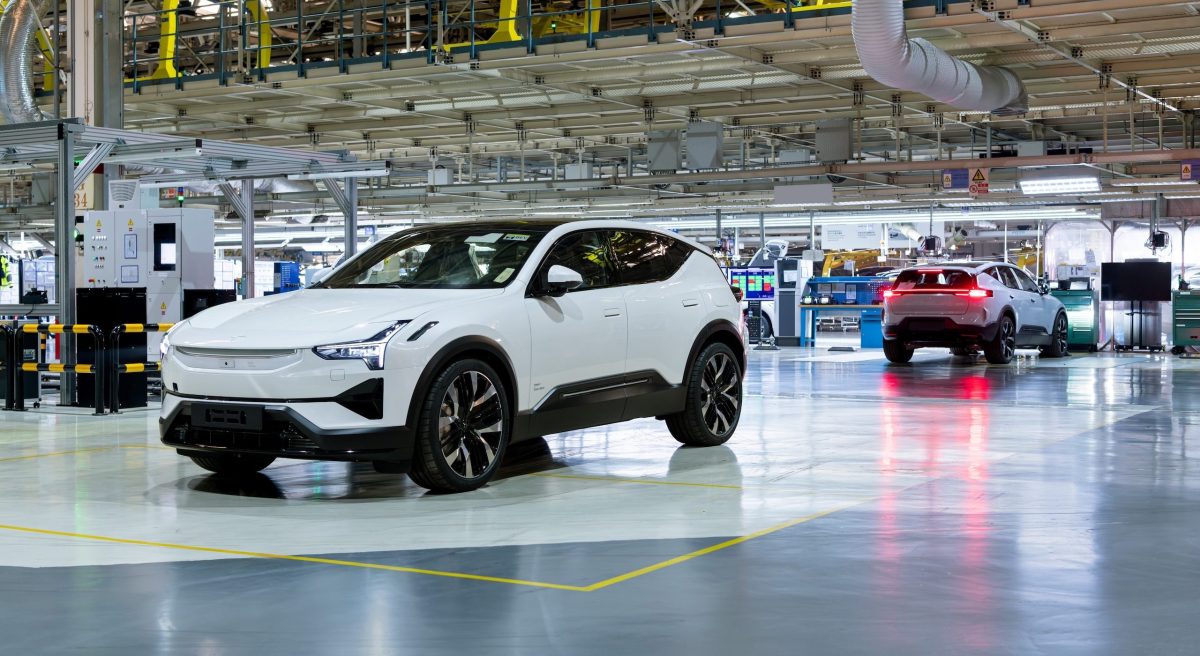
Being an American wanting an electric car must be a nightmare!
Not many options, and all of them are too expensive, because competition is stifled by keeping competition out with insane tariffs.
In Europe we are spoiled with choice, lots of European brands with lots of models, and we even have American although we don’t want them, but we also have Chinese although they do have an EU import tax, to compensate for the Chinese subsidies.
But several Chinese brands are becoming quite popular, especially BYD and XPeng have become popular here in Denmark.
Yeah, it’s extremely frustrating here. The EV market actively sucks with limited options and inflated prices. I also bought a used Polestar 2 last year, so now I’m extra frustrated.
My guess, however, is that PS just didn’t care to deal with obtaining the waiver- the brand has sold poorly here in the US and they’ve been posturing to exit the market for a few years.
For some reason Polestar doesn’t seem to be doing as well as it deserves in many markets.
I hope you can have yours maintained as long as is required even if they leave the market.
It was a runner up when we bought our EV.
If they’re priced the same as the US models, it’s little wonder they’re not selling well. MSRP for the P2 was ~70k USD which is a non-starter for most folks.
I got mine used at 4 years old with 74k miles on it (fortunately EVs generally tend to last towards 200k miles barring any other issues) for 20k, it’s the only reason I could afford to buy it. Otherwise I was probably going to go with an ID.4 which was at a similar price point. What did you end up going with?
Here in Denmark a Polestar 2 is just below $50,000 excluding VAT but including all other taxes.
Competition in USA is absolutely destroyed by crazy tariffs.
That’s still ridiculously high for a car. When my wife and I bought a new car a couple years ago we really stretched the bank to make a $35,000 car work.
Yes it is a expensive, it used to be way cheaper, in 2022 it was “only” $43,000 IDK why the price has increased, I suppose they have made improvements.
Here $35,000 ex vat is a bit below average, which is probably more like $40,000 USD. Which is the starting price of the ID.4 here in Denmark.
Our 4 year old VW ID.4 cost $32,000 IDK including VAT or $26,000 excluding VAT.
So here we have nearly a similar hit for a 4 year used car! I hope you got a nice car. 😀
I’m not sure how VAT equivocates to tax tag and title here in the US, but for $35,000 car it should still be less than $1000. I pay a bit less than the average person because I’m Native and I go through my tribe instead of the state I live in, but I don’t think the rate I get is less than like half the state rate. A few years ago the same car would’ve been in the $29,000 range. At the time we got the car things were so crazy in the used market that it actually was about $100 less per month for us to get the new car then to get a four year-old used car of the same model.
Thank you, we got a Mazda CX-50. It’s a lot nicer than my 2004 Chrysler Sebring was with 280k miles (~450600km)! I’m not the primary driver so as long as my wife is happy with it I’m happy.
Hopefully wages will start reflecting prices someday.
VAT is a sales tax, and traditionally prices in USA are stated without that, sales tax in USA is local to the state you are in.
Companies deduct sales tax, so for them it’s irrelevant except of course for their sales.
The new electric Mazda models we get here are mostly made in China, but being in USA, I bet yours isn’t.
I like Mazda and have had a couple many years ago.
We ended up with a 4 year old ID.4, 😋
We could have had a more powerful Polestar cheaper, except my wife didn’t want anything Chinese, and insurance was more than 50% more expensive on the faster Polestar.
But we got a nice ID.4 77 kWh battery, and with literally all the options included.
One of our neighbors however went with the Volvo, which is also very nice.
Driving electric is really nice IMO, it feels absolutely super luxury compared to a similar ICE car.
Absolutely agreed, I can’t imagine going back to an ICE car for my daily driver unless I absolutely have to.
I periodically have to rent a car for work (I travel a lot) and never realized how much noise engines make until it was conspicuously missing from car. The PS is also just super comfortable and feels great on the road, while my rentals rarely are/do.
If the seats are as good as in the Volvo, they are absolutely stellar. We have luxury seats in our ID.4, but the ones in our neighbors Volvo are even better.
We always had European style cars with very good driving capabilities, but I’m still impressed that the ID.4 as a CUV is able to match them, it is a good deal higher than what we are used to, but the low weight balance because of the batteries, makes it way better in road capability than it looks. 👍
One of the things I really can still enjoy, is when turning into a bigger road, that smooth quiet confident way the car handles.
But not having a manual gear is also a first for us with this car, so that is part of it, probably not much of a factor in USA.
Yeah, the seats are fantastic. I also know exactly what you mean about turning into the road with confidence- the ID.4 was the first EV I test drove and that feeling absolutely sold me on electric!
I never had the opportunity to drive a manual, so I don’t really know what I’m missing I guess. Automatic transmission is the de facto standard here. I don’t love the little gear shift on the PS and find having a separate parking button unintuitive, but it’s still miles ahead of the cars with weird buttons or dials for shifting. I didn’t mind the shifter on the ID.4 either, I learned to drive on a truck with a stalk gear shift like that.
When I borrowed a car recently for a few days, it had a manual stick. It was kind of a nostalgic feeling, and I understand Americans better now that enjoy driving manual ( To us Europeans it was the default before the EV ) . It’s hard to describe, but I guess it’s a bit like when people like Vinyl records to play music. It somehow feels like you are more in contact with it, and you are more in control.
Still the automatic is superior for comfort and convenience.
Regarding the park thing, I’ve been using that button on our ID.4 for more than half a year now, and only recently I found out I don’t even have to, it goes to park automatically when I open the door. 😋
I like how they placed the gear knob on the ID.4, I only have to move my hand a few centimeters to use it. But somehow I feel like they could have made it even better, so I didn’t have to move my hand behind the steering wheel, but a bit more flux to it.
But maybe that’s to avoid accidental gearshifts?
With all the automatics in this car, I’m sometimes flustered a bit that it can’t figure out to change into forward by itself after I’ve backed out of the garage. And why the door doesn’t open when I approach the car.
Some of the new Chinese cars open the door for you. 😎
Even better for those of us who can charge at home or work. It’s so nice never having to go to a local gas station
The price point for electric cars in America is 25-30k. 70K is mentally ill
The average price for a new EV in the US is much closer to $40-50k with a range from $25k to >$100k per this US News article. Most EVs are well outside any dream of affordability for the average American, but it makes sense given the ICE market is also increasingly more expensive every year.
Polestar isn’t an entry level or budget brand- they make luxury vehicles and price them as such. It doesn’t make the MSRP less insane and I question why anyone would pay that, but there’s clearly a market for luxury vehicles here given the popularity of BMW, Audi, and other luxury brands that sell ICE cars.
Chevy Bolt MSRP is $28,995.
Tesla model 3 starts at $38k now. Somehow teslas went from being expensive vehicles to one of the more affordable EVs and no one noticed.
Lol, i’d rather ride one of my mopeds than own a Tesla
It’s just a Volvo. Volvo specialists will maintain it. They’ll also maintain Lynk&Co probably.
I wasn’t even aware they were selling in the US. I used to pay attention since they seemed to have compelling vehicles, but never here and never affordable
Yeah I absolutely love my P2, but they sold terribly in the US. Compared to a Tesla model 3 (which are unfortunately still super popular despite Musk), it was nicer but with les range and around twice the stocker price. Polestar struggled to really position themselves here successfully, imo, but they aren’t a particularly high volume brand in other places either.
It’s gets better. Even if you find an EV, the states tax you more than an ICE car. Texas has a $200 yearly fee to supposedly make up for lost gas tax revenue. But at 20c/gallon and assuming 30mpg, I’d have to drive 30,000 miles to offset that cost (only drove about 8,500 miles per year).
And now they want to do the same at the Federal level with another $150 tax (federal taxes are 18c/gallon), which would be another 25,000 miles.
So I would be taxed $350/year to offset “gas tax losses”, which would only even out for me if I were to drive 55,000 miles in a year.
I heard about that, and that’s crazy. You gotta love all that freedom. 🤥
I don’t drive nearly that much either.
I understand the logic of the tax on gas to pay for roads, but here an EV is taxed less because it pollutes less. USA needs more of that.
Realistically we should be taxing by weight and miles driven as the former causes the most damage to the roads. At that point the propulsion type and efficiency don’t really matter. EVs actually would be taxed more given that they’re heavier, but it’d also proportionately tax trucks and larger vehicles correctly at that point.
You could easily implement it with a yearly odometer reading with your registration or inspection and every car has a GVWR registered with it.
Yes that would be fair, but IMO there should be an environment tax on gas.
How about just metering charging infrastructure and taxing by the kilowatt hr? Power consumed is directly proportional to the weight, distance, and rate of travel. A simple mandate that all home charging stations have to have a wireless or remote-readable meter attached, and all public fast-chargers are taxed by KWh. Easy, simple, and nearly frictionless.
No, that doesn’t work. You can charge anywhere.
If you watch that “Technology Connections” video that keeps going around Lemmy, you should not waste your money on a home charging station
A home charging station is just a convenience. A really nice convenience that I highly recommend, but unnecessary
And if we’re trying to be fair, that’s really not true either. There’s a wide range of efficiencies for different vehicles. On the extreme end, if Aptera succeeds, those drivers would pay nothing. More importantly, this also gives them another opportunity to charge unfairly to defend ICE vehicles
Simple weight and miles, regardless of technology and efficiency, and recorded at annual inspection or purchase/sale - ideally also keep the gas tax to help pay for its impact on the environment
As far as the variety of efficiencies, I don’t see that as a downside. That just incentivizes higher efficiency systems if you assume the median efficiency for tax purposes.
That said you do make a valid point about non-standard charging set ups. I’m not entirely opposed to the odometer method, I just find most proposals for implementing it a barrier to adoption.
It’s already illegal to modify the odometer and many states have annual safety inspections where they could record such things
The strongest arguments against smreridinf the odometer are surveillance and safety react, but if you’re only recording it once a year or when sold, then you’re not losing privacy
See, annual inspections make it to visible. You get the bill for your road taxes all in one hit when you take your car in for maintenance, people are going to go a) Lose their minds at the price tag, b) Hit up black market solutions to “fix” their numbers. Being illegal is only a deterrence for getting caught breaking the law.
…vehicle registration taxes should be based upon ton-miles driven and speed limits should be based upon kinetic energy…
But even that doesn’t really hold up. Gas tax depending on state, generally covers less than half of road maintenance and is already unfair because of hybrids and other efficient vehicles.
And the bulk of the damage is probably from big trucks anyway
So by that logic you don’t have to pay tax for electric consumption, right? Right? Damn USA became such a cesspool…
deleted by creator
It’s almost as though Tesla is being granted a monopoly.
Hey just a friendly reminder those Chinese EVs are backdoored with an Elon style god mode like Tesla. Lots of modern cars have a similar issue but EVs get it bad. Tl;dr rip out your car’s modem.
I bet all the new cars are unfortunately, my VW is also constantly connected to VW.
We need to make that shit illegal. Until then we have to live with it, just as with our smartphones.
I know I can install AOSP and get rid of it, and I did use that for years, but I just want the hassle anymore.
Not ALL but most yeah. It’s partially just for data mining to make new cars more profitable but is also an easy way for spooks to RC a car
Even more so in Australia, as we have zero tariffs, as the new EU trade agreement removed the small tarrif that was on EI cars, none on Chinese cars.
I have a BYD and charge off solar panels on my roof
Awesome, we do that too, and haven’t felt the increased oil/gas prices at all. 😎
I’m interested to see how the low-cost Chinese brands do on longer-term reliability. Their initial build quality is generally good, but their product cycles are so short that I don’t see how they can capture knowledge that leads to them correcting design defects. To me, it looks like too much churn. But maybe they’ll be fine. We’ll have to see.
This is absolutely an issue, having used many 2nd hand cars for decades, most of them Japanese but also French because they were cheap, I was extremely astounded when we bought a 14 year old German built Opel Vectra, we had it until it reached 20 with next to no repairs, before it finally gave in mostly because of a legal technicality.
When we had our new (used) car at the shop, and borrowed an only 8 year old mid range car, there was no doubt that compared to that, our 20 year old Vectra was still a way nicer car, faster, smoother, more powerful and better comfort, and also better looking IMO, and would absolutely be worth the repair that was only a sixth of what that 8 year old car cost on the free market!
Problem is that our old Vectra is $850 in taxes per year, because the fuel economy isn’t as good as newer cars. And that $850 per year tax kills the economy of keeping it.
Our new car that is heavier and way more powerful is only $100 in taxes per year!! Because it’s an EV.
I’ve got a bad feeling about overall repairability. Glue and potting used throughout.
Not like American EVs … Oh hang on, another bit fell off a cyber truck
There’s a lot of knowledge about how to build a car that doesn’t apply to EVs. Similarly there’s a lot that does and it will take a while to sort it out. cybertruk is a good example of what not to do on many levels while charging a premium
I’m happy they did try it, tried something very different even if it didn’t succeed.
But as much as Lemmy wants pickups and that is the most frequently bought vehicle in the US, perhaps that was a bad vehicle type to try. Pickup owners are also stereotypically conservative and excessively brand loyal: there a lot going against you in that market.
Look at Ford, also failing but with the opposite strategy. An EV truck trying to be identical to the existing ICE truck was also not the way to go. Their new strategy of an EV for smaller more affordable pickups seems like a winner to me, but we’ll see
While GM continues to sell their EV pickups following the ford strategy of exactly what they’re selling for ICE trucks, they can’t be making any money with how few they sell, anfpd they’ll never sell more with those prices
Standard American build quality
🤣
rather to keep European manufacturers afloat. Protectionism under a different name.
European car makers too profit from subsidies and they make worse e-cars for double, triple the price.
No it’s not, the extra tariff is absolutely to compensate for subsidies in China. When EU subsidized Electric vehicles, the subsidies were equal for cars made in all countries, also outside EU.
China has heavily subsidized both development and production of cars in China. European factories do not get such subsidies, here it was on the sales, and was equal no matter where the car is made. For instance Tesla, Hyundai, Geely, Xpeng too received these subsidies 100% equal to European electric cars sold here.
So why don’t you take that ignorant comment and shove it?
USA subsidizes American MADE cars sold in USA protecting their home market, and China subsidizes China made cars in general no matter where they are sold. And that is what EU tax extra. The tax is even adjusted on a per brand basis, so a manufacturer that has not enjoyed high subsidies is not taxed for it.
This is decidedly false, China is still catching up on several aspects, and the price is way more comparable if it’s considered on a level playing field.
Yes China has done extremely well in this segment as they have in others, but they are not better quality than European made cars. Especially not compared to German cars.
USA is different than EU with their tariffs on Chinese cars, both in that they are way higher with 125%, where EU tariffs have a base of 10% and an additional protective tariff ranging from ZERO to about 25%.
And I’d be fine with this, if it were temporary and if there were also measures to help legacy manufacturers turn it around. I wish legacy American manufacturers would be able to survive The Biden administration passed a comprehensive package to do that, and that’s basically what the legacy manufacturers wrote off as a loss
But the current situation is just exploiting Americans for higher profits on old technologies in the hope that global competition will help legacy manufacturers turn things around. I’m not seeing that. I’m just seeing them even more stuck on dead end technology, with no incentive to change. The excessive protectionism is permanent until we’re ready to bail out failing car manufacturers
Chevy Bolt MSRP is $28,995.
I’m waiting to see if Slate can hit their crazy $24,950 target base price. With a 65kWh battery, that’s a pretty great price. That’s almost cheaper than buying batteries alone. I’m wondering if it will be able to do home backup power.
Just looked it up, GM claims it has a 65 kWh battery, and 150 kW DC charging rate. That’s not bad.
But it’s only 1 option. Where in Denmark we have 16 options below $25,000.
To be fair, Chinese EV’s should have tariffs also because they use virtual slave labor.
I get this, but european Brands lobbied to not implement or stifle the supply chain transparency laws, soooo… none of them guarantee “no slave labor” either. Actually, given their opposition to the laws, it’s reasonable to assume they indeed use slave labor too. So what does that leave the end buyer with?
Also they are mobile surveillance devices for the chinese government. Unlike american cars which are rolling surveillance devices for the lowest bidder.
While it could be better. There’s a lot of great deals on used EVs around 20k. Plus we have Lucid, which has the longest range of any ev in the world afaik.
If we had the Chinese EVs then the prices would be a lot more reasonable.
I think the Mercedes beats it:
But IDK for sure, because they use different measurements.
Slate Auto.
So close…
AFAIK Slate auto is a cheap piece of crap. But AFAIK it’s not available yet, so we don’t really know.
In Denmark we have 16 car models available below $25k USD. None of them as ugly as the Slate.
Are these cheap european electric cars with us in the room right now?
Personally I drive a VW ID4 which is a midrange car in Europe starting at $42,000 USD.
This Citroën ë-C3 is currently the cheapest at $17,218 USD excluding VAT.
https://www.citroen.dk/modeller/e-C3.html
DKK 139,900 kr. incl VAT is 111,920 kr. Excl VAT = $17,218 USD.
Here’s a recent list of alternatives:
https://bilmagasinet.dk/guides/billig-elbil
16 fully electric BEV car models all below $24,500 USD. 5 of them from China.
Denmark is traditionally a pretty expensive country to buy anything, we have the highest average price index in EU.
So I bet other European countries have even better prices.
Well, our eastern block post-communist shithole has the cheapest e-C3 for roughly $22k pre-tax. It’s insane.
I sure hope you have better options then. IDK what country you are in, but it’s weird that it’s more expensive than here.
Maybe it’s because sales of EV is low, when inventory moves slower it makes products more expensive.
Maybe dealerships should just parallel import the cars? It is a free market after all, anyone that wants to can do it.
It’s Czech Republic and no, there are probably not any cheaper EVs here. I’m not counting Dacia Spring ($16,5k pre-tax) as it’s Chinese car in disguise and it’s just too small and weak I’d hardly consider it a proper car anyway. Some other “cheap” non-Chinese choices are Hyundai Inster for $21,5k, Fiat Grande Panda for $22k or Renault 5 for $26,5k, all prices pre-tax.
Overall it’s just so expensive here. A lot of people are skeptic about the tech both for being expensive and also because everyone thinks they probably need to drive 800 km every day and charging is too slow… I’d buy EV a long ago if it wasn’t so price prohibitive.
EDIT: Just for comparison, average monthly wage is ~$2300 and median is ~$2100 (before taxation).
I thought Dacia was made in Romania?
We had the Dacia too a few years back, but it disappeared pretty quickly, I suspect it simply wasn’t good enough, exactly because as you say it’s incredibly weak, and has a very small battery, and although it was the cheapest when available, it clearly had worse value than the slightly more expensive competitors.
I looked up if you have any particular registration tax on cars in the Czech Republic, and as far as I can trell you don’t, except a very cheap flat fee of CZK 800 (roughly €32) according to Google.
The other cars you mention are pretty close to the prices here. The Inster is $20,800 USD. The Fiat Grande Panda the same, and the Renault 5 $23,400 USD.
So at least not as bad as the Citroen, but still a bit more expensive in the Czech Republic.
That said however, there is a long tradition in Denmark to remove equipment that is standard in other countries, and have it as extras here. Especially smaller rims than standard are common. But also cruise control and seat heating. A package of extras to “upgrade” to normal easily runs up to a couple thousand dollars.
This tradition evolved because Denmark had some of the highest taxes on new cars in Europe. And as a funny side effect, cars were sometimes exported from Denmark, to other countries, because the price without taxes was lower here. This could even be to the country where the car was made. 😋
Unfortunately Skoda doesn’t have anything yet in the low price segment, VW recently announced the ID.Polo to arrive next year, maybe there will be an equivalent Skoda?
Skoda are absolutely good cars, I bought the VW instead mostly because it was significantly cheaper as used, and there were more to choose among.
Here the median and average are about twice what you get in the Czech Republic. We are personally not up to the average, but we are doing fine anyway. 😋
The usual Dacia is indeed from Romania, but Spring is their first EV and it’s basically some unknown Chinese car rebranded with Dacia’s body kit. The whole EV technology is Chinese, though. New one will be (supposedly) based on new Renault Twingo platform.
As for the tax: yes, there’s just that small registration fee specific to cars, but there’s also usual 21% VAT like on everything.
And that “upgrade” path? It is definitely not Denmark thing alone as we have it here too. Prices I listed are for the bare bones trims. Classic move is like this: Want something useful like parking cam? Pay up. And because manufacturers are pricks, it’s only available as a package with some other crap you don’t need nor want but still have to pay for…
Škoda revealed Epiq recently, which is I believe ID.Polo cousin. And it’s not cheap by far, for it’s size and specs. Basic trim starts at over $30k and that means things like gray color only, no parking cam, no keyless doors, no V2L, no heated seats, no wireless charger, etc. And also just basic 3 year warranty. Want better specs? You’re at price of Tesla Y… (Don’t want to bring its idiot owner here, just comparing cars offers.)
And my personal gripe of car industry: I absolutely hate every car review magazine/site/channel where they present new cars like “this new model costs just XY”, then proceed to show you nice car and at the very end they tell you it’s not the XY price base trim. It actually costs over twice as much, due to better trim, bigger battery and all the fancy options. Yeah, thank you and f*ck you with a cactus.
We have 25% VAT!!
It’s disappointing to hear the Skoda equivalent to the ID.Polo is so expensive. I had hoped it would start $5k below that price.
That last part about saying the starting price and then showing a way more expensive model, sounds like it could be fined as illegally misleading marketing.
Here they always make such things very clear in reviews, and recently we have had influencers that had to pay pretty hefty fines for illegal marketing.
If they can do it to influencers, they can do it to reviewers too.
I had a similar situation with a popular site where some used cars were stated to have a Trailer hitch but hadn’t.
I wrote to a couple of dealers and stated they were legally obligated to meet their advertising, and sell me the car with trailer hitch at no extra cost.
It was kind of hilarious the polite answers I got back, turned out it was the site that added it because of a bug.
If what you write is true, I think it’s actually illegal by EU standards of consumer protection against misleading advertising.