I get what you’re referencing (lack of radar, lidar etc.), but objectively a camera is a sensor in the exact same way as the others, that’s not even up for discussion.
It’s a sensor relying on image recognition, which is only as reliable as the image recognition software. The more clever software tries to be, the more potential failure states that exist.
Yes that is true all sensor input is only as good as the algorithm interpreting it. But that doesn’t change the fact that a camera is just as much a sensor as a lidar or radar, which is what I stated.
Yes, a camera is technically a sensor. Just not one that can tell you a distance to an object. And that capability is pretty useful to not have a car drive through a solid garage door.
It is possible, but it is not error-free. For example, there is no way to tell a distance to a featureless wall that takes up the entire field of vision.
But Teslas don’t even have stereoscopic vision. The moment you start using neural networks and monoscopic vision, you get affected by all the visual illusions that humans get. And that is in addition to the system not being as good as humans at processing visual information.
Which was all I stated, but somehow people disagree with facts here.
Edit: and you actually easily can measure distance quite accurately with cameras in a stereoscopic setup, but of course this is not what Tesla does, despite having several forward-facing cameras.
No it adds precision and accuracy to the words used. These things matter when it comes to forming specific meanings in a purely text-based environment where people share little (or none at all) common understanding or biases.
The problem with wile e coyote comparisons is that a lot of humans would also crash into a wall that was painted to look like it wasn’t a wall. It’s much more meaningful to find mistakes that a human wouldn’t make.
I don’t like this either as it seems to lead people to overestimate the capability of lidar and radar systems (and radar is worse than useless. False positives are dangerous too).
There is NO automated system on the road that is proven. Waymos and shit will also end up killing people. Please, people, don’t do their marketing for them. The road system and cars are a lethal system with dangerous tradeoffs by design.
no system is perfect. I personally wouldn’t trust any autonomous vehicle. I don’t think it can be made reliable enough in the chaotic environment they are supposed to operate in.
But some systems are less bad than others. Lidar has other limitations, but it would have detected that it’s getting closer to “something solid”. Ideally both (and more), but cameras only is the stupidest way to do it bar none, imo
AP back then had radar, but radar cant reliably detect a stationary object at high speeds. Every OEMs traffic aware cruise control had this weakness if its radar based back then. They typically warn you about it before first use, which is part of why you must pay attention.
Only vision or lidar can address an issue like this, and cars weren’t really shipping with lidar back then.
Newer Teslas with HW4 and FSD would handle this better. HW3 and FSD might not reliably handle it, but its hard to say.
Edit: and even today on HW4 car, AP would probably fail here like this story. Its just not meant for this and is very very old at this point.
Yes, radar was found to be useless at highway speeds for stationary objects because if it responded to such events, you get sudden, emergency “ghost braking.” Radar is so low resolution, it cannot tell the difference between the back of a tractor trailer and a large sign or overpass.
The point was to illustrate the failure of the visual system from way back then. And considering the price point of Teslas, the fact they still don’t have lidar today is criminal.
The fact that American trucks and SUVs don’t have forward facing cameras that activate at slow speeds to prevent driving over kids hidden in their insane blind spots while navigating parking lots and driveways should be criminal. The headlight situation as well (Europe is actually doing something, fwiw). We also had external airbag tech to prevent pedestrian deaths decades ago and with modern vision systems they could be incredibly cheap and highly reliable today, but its not criminal to ignore that tech.
They even fought seatbelt requirements for gods sake. The auto industry are depraved. Let’s not give any of them a pass.
Edit: I can’t help but add that everything above is so damned cheap it would be a rounding error on a vehicles manufacturing cost and wouldn’t impact their shitty “design goals and styling” one iota. I’m not even suggesting changing the shape or size of them here.
Yeah, its just the new version of “my gas peddal got stuck” or the more general “my car accelerated out of nowhere”
FYI, neither actually happen, despite thousands of claims going back decades, and if they did, brakes easily overpower engines. People confuse their pedals and don’t believe it.


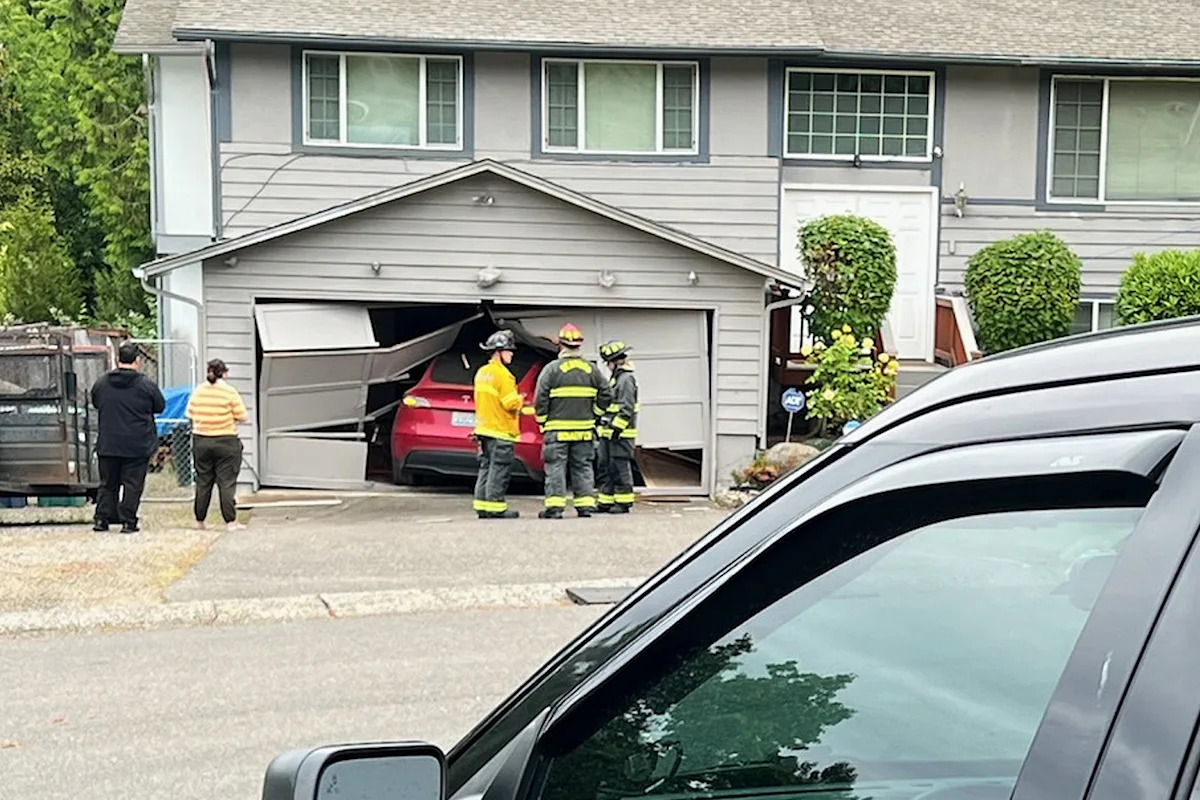
Pretty unlikely. No third party analysis of the logs? Just putting this out there as “driver says”
Very basic autonomous systems can avoid collision with a large flat stationary surface.
The ones with actual sensors can, anyway.
They still have ultrasound sensors for slow speeds like parking. Either they failed or he was at roadway speed when he entered the driveway.
I get what you’re referencing (lack of radar, lidar etc.), but objectively a camera is a sensor in the exact same way as the others, that’s not even up for discussion.
It’s a sensor relying on image recognition, which is only as reliable as the image recognition software. The more clever software tries to be, the more potential failure states that exist.
Yes that is true all sensor input is only as good as the algorithm interpreting it. But that doesn’t change the fact that a camera is just as much a sensor as a lidar or radar, which is what I stated.
Yes, a camera is technically a sensor. Just not one that can tell you a distance to an object. And that capability is pretty useful to not have a car drive through a solid garage door.
You can absolutely tell the distance to an object with cameras if you use more than one. Our eyes do it all the time.
It is possible, but it is not error-free. For example, there is no way to tell a distance to a featureless wall that takes up the entire field of vision. But Teslas don’t even have stereoscopic vision. The moment you start using neural networks and monoscopic vision, you get affected by all the visual illusions that humans get. And that is in addition to the system not being as good as humans at processing visual information.
They actually have three cameras in the main front-facing unit as of 2020. Before that, I believe they did still have 2.
Which was all I stated, but somehow people disagree with facts here.
Edit: and you actually easily can measure distance quite accurately with cameras in a stereoscopic setup, but of course this is not what Tesla does, despite having several forward-facing cameras.
It’s because it adds nothing to the discussion.
No it adds precision and accuracy to the words used. These things matter when it comes to forming specific meanings in a purely text-based environment where people share little (or none at all) common understanding or biases.
My read was “The ones with actually good sensors can, anyway.”
(good for the purpose)
Nice to be technically correct, but of course (best kind of correct!)
edit: elaborated
teslas can’t. As has been proven multiple times, even wile e coyote style
The problem with wile e coyote comparisons is that a lot of humans would also crash into a wall that was painted to look like it wasn’t a wall. It’s much more meaningful to find mistakes that a human wouldn’t make.
I don’t like this either as it seems to lead people to overestimate the capability of lidar and radar systems (and radar is worse than useless. False positives are dangerous too).
There is NO automated system on the road that is proven. Waymos and shit will also end up killing people. Please, people, don’t do their marketing for them. The road system and cars are a lethal system with dangerous tradeoffs by design.
no system is perfect. I personally wouldn’t trust any autonomous vehicle. I don’t think it can be made reliable enough in the chaotic environment they are supposed to operate in.
But some systems are less bad than others. Lidar has other limitations, but it would have detected that it’s getting closer to “something solid”. Ideally both (and more), but cameras only is the stupidest way to do it bar none, imo
I guess Tesla’s systems don’t even qualify as very basic. Here’s a video from as far back as 2020. Tesla crashes straight into a huge flat surface.
https://youtu.be/eKgSDi2109U
There’s so many more examples if you go looking.
That would have been AutoPilot 6 years ago.
AP back then had radar, but radar cant reliably detect a stationary object at high speeds. Every OEMs traffic aware cruise control had this weakness if its radar based back then. They typically warn you about it before first use, which is part of why you must pay attention.
Only vision or lidar can address an issue like this, and cars weren’t really shipping with lidar back then.
Newer Teslas with HW4 and FSD would handle this better. HW3 and FSD might not reliably handle it, but its hard to say.
Edit: and even today on HW4 car, AP would probably fail here like this story. Its just not meant for this and is very very old at this point.
Yes, radar was found to be useless at highway speeds for stationary objects because if it responded to such events, you get sudden, emergency “ghost braking.” Radar is so low resolution, it cannot tell the difference between the back of a tractor trailer and a large sign or overpass.
The point was to illustrate the failure of the visual system from way back then. And considering the price point of Teslas, the fact they still don’t have lidar today is criminal.
That would require the muskrat to experience a moment of self reflection and admit he was wrong about something.
The fact that American trucks and SUVs don’t have forward facing cameras that activate at slow speeds to prevent driving over kids hidden in their insane blind spots while navigating parking lots and driveways should be criminal. The headlight situation as well (Europe is actually doing something, fwiw). We also had external airbag tech to prevent pedestrian deaths decades ago and with modern vision systems they could be incredibly cheap and highly reliable today, but its not criminal to ignore that tech.
They even fought seatbelt requirements for gods sake. The auto industry are depraved. Let’s not give any of them a pass.
Edit: I can’t help but add that everything above is so damned cheap it would be a rounding error on a vehicles manufacturing cost and wouldn’t impact their shitty “design goals and styling” one iota. I’m not even suggesting changing the shape or size of them here.
The point is that no consumer system on the road back then would have reliably prevented that incident, and it is better today.
Edit: to clarify, youre trying to say it isnt even basic because back then it failed at something everything would have failed at.
Lidar first started getting deployed commercially in cars in 2017.
Teslas are still using the same sensors today that they were back then.
Maybe there was 1 or 2 consumer cars in 2017, but it wasn’t normal, hence my earlier comment. They were all typically radar and vision.
Its still vision yes, but the cameras were upgraded in HW4 vehicles.
Edit: i should clarify, for the typical brands people could buy in north America. I actually have no idea what Chinese cars had in them back then.
Yeah, its just the new version of “my gas peddal got stuck” or the more general “my car accelerated out of nowhere”
FYI, neither actually happen, despite thousands of claims going back decades, and if they did, brakes easily overpower engines. People confuse their pedals and don’t believe it.
If brakes easily overpowered the engine, I would never be able to accidentally drive away with my parking brake still engaged.
A parking break is different than the breaks operated by the floor pedal.