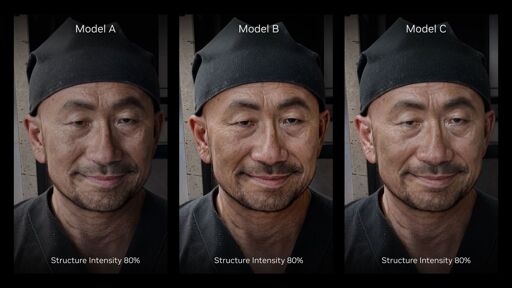
The very bad news is, Nvidia says turning DLSS 5 on will currently reduce performance by 50-60%. And that’s across the board—no matter the game.
Well its a good thing no one plays games anymore, its just benchmarking and dick measuring right? Right?
The only game I would use this for is the Hellraiser game about to be release. Yes, I’m a bit morbid. Otherwise I’m good with Palworld graphics.
deleted by creator
I’ve always been a firm believer that the better a game looks, the worse the game will actually be overall. While not always true, but I’d much prefer the focus on fun rather than how close to real life it can look… if I wanted to see shit that looks that good I’d go interact with the outside.
oh no way
all I have to do is tank my gpu performance, and I get a non-deterministic result, plus it looks substantially worse?
dang yo, where do I sign up
It’s deterministic. It looks like ass every time.
total polar opposite of its original purpose.
Generating stock value?
that too, but I w as referring to enabling shittily coded games to run on midrange hardware
I wouldn’t use it, even if it was adding performance. Nvidia really found a new technology that is even worse than Frame Generation.
AI frame generation makes sense on lower hardware but to turn your games into slop? Why the hell? Why not enhance the 3d rendering or ray tracing with this ** crap.
I would actually argue it does not. Frame generation requires a minimum of 45-60 FPS so with such a requirement it does not take a game from unplayable to playable. Additionally, those frames don’t lead to the same experience as if the GPU had natively rendered the game because it does not account for the user input for those frames. It literally delays the next frame to insert a fake frame in between, leading to an increase in latency, so the only experience improvement is a smoothing of the rendering but it makes the visual quality worse and the latency worse. To me, this does not make sense and has been very wrongly advertised by nvidia with claims such as an 5070 = 4090, so so wrong.
Edit: frame generation is only appeasing the people for whom higher FPS = better, without looking at the real user experience such as frame pacing, latency, visual quality etc.
Yeah, the only case where frame gen makes sense is when you care more about smooth motion than responsiveness, and you’re willing to pay for it with the inherent artifacting.
Games (and TVs) have gotten a lot better at latency compared to the 100+ms PS3 days, so it wouldn’t phase me if someone with a ultra high refresh rate monitor says they prefer having it on because of how smooth it is, but there are big drawbacks.
Wasn’t the original premise of DLSS to add performance and now they even falling on that?
I’m not as familiar with it, but from what I understand DLSS was switching rendering to a lower resolution then used algorithms to upscale the video to make it look as if it is high res.
It is. According to Nvidia, DLSS is a family and brand now, consisting of different technologies. So the name DLSS started as upscaler only, but now it contains the image styling and other techs in the same name. Which is great, because it confuses everyone.
DLSS5 looks bad, but after using for a little while frame generation does have some use cases. It requires a high refresh monitor to be worth anything first and foremost to ensure there’s space for the interpolated frames between a high base frame rate. I use a 144hz monitor, so with 2x frame rate I still get a perfectly playable 72fps based latency.
I found it to be good while playing Kingdom Come Deliverance 2 because it let me turn up the other settings while consistently looking smooth. It’s a slow enough game that the increased latency isn’t noticeable.
It’s especially helpful for CPU bound games like Helldivers 2 and Victoria 3 because the interpolation happens after the main rendering. I could not get HD2 above ~90fps with my CPU, but with frame gen on the CPU only had to render 72fps. It also meant I could turn DLSS scaling off, which meant the generated frames were based on native renders and everything looked better. Victoria 3 went from a painful 20-30fps to a much more tolerable 4-60.
All that said it does have serious issues. The increased latency means I’ll never use it for a reaction time based shooter like Enlisted or Deadlock. A few games just don’t look good with it. Star Wars Jedi Survivor had poor performance anyway, but turning frame gen on both makes it feel like it plays worse while also adding terrible ghosting effects and artifacts.
I’ve been interpolating movies and tv shows since 2015, so I think I was better able to set my expectations for the downsides of interpolation.
While I don’t disagree that frame gen at high refresh rates does look pretty decent, I feel the need to correct the input latency part… In your 72fps example you actually have the latency of effectively 36fps because the GPU has to hold back a frame in order to have two frames to interpolate between. It doesn’t (currently?) do extrapolation so this holding back a frame is a hard limit and applies pretty much equally from 2x frame gen all the way up to 6x. This isn’t exactly catastrophic for single player or PVE multiplayer but I would steer clear in PVP
Nvidia reflex 2 should sorta kinda tackle this by taking the updated input => camera position and reprojecting the image before rendering but 1) this will require the game to support it (e.g. declaring UI, crosshairs etc to exclude) and 2) only serves to tackle the game feel portion of the problem - in pve you’ll still be working with old pixels and your response times will still suffer accordingly.
Again, great tech but worth knowing the limits!
Okay, thank you for describing that, I drew a couple charts to help me think through the situation. The lettered frames represent the image sitting on the gpu. It’s called B1 because it’s a frame that needs to be interpolated from frame B, so frame B needs to be rendered first before interpolation can occur. The numbers represent units of time, so in the first chart at time unit 2 Frame A is being displayed on the screen while Frame B is being rendered by the card.

The first chart I drew I made an assumption that the interpolation is basically free due to my understanding that the DLSS functions use specialized cores that could be running in tandem with the rendering of frame B. Then I realized that was an assumption and went over it again assuming frame B needed to be fully rendered and so interpolation would need to take a unit of time before displaying.
I think this illustrates what you’re saying.
I’ve been interpolating movies and tv shows since 2015, so I think I was better able to set my expectations for the downsides of interpolation.
why???
Looking at the basic performance charts Nvidia has provided us so far, the ultra-high frame rate figures are based on 6x Multi Frame Generation.
Let this sink in for a moment.
Isn’t the input lag going to be insane if the game runs at, say, 10 fps? This would have to come with some kind of new render pipeline where the simulation can somehow still run at a higher framerate.
Exactly (we almost posted at the same time, where I explicitly talked about this in the other reply, lol, also with 10 fps as example. :D). There is a reason why Nvidia does not share the latency. I have no idea how this is legal.
I don’t really get how frame generation works, but at what point are you extrapolating so much that it gets out of sync with the gameplay? Surely there’s a limit…
The game can pass movement vectors so they gen image can adapt.
The main images are fully rendered
It delays the task frame from showing and then generates between frame, then more between frames and again more (6x 5 total frames)
I want to make sure I understand this right. The 6X here means that for every one real frame generated by the GPU, the next six frames that follow will be AI generated?
I’m pretty sure its 1 real frame every X frames so 6x would be 1 real, 5 generated.
This is how I understand it too. 6x frame generation means 6 times the amount it had before. If it had 10 frames before, then 6x means 60 frames in total, which are 50 of them fake frames. Note to anyone reading this: Frame Generation is also adding lag. So anyone saying Frame Generation is increasing performance just because the numbers go higher, did not understand what it is. In fact Frame Generation is decreasing performance.
Now imagine you use DLSS and RayTracing, and to feel good you add Frame Generation. What an abomination is this?
Frame generation is for when you can play at native 60 FPS but want more. More native frames don’t give you less noticeable input lag. But more (fake) frames still feel smoother. That’s the sweet spot for frame gen: playing at 120 FPS when your card can only do a little more than 60 FPS native (some native frames are sacrificed to the AI gods to get the fake frames to interleave with the real ones).
The advertising is ridiculous though.The article goes into this.
Looking at the basic performance charts Nvidia has provided us so far, the ultra-high frame rate figures are based on 6x Multi Frame Generation. So, while the little RTX 5060 can churn out a 258 fps result in NBA 2K27 at 1080p Ultra settings with ray tracing and DLSS 5 enabled, the game underneath will actually be running at around 43 fps.
258 / 43 = 6I haven’t looked at the raw numbers, but if the A.I. is reducing performance by 60%, you can do some basic math and estimate that your game would have 110FPS normally. So the A.I. technically comes out ahead by a lot of frames. But, are those frames actually valuable? 60fps is enough for me personality, and 120fps is more than enough for almost everybody, so anything more than 120 is basically fluff.
Also I don’t really want to play a game where 5/6 of frames are “fake”. Imagine just walking along in Elden Ring and you glitch through a wall, but the wall never existed, it was hallucinated by the A.I. based on surrounding geometry, and then you get hit by a random fireball the A.I. accidentally left out. I would be pissed. I can’t even imagine all the strange visual artefacts and glitches the A.I. would introduce. Like your character gaining and losing fingers in The Sims multiple times per second.
It’s not even just 1/6 frame, because there is upscaling with Ai before, plus the upscaled image is probably changed a bit with the new DLSS 5 imagery. So the one full frame isn’t even a full frame.
What’s the upscaling with A.I. “before” that you’re talking about?
DLSS can upscale the image. Lets say from 1080p to 4k, with Ai. Then the DLSS 5 cosmetics are added, these new ones we see in the screenshots. That’s also Ai. And at last 6x Frame Generation with 5 generated images in between real images, with Ai.
Man you’re basically not even playing the game at that point.
Just one 6th of it.^^
at best. that’s just framegen. You forgot upscaling. it internally renders at 540p…
In that answer, I forgot indeed. And the DLSS 5 image styling on top after upscaling… First Ai: Image upscaling, on top second Ai: DLSS 5 styling, on top third Ai: Frame Generation. And that assumes that the original input image from the developers was created without Ai. I mean Unreal Engine has some builtin Ai features and so on.
A marketer’s dream (but garbage to everyone else).
What the hell is even the point of that? (Other than to sell graphics cards…)
Are you saying that the 50-60% lower framerate is with with 6x framegen on?
Yes, pretty much. Each those diagrams and numbers Nvidia put on screenshots, look down at the bottom it says Multi Frame Gen 6x. It’s small, most people would miss.
Edit: Removed explanation, it was a bit unnecessary complicated.
Looking at the basic performance charts Nvidia has provided us so far, the ultra-high frame rate figures are based on 6x Multi Frame Generation. So, while the little RTX 5060 can churn out a 258 fps result in NBA 2K27 at 1080p Ultra settings with ray tracing and DLSS 5 enabled, the game underneath will actually be running at around 43 fps.
I can feel the molasses from here.
Just generate more fake frames with a second 5090!
Nvidia’s new SLAI technology!
Not gonna lie, I’d try this in the same way I’ve tried AI for 5 minutes like a morbid curiosity thing. I’m also gonna admit that I can see it working with a very specific category of games, if it didn’t have a performance impact. Those games being the kind of games I have absolutely no interest in; sports games. I can see it for porn games too but I’ve not played more than a few and didn’t really see the appeal, but I can imagine it’d be a cool thing for some people.
None of that has any effect on this being a purely bad thing though, I’d rather stop using technology completely than being forced to use AI in any way.This comment is nonsensical AI hate. It’s a mechanical trick to produce interesting developer controlled detail that is hard otherwise to render directly. It might turn out to cost too much for much practical usage for years or forever or it might be sufficiently accelerated by hardware such that it becomes a mainstay this will be a function of what makes pretty graphics better not your hang ups.
It’s a brute force hack that adds tiny details no one will ever notice during actual gameplay, at the cost of the majority of your frames
No
Mmm, excellent contribution. Gonna really have to have a think on this one
if they had google where you live you could actually see demos of details you can see. Also describing something as a “majority of your frames” makes no sense. You either have enough performance to spare and it makes sense to turn on or you don’t in which it is interesting tech like ray tracing for the overwhelming majority of gamers.
You see the article in this post right? Did you read it?
“50-60%” is literally “a majority,” I don’t know what to tell you. Math.
Your math is brainless. Your monitor can’t display infinite frames. The majority of monitors can display exactly 60 others can display 144 165. If you have a 60 hz 1080p machine and a good GPU on some games you could still achieve 60 frames eg as much as you can have.
At present with current tech the majority probably can’t turn it on and have acceptable frame rate but there is no reason to believe that the performance cost will be constant.
So traumatised by AI ads on YouTube that I think this post is a tai chi ad.
Hey, wanna get rid of that stubborn belly fat? Try this chair tai chi.
As someone who works with 3D software everything about this trend annoys me to no end. I don‘t benefit from any of this. Instead hardware becomes unaffordable. And before anyone mentions AMD, last time I checked Nvidia still had more bang for your buck in Blender despite everything.
I pray my current hardware survives for a long time because it‘s looking grim out there.
If only a certain country and their president didn’t cause the prices of GPU and RAM to skyrocket, maybe it’d be more affordable. That’s not AIs fault, that’s capitalisms fault. Inb4 China comes out with RTX GPUs for a fraction of the price and leads to a democratization of AI technology. But “it’s unaffordable” is how all new tech feats always start, that’s how the shiniest new tech has always been. Were people complaining about this when Half Life 2 was being released with all its DX9 bells and whistles? No, because a brand new “512mb GPU” at that time was cutting edge and less affordable, but at least people were being paid enough to make that expense. Now that capitalism has destroyed our economy, people are blaming the prices and not the capitalism. It’s silly.
Releases the first working Fusion Reactor “This is terrible because it’s too unaffordable. I don’t benefit from any of this because my country can’t afford it right now.”
Saw a Fallout 4 mod that would do this and immediately imagined my PC on fire.
I don’t care about or want this technology
If I had a video card that could run this I’d be so disappointed.
Nah, keep giving Nvidia money