"It really seems like anyone with some renders and a white paper written by someone being gassed up by an overly agreeable AI can get VC funding these days."
I don’t know how that even got past the brainfart stage. AFAIK nobody has actually demonstrated how that would really work.
Despite SpaceX’s advancements in regards to things like resutable rockets, shooting stuff into space is still prohibitively expensive.
Server clusters are exceptionally heavy.
Server clusters run hot, cooling is not a triviality considering you can’t just rely on convection in space, so more mass for alternative solutions.
Datacenters need regular maintenace.
Logic boards won’t do well with the radiation in space.
Despite SpaceX’s advancements in regards to things like sattelite internet, getting large datacenter level quantities of data from earth into space and back, and at low latency, is no triviality.
Not saying this won’t ever be a thing.
But not in the lifetime of anybody on earth right now I don’t think.
People don’t understand just how difficult it is to cool stuff in space. Half of the shit sticking out of the ISS that people think are solar panels are actually radiant cooling systems, and the ISS will generate WAY less heat per volume than a data center.
Not to mention the power requirements would likely require more than solar unless they put solar panels up far bigger than anything put up there before.
If we did make something like that, could you even put it on a disposable dish meant to burn up in the atmosphere after 5ish years? There’s already uncertainty about all the dishes burning up and long term impacts, but a mini nuclear reactor?
This whole idea reminds me of the “putting solar panels on highways” idea that keeps popping up from time to time. Anyone who has ever built anything understands how stupid it is. Even if you could do it, it still wouldn’t make sense over just putting solar panels next to highways.
Making an expensive solar panel that lets most of the energy pass through it, and is not mounted in a way to effectively collect solar energy, is a terrible idea.
There is an unsolvable compute problem. The average PC on earth has multiple bit-flips a year from cosmic rays. The space hardened chips we use are 50nm and the chips used from inference are 4 to 6nm. 50nm is far more cosmic ray resistant than 6nm because of the transistor size. Are we supposed to think making H100s with a 65nm process is possible? The speed of light creates a die size limitation as well.
They are not using 6nm process chips in the ISS. The computers themselves were made before that process existed. An off-the-shelf space hardened computer system uses 65nm process. Cosmic rays is a very general term, it covers basically everything that flies around in space, that includes sources like the sun, which is hammering everything in the solar system with rays. Outside of the atomsphere there are so many more cosmic rays that non-space hardened computers can not even make calculations. Combined with the difference between the bit flip rate when you make transistors 10 x smaller is also fucked up high. One CPU cycle will have enough erros to make the computer useless. It’s a multi-faceted problem and when the largest limiting factor is weight & size, it can’t be solved with scaling.
The way I see it is they are doing inference, not transfiring bank account balances. I’d be curious to see some actual experimental data, but I’d expect LLMs to skip past bit flips same way you shrug and move on from spelling errors. At worst you can do your critical calculation in triplicate on your 6nm nodes (with redo upon dissensus) and reduce your bit error from 4/year (or 4000/year or whatever have you in orbit) to (4/year)^3
A bit flip might change a 0 to a 1 or a 1 to an infinity. Even if you could just do everything three times, that triples the hardware and energy costs compared to terrestrial computing.
I don’t think you don’t understand the difference between the amout of cosmic rays, which are basically any flying particle, on Earth compared to space. Small nodes would be dealing with multiple per cpu cycle. Multiple could be 1 million a second, I am trying to figure out a way to measure. It would be something like distance from atomsphere(rate of total particles) x probably of an object the size of a transitior getting hit(rate of collions). I could probably find the bit-flip rate for an off-the-shelf space resistant chip and infere the rate for the size I need, but there are other factors. A bit will not flip on every collision, shrinking transistors exponentially increases this.
There’s various ways from better shielding to redundancy to error checking everything.
This is actually why I hope they do pursue this stupidity. We do need to figure out how to goto the next level of computing for everything we do in space. If the folly of “datacenters in space” helps them figure out reliable computing despite radiation and lack of cooling then we win
You have two options for shielding, one is shield the entire thing like we do with the ISS because people live there and radiation is bad for living cells. Two is to shield the smallest unitary entities to use the least amout of materials, like a shield per chip. This is physics not magic, radiation does not just go away. When everything add to launch weight it does not make sense. Redundancy systems also add to launch weight.
I agree, that this is at the moment not a viable thing and especially the SpaceX “concept” is complete bullshit.
I do not agree with some of your points, since they are solved/irrelevant (e.g. “regular maintenance”, “low latency”) or could be overcome with reasonable tech advances (e.g. “rockets prohibitively expensive”, “radiation shielding”).
Let me steelman the argument a bit with this single bit of - sadly forgotten - “super cool and innovative tech”:
“Underwater data center”, like project Natick (Microsoft) or the Chinese project:
Soooooo, if we will ever see something other than our current land based data centers, we will see millions of ocean data centers, before we will ever see a single commercial space data center.
Reasons:
Delivery is super cheap (in comparison to space) at scale, thanks to the already existing wind farm infrastructure
Weight is not an issue
Cooling is solved
Maintenance is not necessary, but replacement is. Easy on scale, because modular.
No radiation shielding necessary
Connection: data cable = no extra lag or quantity limit
Oh, and by the way, it is still not clear if even ocean data center will be viable. Just found this 😂
getting large datacenter level quantities of data from earth into space and back, and at low latency, is no triviality.
Latency is a huge issue, but so is bandwidth.
Land based data centers will have multiple hundred gig (and faster) fiber connections to the outside world.
Replicating that level of bandwidth on wireless links to a satellite in any sort of stable way is (as you said) no triviality. I would even classify it as near impossible.
Unless it becomes cheaper than having a datacenter on earth per quanity of compute, it won’t happen in any meaningful scale even if these issues are solved.
The $200/kg launch price target is based on 150 ton capacity. That’s a $30m launch costs target. Volume/foldability matters the most because that is the actual constraint that limits datacenter launch to a single NVL72 size.
Projected cost targets from SpaceX, especially for Starship are only losely related to reality. Weight is what determines the minimal required energy input to lift something into orbit. Independently from SpaceX number magic. Volume, like I said, can be an additional bottleneck but never undo the above.
most of the fuel weight required is to lift the rest of the fuel. Fuel costs is about $1m for full load. Rest of cost is huge staff, maintenance, and capital cost of rocket.
Starship is huge. I dont know how tightly they can fold these expected dishes, but by weight, they can amd will do 60 starlink v3, and itd be 50 datacenter dishes equivalent. How many they can actually launch is going to depend on how well the solar and radiator folds down, so it might be a volume issue vs weight where they cant launch with the max weight capabilities of the ship.
1000km is still considered LEO and would take hundreds of years to decay. At this distance, you’d add 3ms of latency, which isn’t nothing but acceptable for most applications.
Whatever the end latency is, it’ll be higher than starlink as these are going to be in a sun synchronous orbit and they dont talk to earth, they talk via starlink.
So you’ll have to go up to starlink, then laser link the shortest route to the nearest available dish, then back.
If it’s one rack it’s kinda pointless? And also absurdly more expensive than putting that one rack almost anywhere else in the world. And you can’t really fix or upgrade it. And then it’s in space and more susceptible to bit flips.
I’m not sure there’s a single thing it being in space does that’s better than it not being in space.
One rack is generally going to be well more than enough for a persons inference needs.
They want to put a million of these up there long term, where are you going to find space for a million individual racks? Now it’s a large datacenter again.
I did see one thing about a company adding a cluster or something to someones house and giving them a cut of it. That decentralizes the power distribution, and space requirement, but it adds other problems like vandalism / theft as how well can you protect a thing tacked onto the side of a house worth 10s of thousands of dollars.
Edit: And you don’t fix or upgrade them, they deorbit in ~5 years, and get replaced with the next best thing. Radation protection to avoid bit flipping will be a cost issue, but they already have hardened chips that work in space, so I’m not sure how much new technology is needed, and starship can lift a shit ton of weight, so heavy shielding is possibly an extra option?
Edit2: Just to be clear, I’m not trying to say they are going to earn enough revenue to make these things profitable like they did with Starlink, I’m just talking about the technical specs of what they say they’re going to do. There’s a lot of misconceptions about what they even intend to try putting up there.
It’s not no real benefit, these are some, which are legitimate benefits.
Unlimited sun, without the sun having to go through the atmosphere which increases the efficiency of the solar panel.
No opposition / red tape from communities fighting against the data centers, some communities are evening banning them.
No theft or vandalism.
Just to restate my relevant edit you probably didn’t see above
I’m not trying to say they are going to earn enough revenue to make these things profitable like they did with Starlink, I’m just talking about the technical specs of what they say they’re going to do. There’s a lot of misconceptions about what they even intend to try putting up there.
You can get more power from solar on the ground, cheaper, because it isn’t in space and they’ll get deorbited which is worse than vandalism because the entire thing is now gone.
I’m not disagreeing and saying they won’t do it, I’m just saying it’s an incredibly stupid idea.
That just increases the land space required though which makes it harder to get it built upfront, but I agree, land based solar, even taking 3x+ the land required + battery backup is probably still cheaper given they’ll last 20 years or more.
Ground projects like that take years to complete as well, between finding a spot, permitting, building it etc and to some extent time is money in this current environment.
Weight wise, they can launch 50 AI datacenters per launch with Starships 100T capacity, but volumetric wise I don’t know how well they can fold these up and if they’ll actually reach 50, but lets say they can get 50. I honestly have no idea if they can.
That’s 7.5MW of solar panels deployed each launch which will be coming off a factory line launching multiple times a week. They did 123 starlink launches in 2025, so thats 922.5MW solar capacity launched in a year if they did that with the AI sats, but they’ll likely do way more if starship actually works.
You can’t build an almost 1GW solar array (edit and datacenter) on land that quickly.
(edit2: Oops I didn’t do the 3x+ for the 1GW solar i mentioned above, it would need to be 4-5GW on land so it can overproduce to store enough in the batteries for overnight)
The downside of course is it’s only going to last 5-10 years. That’s a lot of costs to try to recoup in that time frame.


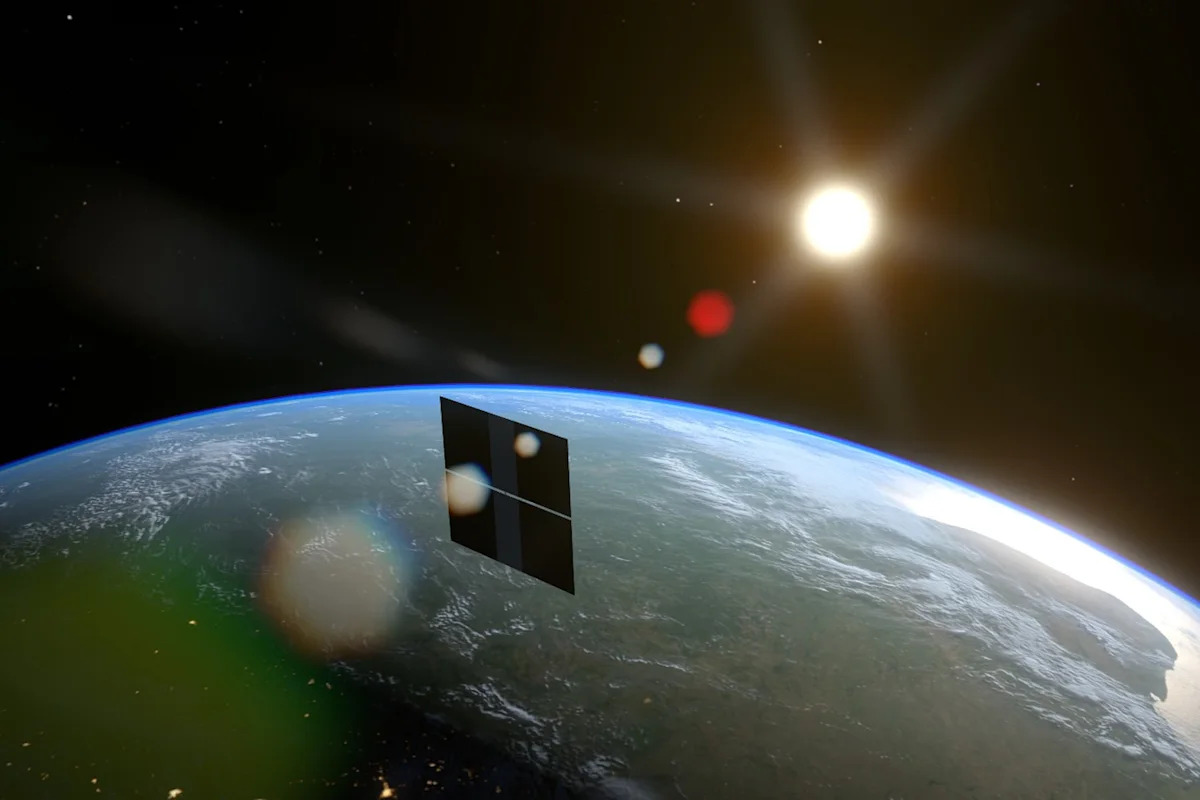
I don’t know how that even got past the brainfart stage. AFAIK nobody has actually demonstrated how that would really work.
Not saying this won’t ever be a thing. But not in the lifetime of anybody on earth right now I don’t think.
People don’t understand just how difficult it is to cool stuff in space. Half of the shit sticking out of the ISS that people think are solar panels are actually radiant cooling systems, and the ISS will generate WAY less heat per volume than a data center.
Not to mention the power requirements would likely require more than solar unless they put solar panels up far bigger than anything put up there before.
Beyond the power requirements for the computer, there is also the power that will be needed to transmit back to earth.
A wireless link that can pass the amount of bandwidth needed (and do it reliably) will need huge power as well.
It will be far bigger. Its mostly solar panels.
Or one of those mini nuclear reactors they are working on
If we did make something like that, could you even put it on a disposable dish meant to burn up in the atmosphere after 5ish years? There’s already uncertainty about all the dishes burning up and long term impacts, but a mini nuclear reactor?
No. At least historically they went the opposite way: the nuclear materials be contained well enough to survive reentry and impact
Im seeing the ISS needs to reject 70kw with a max ability of 84kw. The datacenter dishes will be between 125 and 150, so around double or less.
I’m saying it
This whole idea reminds me of the “putting solar panels on highways” idea that keeps popping up from time to time. Anyone who has ever built anything understands how stupid it is. Even if you could do it, it still wouldn’t make sense over just putting solar panels next to highways.
That, and solar windows.
Making an expensive solar panel that lets most of the energy pass through it, and is not mounted in a way to effectively collect solar energy, is a terrible idea.
There is an unsolvable compute problem. The average PC on earth has multiple bit-flips a year from cosmic rays. The space hardened chips we use are 50nm and the chips used from inference are 4 to 6nm. 50nm is far more cosmic ray resistant than 6nm because of the transistor size. Are we supposed to think making H100s with a 65nm process is possible? The speed of light creates a die size limitation as well.
Either that or they’d have to triplicate everything and have a voting system.
this is the current real solution on the ISS - three main computers doing everything.
They are not using 6nm process chips in the ISS. The computers themselves were made before that process existed. An off-the-shelf space hardened computer system uses 65nm process. Cosmic rays is a very general term, it covers basically everything that flies around in space, that includes sources like the sun, which is hammering everything in the solar system with rays. Outside of the atomsphere there are so many more cosmic rays that non-space hardened computers can not even make calculations. Combined with the difference between the bit flip rate when you make transistors 10 x smaller is also fucked up high. One CPU cycle will have enough erros to make the computer useless. It’s a multi-faceted problem and when the largest limiting factor is weight & size, it can’t be solved with scaling.
How would that even work with inference where the expected output will be different between 3 runs with the same input?
The way I see it is they are doing inference, not transfiring bank account balances. I’d be curious to see some actual experimental data, but I’d expect LLMs to skip past bit flips same way you shrug and move on from spelling errors. At worst you can do your critical calculation in triplicate on your 6nm nodes (with redo upon dissensus) and reduce your bit error from 4/year (or 4000/year or whatever have you in orbit) to (4/year)^3
A bit flip might change a 0 to a 1 or a 1 to an infinity. Even if you could just do everything three times, that triples the hardware and energy costs compared to terrestrial computing.
I don’t think you don’t understand the difference between the amout of cosmic rays, which are basically any flying particle, on Earth compared to space. Small nodes would be dealing with multiple per cpu cycle. Multiple could be 1 million a second, I am trying to figure out a way to measure. It would be something like distance from atomsphere(rate of total particles) x probably of an object the size of a transitior getting hit(rate of collions). I could probably find the bit-flip rate for an off-the-shelf space resistant chip and infere the rate for the size I need, but there are other factors. A bit will not flip on every collision, shrinking transistors exponentially increases this.
There are not 1 million bit flips per cpu per second. They let you take your iphone on the ISS now.
LEO is still protected by the atomsphere and magnetosphere fully. Geostationary orbits start to have issues.
There’s various ways from better shielding to redundancy to error checking everything.
This is actually why I hope they do pursue this stupidity. We do need to figure out how to goto the next level of computing for everything we do in space. If the folly of “datacenters in space” helps them figure out reliable computing despite radiation and lack of cooling then we win
You have two options for shielding, one is shield the entire thing like we do with the ISS because people live there and radiation is bad for living cells. Two is to shield the smallest unitary entities to use the least amout of materials, like a shield per chip. This is physics not magic, radiation does not just go away. When everything add to launch weight it does not make sense. Redundancy systems also add to launch weight.
I agree, that this is at the moment not a viable thing and especially the SpaceX “concept” is complete bullshit.
I do not agree with some of your points, since they are solved/irrelevant (e.g. “regular maintenance”, “low latency”) or could be overcome with reasonable tech advances (e.g. “rockets prohibitively expensive”, “radiation shielding”).
Let me steelman the argument a bit with this single bit of - sadly forgotten - “super cool and innovative tech”: “Underwater data center”, like project Natick (Microsoft) or the Chinese project:
https://www.datacenterdynamics.com/en/news/chinas-hicloud-launches-wind-powered-underwater-data-center-targets-500mw-subsea-deployment/
Soooooo, if we will ever see something other than our current land based data centers, we will see millions of ocean data centers, before we will ever see a single commercial space data center.
Reasons:
Oh, and by the way, it is still not clear if even ocean data center will be viable. Just found this 😂
https://www.reuters.com/business/aerospace-defense/spacexs-orbital-data-centers-could-face-same-hurdles-microsofts-abandoned-2026-04-01/
Latency is a huge issue, but so is bandwidth.
Land based data centers will have multiple hundred gig (and faster) fiber connections to the outside world.
Replicating that level of bandwidth on wireless links to a satellite in any sort of stable way is (as you said) no triviality. I would even classify it as near impossible.
Unless it becomes cheaper than having a datacenter on earth per quanity of compute, it won’t happen in any meaningful scale even if these issues are solved.
They’ll manufacture it on the moon ofc. We won’t ship it from earth.
Orbital data center plan:
Step 1: Establish a slave labor force and advanced chip fabrication facility on the moon.
It will never be an economic thing. Only unpluggable skynet military thing. The weight is not an issue. though. It’s volume.
Weight is always the issue with lifting stuff into space. Volume might merely be an additional issue.
The $200/kg launch price target is based on 150 ton capacity. That’s a $30m launch costs target. Volume/foldability matters the most because that is the actual constraint that limits datacenter launch to a single NVL72 size.
Projected cost targets from SpaceX, especially for Starship are only losely related to reality. Weight is what determines the minimal required energy input to lift something into orbit. Independently from SpaceX number magic. Volume, like I said, can be an additional bottleneck but never undo the above.
most of the fuel weight required is to lift the rest of the fuel. Fuel costs is about $1m for full load. Rest of cost is huge staff, maintenance, and capital cost of rocket.
Starship is huge. I dont know how tightly they can fold these expected dishes, but by weight, they can amd will do 60 starlink v3, and itd be 50 datacenter dishes equivalent. How many they can actually launch is going to depend on how well the solar and radiator folds down, so it might be a volume issue vs weight where they cant launch with the max weight capabilities of the ship.
What about the latency hit getting data back to earth?
LEO isn’t that far away. StarLink has quite good latency.
You’d have to constantly adjust its orbit. Something that huge with massive radiators and solar panels is going to get a lot of drag.
1000km is still considered LEO and would take hundreds of years to decay. At this distance, you’d add 3ms of latency, which isn’t nothing but acceptable for most applications.
Whatever the end latency is, it’ll be higher than starlink as these are going to be in a sun synchronous orbit and they dont talk to earth, they talk via starlink.
So you’ll have to go up to starlink, then laser link the shortest route to the nearest available dish, then back.
Heh yeah you’d get daily latency variation.
Made me think of this, dish is far away right now! Obviously not that slow, but still haha.
The datacenters are only a little bigger than a v3 starlink. It’s 1 rack of compute, around 125kw avg 150kw peak. The biggest part is the solar array.
If it’s one rack it’s kinda pointless? And also absurdly more expensive than putting that one rack almost anywhere else in the world. And you can’t really fix or upgrade it. And then it’s in space and more susceptible to bit flips.
I’m not sure there’s a single thing it being in space does that’s better than it not being in space.
One rack is generally going to be well more than enough for a persons inference needs.
They want to put a million of these up there long term, where are you going to find space for a million individual racks? Now it’s a large datacenter again.
I did see one thing about a company adding a cluster or something to someones house and giving them a cut of it. That decentralizes the power distribution, and space requirement, but it adds other problems like vandalism / theft as how well can you protect a thing tacked onto the side of a house worth 10s of thousands of dollars.
Edit: And you don’t fix or upgrade them, they deorbit in ~5 years, and get replaced with the next best thing. Radation protection to avoid bit flipping will be a cost issue, but they already have hardened chips that work in space, so I’m not sure how much new technology is needed, and starship can lift a shit ton of weight, so heavy shielding is possibly an extra option?
Edit2: Just to be clear, I’m not trying to say they are going to earn enough revenue to make these things profitable like they did with Starlink, I’m just talking about the technical specs of what they say they’re going to do. There’s a lot of misconceptions about what they even intend to try putting up there.
Large data centres are used for a reason, it’s way more efficient to shove all the compute in one large building than putting it in space, at all.
Its a horrifically stupid idea, with no real benefit at absurd cost.
It’s not no real benefit, these are some, which are legitimate benefits.
Just to restate my relevant edit you probably didn’t see above
I’m not trying to say they are going to earn enough revenue to make these things profitable like they did with Starlink, I’m just talking about the technical specs of what they say they’re going to do. There’s a lot of misconceptions about what they even intend to try putting up there.
You can get more power from solar on the ground, cheaper, because it isn’t in space and they’ll get deorbited which is worse than vandalism because the entire thing is now gone.
I’m not disagreeing and saying they won’t do it, I’m just saying it’s an incredibly stupid idea.
That just increases the land space required though which makes it harder to get it built upfront, but I agree, land based solar, even taking 3x+ the land required + battery backup is probably still cheaper given they’ll last 20 years or more.
Ground projects like that take years to complete as well, between finding a spot, permitting, building it etc and to some extent time is money in this current environment.
Weight wise, they can launch 50 AI datacenters per launch with Starships 100T capacity, but volumetric wise I don’t know how well they can fold these up and if they’ll actually reach 50, but lets say they can get 50. I honestly have no idea if they can.
That’s 7.5MW of solar panels deployed each launch which will be coming off a factory line launching multiple times a week. They did 123 starlink launches in 2025, so thats 922.5MW solar capacity launched in a year if they did that with the AI sats, but they’ll likely do way more if starship actually works.
You can’t build an almost 1GW solar array (edit and datacenter) on land that quickly. (edit2: Oops I didn’t do the 3x+ for the 1GW solar i mentioned above, it would need to be 4-5GW on land so it can overproduce to store enough in the batteries for overnight)
The downside of course is it’s only going to last 5-10 years. That’s a lot of costs to try to recoup in that time frame.
You would need staff living up there to support them. Robotics isn’t up to it.
You think they have people repairing and doing maintenance on starlink?