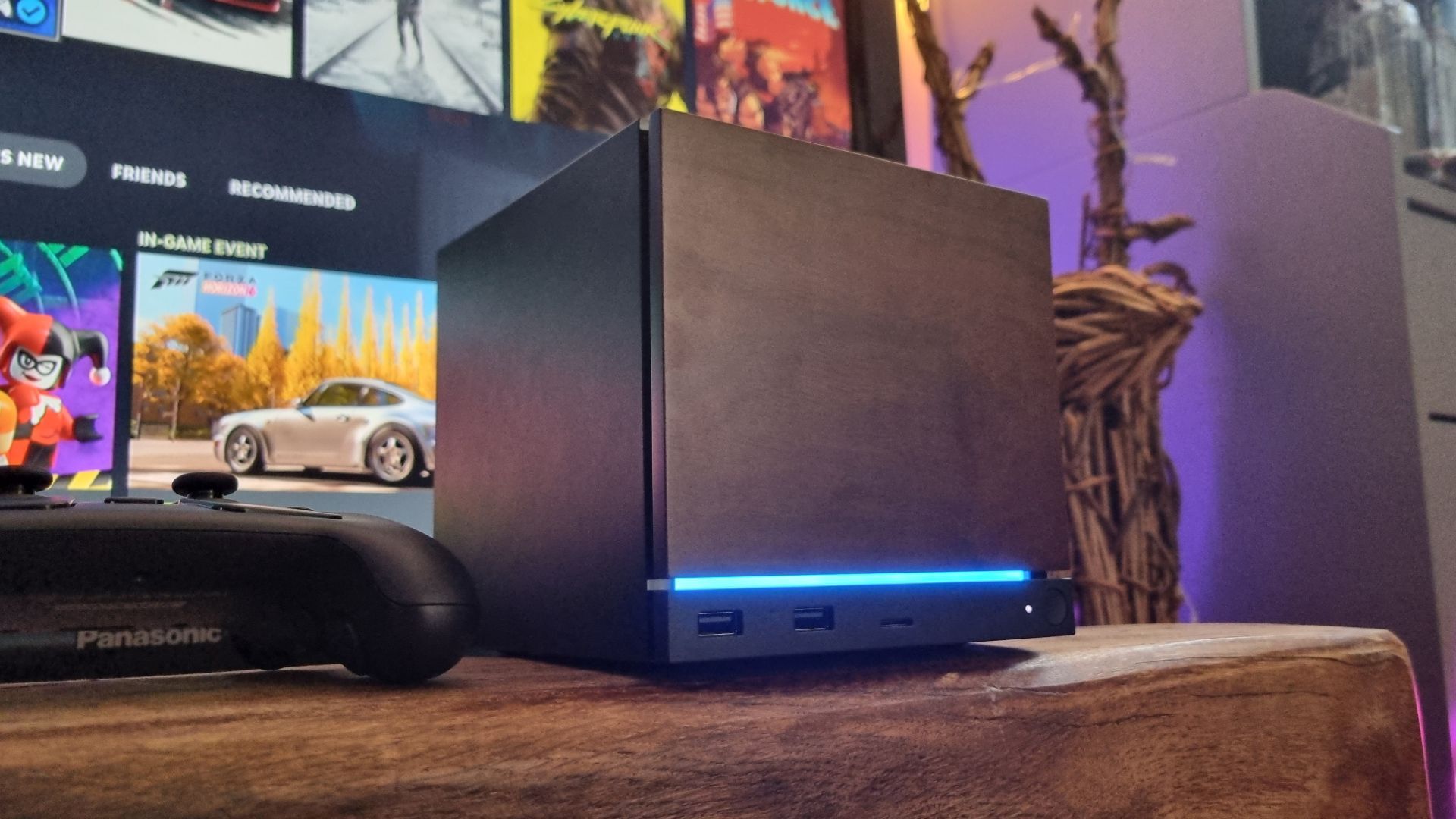
I’ve also read speculation that selling it at a loss could contribute to antitrust lawsuits against them. Basically if they sell gaming PCs below cost, and the gaming PCs incentivize Steam use over other platforms, there would be an argument that Valve was using their 30% sales cut to sell hardware others can’t compete against, to further cement their monopoly. This would be partially countered by the open nature of the device, but not fully since it would still “steer” common users towards steam over other platforms.
This isn’t an issue for console makers because there are multiple competing consoles with valid market share.
I mostly believe this, but I also believe it isn’t a negative for Valve.
The hate towards Valve right now is so fucking weird. Is it perfect? No. Are they actively contributing to projects which can break the M$ coalition? Yes.
Don’t let perfection be the enemy of progress, and accept the wins. When Valve actually becomes anticompetitive (big when), then speak up. Otherwise you have bigger fish to fry.
Here’s one: Microsoft itself. So tired of hearing shit about Valve from people still booting Windows every day.
I’m certain a lot of bot farms by competitors are involved in spreading Valve hate. And this is happening to other companies, as well. Obviously, this is hard to prove so it’s just speculation, but if I were a competitor (and an asshole) I would certainly try to manipulate public opinion using the tools at my disposal. LLMs make this kind of stuff easy enough. And we know that many many bots lurk around everywhere.
Especially since Valve is a major promoter of Linux with Proton, I could see Microsoft not being too happy with them.
i just read this and realized you beat me to my comment
Its because most people have a childish understanding of complex issues that basically boils down to ‘thing either bad or good’, ‘thing either perfect or evil’.
Fanboy/girlism applies to sociopolitical idologies too.
Its easier to perform purity testing to establish yourself as a morally/logically consistent person, its easier to criticize flaws…
… than it is to realize the fundamental strategy that has to be involved in achieving any kind of change from the world as it is, to the world as you’d prefer it to be… than it is to think about broad patterns underlying decision making, as well as what those broad patterns could lead to, in a complex world with other actors who have other ideologies/behavior patterns.
You can argue that this kind of fast-food opinion/judgement formation is itself a personality aspect caused or exacerbated by the instant gratification of modern digital hypercapitalism.
Like, I don’t think Valve or Gabe are perfect moral actors, I don’t agree with literally everything they do or espouse.
An example of this:
Lootbox gambling is in fact bad, and that system needs to be at bare minimum, seriously reformed or reimagined. IMO, any game that a kid is capable of playing should not directly resemble the inconsistent reward structure of a slot machine, when real money can exist as either an input or output.
Of course … if you applied that principle consistently, all gacha games should either be destroyed or massively reworked, which is literally half of the video game industry’s revenue. I hold that position… if you criticize Valve on these lines, as I do… you should also hold the position that your gacha waifu pull is a moral abomination.
But… on net? In the big picture? Nearly every other major or even notable actor in the space is morally atrocious in comparison to them, and many things that Valve does are effective counter pressures to those much more atrocious things.
I see it more as warriness than hatred. Whether or not they act “good” now, they have a near monopoly. It has a lot of potential to go bad for us consumers, even if the probability might be low. Murphy’s law apply: if it can go wrong it will, someday.
the hate is artificial and useful idiots
Literally just Lemmy echo chamber shit
I don’t think it has much merit unless there is a gaming storefront that actively cares about linux though.
Like if I go down to the bottom of my hill and set up a lemonade stand, do I suddenly have a monopoly/anti-trust on lemonade as im the only one selling on the hill?
It’s a weird excuse to use. and if a court actually allowed steam machine as evidence for anti-trust. it would open both Xbox and Playstation to the same rulings as they are even more closed off gardens.
Xbox/PlayStation/Nintendo don’t have monopolies within the console space.
Also (and this seems stupid to me), having a more open platform can open you up to antitrust lawsuits. In the Epic vs Google and Epic vs Apple lawsuits, apple was ruled to be fine to have a closed app store, but Google was rules to have an illegal monopoly on Android, despite it being the more open platform.
Basically Valve having the Steam Machine be an open platform (or being sold as a PC which is expected to be open) while steering Steam use could be considered more of a monopoly issue, than if they released a stripped down Steam only “console” and advertised it as such.
I agree with you.
However, if I remember the Google case right, it wasn’t as much as it was because they allowed people onto the market, it was because they allowed people onto the market, and then participated in underhanded tactics in order to basically guarantee that third-party stores weren’t going to strive, some of these practices, including vendor contracts, that state that if they want to ship Google Play Services with their phone, they can’t have specific applications installed by default. In some cases, straight out, refusing to even allow that vendor to have a first party store.
I don’t think steam meets that metric, There is currently no major storefront except for Steam that is willing to touch Linux with a 10-foot pole. Every major storefront that’s on Linux is via a third-party application. Gog doesn’t even offer a native Linux version anymore. They’ve offloaded it onto the heroic team. None of those choices are a result of steam creating a steam machine and none of those choices will change if they had subsidized the machine to be significantly less in the market.
It’s not as if Steam intentionally modified SteamOS to disallow competitor apps or to make it harder for competitor apps to enter that market.
I struggle to see how anything can be a monopoly(by ftc definition not literal definition) if nobody else is trying to enter that market. There’s no restrictions in place being set by steam to prevent large companies such as Epic or EA from making a native Linux platform where with Android there were restrictions in place to prevent other people from making their own.
them charging less for the steam machine to get more people into the Linux market doesn’t undercut other companies because they’re not restricting or disincentivizing other companies from existing in that market, its companies willfully ignoring the Linux existence, as the userbase is insignficant most of the time and alternative methods of accessing Windows programs on Linux have been created.
The only argument they could give for subsidizing the steam machine being anti-competitive or antitrust would be that they were intentionally trying to pull people into a market that doesn’t have any other competition. But that’s a fairly weak argument if you ask me because gaming on Linux is more or less a Windows predominant market anyway. It’s just running Windows games over Proton instead of Windows games on Windows.
Heck, I’m not even sure if the current license of Proton even prohibits another company taking the transition layer and using it for commercial means. The proton repository is labeled as is and out of the components I checked in it its mostly MIT or Apache, Wine is GPL, so that’s free commercial use. I just don’t see the anti-competitive concern with it. Any Joe Smo with money could go out and make a competitor that’s native to Linux. That would be more or less the same as Steam. That doesn’t mean it will succeed, but Valve is not actively preventing anyone from doing that.
my personal opinion on their public relations in regards to it, regarding the text above.
being said, my annoyance at this is less the price; and more every response that they’ve used trying to explain why the pricing is so high. Each has been them shifting the buck onto another entity instead of taking accountability. They have blamed that the RAM companies would walk if they tried to negotiate a deal. They have blamed the current hardware market. They have blamed not wanting to be an antitrust case. They were not forced to signed the hardware contracts for the pricing that they’re currently at. They were not forced to release the steam machine this year. It’s not like the hardware market changed overnight the market’s condition was obvious as well, experts have been saying for at least a year and a half, two years now, that they don’t expect this market is going to stabilize until sometime in 2028. Honestly, they weren’t even forced to release it at a $1,000 price point, I understand why they did, but I really don’t like how they’re making excuses regarding it. At some point, they need to just be blunt about it and say: Valve is a company, we’re here for the money, and we’re having to sacrifice a little bit of customer relation in order to have that. Instead of blaming everyone else for the company price choices.
You’re right about it being underhanded tactics that resulted in the monopoly charge, but it also just seems silly that they could instead say “no other app stores are allowed” and it would suddenly be ok.
Imagine the possibilities of actual changes to the world if aggressively undercutting prices to force newer, less profitable and therefore less rich companies into the ground was actually illegal
There are plenty of PC manufacturers with plenty of market share and they could absolutely build a similar PC for a similar price.
And, perhaps ironically… that’s kinda part of the point.
Valve literally presents the Steam Machine as a possible gaming device for the open ecosystem they ‘religiously’ believe in.
But not the only possible gaming device.
The original idea of the Steam Machine, over a decade ago, wss that it would basically be a performance and component spec standard, basically just a known quantity of kinds of hardware that they could say ‘Steam and most games on it will run on something that meets these standards!’
There actually were a number of pc builders that did their own attempt at making their own version of a ‘Steam Machine’.
https://en.wikipedia.org/wiki/Steam_Machine?wprov=rarw1
Valve is here, now, doing basically the same thing, they just… literally built their own benchmark as an exemplar device, and also now have an operating system to actually center the entire concept around.
I think they’d be greatly pleased if this new Steam Machine, version 2, actually spurred on other manufacturers to make their own… just like how Valve keeps working to make SteamOS work well on other handheld PCs, made by other manufacturers.
Are antitrust laws enforced anymore? (At least in the US)
I know some massive merged conglomerates who would be prime targets if so.
Line Khan made incredible headway in actually enforcing the (actually pretty good) antitrust legislation that already exists, but alas, she’s not in the role anymore (since Trump entered office, I think)
Despite this, I have no doubt that we’d see some pretty efficient antitrust stuff against Steam if they did subsidise the Steam machine, due to the efforts of the competitors to Steam.
The thing is, I do think that Steam has a monopoly, in that if they suddenly turned evil, it would have a disproportionately large impact on the overall gaming ecosystem. However, they only got to this position because they understood that piracy was a service issue, and did legitimately better than most of their competitors
Yeah, I don’t disagree with anything said here. Steam has an effective monopoly, but not because of mergers or violating antitrust laws. They’ve mostly focused on being a good value for consumers and have invested more heavily in their platform compared to competitors.
While Gabe is not perfect, I do worry when someone finally takes his place. If it’s someone with a sole profit motive…we’re fucked.
Personally, I think one of the major reasons to also not subsidize the steam machine is that it would then be an incredibly attractive choice as a simple workstation pc for businesses. It would be the cheapest choice in comparison to standard dell, ibm, hp, etc workstations and could simply be flashed with whatever workstation OS they wanted to put on it. This would drive a lot of buyers out of the steam ecosystem, defeating the purpose of subsidizing. This is one reason for consoles locking down their, essentially nowadays, pc hardware ecosystems.
Though, groups did recently unlock the ps5 bootloader and put Linux on it. Dunno how the performance lines up yet though
Yes, they have a pretty dominant position, but they’re not abusing it, at least not like many other companies, and that makes the difference. For example, they don’t make anything exclusive to their own hardware or their own OS, their software can run on any distro, and their OS can be installed on any adequate hardware. And they don’t lock the Steam Machine to run only games sold on Steam. And a lot of work they do under the hood is made open source (Proton DXVK, SDL, GameScope, driver work etc). It’s mainly Steam itself and stuff part of it that’s kept proprietary (and that’s been relatively resistant to enshittification).
Of course, the thought of Valve starting to abuse their dominance is every PC gamer’s nightmare.
I bet they would be (against Valve) if a competitor donated to Republicans. I mean, they’re keeping a finished bridge they paid $0 for closed because the owner of a competing, tolled bridge donated to them. Of course they’ll open an investigation into a smallish leftish leaning company if a large donor asked them to.
Fair, those that have principles are the enemy of fascism and we are in the “rules for thee, not for me” era of “justice”
What you read may well be correct, but I wonder how that legal battle would play out. There are other PC manufacturers that can definitely build a competing product. Also, what sets this apart from being another console? It’s a custom built machine designed to play games, specifically from Steam. I’m not sure how that’s different from an Xbox that has access to GamePass being the only console that can do that. If Steam sold this as the Steam Machine Console, would that change things?
Presumably PC games are considered their own market, separate enough from console games. It honestly seems murky reasoning to me, but I would imagine valve would be cautious about it since they’re currently facing monopoly lawsuits.
Completely fair. Some fights aren’t worth fighting, especially since there’s no guarantee they’ll recoup the losses. I buy a few games a year on Steam, almost never at full price. It would take me a very long time to cover any subsidized machine, and I’m surely not the only one.
Honestly, a steam machine was on my radar because for about 10 years now, me and some friends have traveled to Dreamhack Dallas, and packing 5 men and our computer equipment in a big van and driving 13+ hours isn’t ideal. Something a bit smaller would be amazing. The price is a bit too rich for me since I do still have a functional computer.
i mean, yea?
the reason consoles are sold under cost is because they are trying to lock you into buying games in their ecosystem.
if valve is not trying to lock you into their ecosystem… then why would they ever sell the steam machine at a loss?
Duh - people are shitty and would abuse it.
Buying things at their retail price and using them in a way the manufacturer didn’t intend is not shitty, nor abuse.
Most of the business models that enable subsidized pricing for consumer products, on the other hand rely on artificially restricting how people can use those products, which is shitty and abusive.
Most of the business models that enable subsidized pricing for consumer products, on the other hand rely on artificially restricting how people can use those products, which is shitty and abusive.
Which they agree with, that’s kind of the point though, unfortunately the customer see’s the PS5 for 600, and the steam machine for 1000+, and assume steam is the one doing something unethical, when the reality is valve is literally selling a PC. that you are allowed to install windows or a different linux distro on… play games from GOG or whatever on etc… which means valve has to make a bit of profit or at least break even in order not to be bankrupted by people buying a bunch of steam machines and no games.
the customer see’s the PS5 for 600, and the steam machine for 1000+, and assume steam is the one doing something unethical
Do they? I don’t automatically assume there’s anything unethical about the more expensive option in any other product category. The PS5 itself costs more than an XBox Series S, probably not because Microsoft is morally superior to Sony.
Can’t say I’ve seen much discussion on steam boxes, but generally speaking when hearing non techie people talk about phones etc… when people see a less expensive option with marginally comparable features, they tend to conclude the expensive one is just charging more to squeeze the most out of them… unless it’s apple.
Huh – what do you think I said or why I said it?
I think you said that people who do things like build a cluster of PS3s because they’re a lot of compute for the money are shitty, and that they’re abusing the fact that Sony priced them low in the hope that people who bought them would also buy games. I disagree with that position.
If you meant something else, perhaps we don’t disagree.
My first thought was scalpers. But other than that, I agree with you. I think it would be good to limit sales to 1 or 2 units to prevent that and to give people that want to pay games a chance to buy one, then the people that want to cluster them or whatever can get their fix later. If someone wants to buy just one and modify it to do damn near anything, more power to them.
Not much to abuse. The same way that the subsidizing of consoles doesn’t open it up for abuse per se
Valve would just lose money on a lot of sales, as they can’t get a guaranteed recoup of the subsidy in the same way that Sony or Nintendo do
I mean sort of, if it was heavily subsidised, people would just buy a bunch of them and make a server farm or something like that
US air force and PS3s anyone
Consoles make an attempt to be a locked ecosystem - which is why they can subsidize it - because they know if you buy it your buying their games for it.
Yes, that’s what I’m saying
not much to abuse
Then I’m misunderstanding this part. The PS3 compute cluster incident commented below is what came to mind.
But in the current climate I image that if the Steam machine was heavily subsidized that there would be a subset of people abusing that by doing something like purchasing, harvesting, and immediately reselling its parts.
The PS3 compute cluster incident commented below is what came to mind.
You mean the thing that was amazing advertisement for the computing power of the PS3 over the Xbox360? Yeah, Sony suffered so much from the abuse.
Okay - go tell Valve to subsidize it for marketing purposes then.
Duh - people are shitty and would abuse it.
One order per valid account (the same restrictions they applied to Steam Deck purchases years ago, account at least a year old and previous game purchases from that account). There can’t be large scale abuse.
Sony sold the PS3 at a pretty significant loss and had an “OtherOS” feature that allowed people to install Linux on it.
Between that and ots cell architecture, it turned out to be a super affordable way to build supercomputers. Sony eventually disabled the OtherOS feature to combat people buying them en masse and costing Sony their lunch, and they got a LOT of flack for it.
Valve is doing the opposite. They’re keeping the openness, but charging enough money it’s not financially viable to buy a bunch of Steam Machines to build cheap AI clusters.
Sony eventually disabled the OtherOS feature to combat people buying them en masse and costing Sony their lunch, and they got a LOT of flack for it.
And also tried to get Youtube to reveal the identities of everyone who watched George Hotz’s PS3 hacking video so they could attempt to individually sue them. Don’t forget that part.
Sony eventually disabled the OtherOS feature to combat people buying them en masse and costing Sony their lunch
By people I assume you’re talking about the U.S. Navy lmao
The Navy has people too!
I support their ethos but also can’t justify the purchase.
Same and I don’t blame them for it, like I would if Apple or Microsoft did that.
Yeah it’s just unfortunate market timing with the hardware shortages
Do they at least have a clause in the TOS to not use the Steam Machine to build or use nuclear weapons?
(iTunes had one and that shit will never stop being funny)
What if I connect it to a 3D printer and then download a car with a gun in the trunk.
Think of the children.
Those sound like things children would love.
Why would anyone buy it then?
I commented here quite some back that I did not expect that Valve would subsidize the console and that it would be for this reason, that subsidizing the console means a razor-and-blades business model, and a razor-and-blades model requires a closed system, where one has to purchase additional product specifically from the vendor of the initial product. They were making an open system, where this isn’t the case.
https://en.wikipedia.org/wiki/Razor-and-blades_model
The razor-and-blades business model[1] is a business model in which one article is sold at a low price or even given away in order to increase sales of a complementary good, such as consumable supplies. It is different from loss leader marketing and product sample marketing, which do not depend on complementary products or services. Common examples of the razor-and-blades model include inkjet printers whose ink cartridges are significantly marked up in price, coffee machines that use single-use coffee pods, electric toothbrushes, and video game consoles, which require additional purchases of accessories and software not included in the original package.[1]
Although the concept and the catchphrase “Give 'em the razor; sell 'em the blades” are widely credited to King Camp Gillette, the inventor of the double-edged safety razor, Gillette did not in fact follow this model, nor did it invent the razor-and-blades model, although it did pioneer the production and sale of disposable razor blades.[1][2]
In more recent times, video game consoles have often been sold at a loss while software and accessory sales are highly profitable to the console manufacturer. For this reason, console manufacturers aggressively pursue legal action against carriers of modchips and jailbreaks due to a belief that the resulting possibility of unauthorized or prohibited copying causes a loss in profits. Particularly in the sixth generation era and beyond, Sony and Microsoft, with their PlayStation 2 and Xbox, had high manufacturing costs. As such, the companies sold their consoles at a loss and aimed to make a profit from game sales.[9][10] Nintendo had a different strategy with its GameCube, which was considerably less expensive to produce than its rivals, so it retailed at break-even or higher prices.[11] In the following generation of consoles, both Sony and Microsoft have continued to sell their consoles, the PlayStation 3 and Xbox 360 respectively, at a loss, with the practice continuing with the concurrent eighth and ninth generations of console hardware.[12][13][14]
In other words, you wouldn’t want a small business buying a hundred of these, slapping Windows Enterprise on them, and using them as the cheapest computer in the market. Because that’s something you can just do to these, which isn’t so easy with locked-down consoles.
Valve already stated from the beginning that they didn’t want to subsidize the cost like a console but they also believe that idea is infeasible which isn’t true, especially in the short term.
The whole point of the hardware is to push steam software and increase the Linux marketshare which would encourage other OEMs to offer SteamOS or Linux from factory. No one is buying this to not use it for gaming under a subsidized price because there are much better options for that purpose.
The primary buyer would still be a steam user, meaning they’d make that money back on steam purchases. They could even run a launch promo to offer reduced price with a steam wallet combo. At least give it a month or two before the final price sets in stone.
Even if they had launched at the original $750 earlier this summer with a fat price increase warning, I think the average user would have been more receptive to buying at the full price in the future. It’s the getting slapped with a $1k pricetag from the start that’s got everyone shell shocked.
Beg to disagree. I’d never pay 750 for a “pc” that performs like ryzen 3600 with an rx 6600 and has no way of being upgraded (besides replacing ram and ssd). The hardware is outdated from day 1.
For people like you and me, sure, not worth it. I know at least 3 people that are getting one because it is better than what they have, they will never upgrade even the drive let alone ram. PC I upgraded from was a ryzen 7 3800 with a rtx 4070ti super, now on a ryzen 9 9950x with an rx 9070xt. Remember this is better than what many steam users have currently, and again, these people will just use it til it dies as is. Plus this gives devs a target hardware to code for to maximize their sales and optimize their games for (there are some indie devs that do care to optimize unlike the AAA types). If the system was going to go for the original price it would almost be worth it for a living room pc, if my pc wasn’t already filling the role.
I say “upgrade” but it’s actually a repairability issue as well. If something breaks, getting a replacement part is not as easy as going to any pc store/amazon/newegg and getting what you need. You’ll have to go through steam/ifixit and it will most likely be more expensive than the equivalent pc part. You also can’t replace just the cpu, gpu or motherboard. If any of those breaks, you have to replace the whole thing.
We are not “normal” in this sense, I no longer build my own pc I go to my favourite local computer store and buy the parts and have them put it together, but I will never buy one that I did not choose the parts. Since I won’t be buying one I didn’t look at the warranty but would hope that it is at least 2 - 3 yrs (should be 5 but, yeah). Most people will simply send it off to steam and pay whatever the cost is. I was beating the hell out of my 3800 for 5 years (some VR games sent that cpu to the red line and stayed there for hours) and it is still a viable machine, owners just need to hope they don’t get a dud cause I don’t think these are off the shelf parts (cpu/gpu/mobo) so replacement will be difficult either way.
It doesn’t matter if you build it yourself or not, it matters that whoever repairs it can swap only the part that failed. The steam machine has a lot of stuff on a single board (kinda like a laptop) and that sucks, from a repairability standpoint.
Steam Doesnt even need to push hardware to increase sales… plenty of idiots like me with a 200 game backlog, and didnt even bother to stress the valve CDN by downloading the gamr even once
No one is buying this to not use it for gaming under a subsidized price because there are much better options for that purpose.
If it cost a few hundred dollars less per unit than comparable small form factor PCs, then small businesses probably would. When you only need something that works and don’t care about support contracts or having a standardized hardware fleet, anything cheap will do the job.
I guess Steam Workshop is a vivid hallucination of mine then.
Steam Workshop is more of a player-level storefront.
It’s a closed system that doesn’t allow owners on other platforms to access the mods (Valve actively shuts down anyone attempting to make it possible). Many mods are only uploaded to Workshop.
I dunno did you search for it ? https://github.com/imwaitingnow/WorkshopDL
That workarounds exist doesn’t change the fact that Valve shuts them down when it can (as noted by that repo). It doesn’t change that Valve claiming to not want to create closed ecosystems rings extremely hollow.
I see capitalism and a corpo is part of it so nothing surprising. Look like they have to pay for opensource if they judge that they have to get the opinion back. I use nexus, I never felt missing a steam mod. (I wasn’t aware of steamcmd though, that a good discovery)
They could give you steam credits with the purchase essentially the same outcome
Maybe if they gave percent-off coupons, but otherwise it’s definitely not. The big console companies subsidize consoles because they know people are going to buy games for that system, probably on their digital storefront, and thus they’re going to earn that subsidy back in the profits from those sales. Even if people buy physical copies, the licensing fees come back to the console manufacturers.
But with Steam credits, that’d just be loss on the other end.
No even strait credits would be fine. Let’s game it out: PlayStation sells a console for x-y dollars where x real cost of console and y is subsidisation discount. Their profit from game sales is z. Therefore total profit is x-y+z. Steam sells Gabe cube for x dollars where x is real cost of console and issue y dollars of credits as subsidisation discount. Their profit from game sales is thus z-y dollars. Therefore total profit is x+z-y this is identical to that of PlayStation.
They can still do subsidisation without requiring the PlayStation/Xbox lockin as the credits limit subsidisation to steam ecosystem.
There’s no z in the Valve equation, though, because they’re not locking you in to their ecosystem on the device.
You’re right about Sony: They sell a console for x (cost of console) - y (subsidy) + z (profit from Playstation games). They’ve calculated that z is going to be significantly more than y over the life of the console, on average. Nearly every game anyone ever plays on a Playstation will involve some amount of money going to Sony. You can’t really do anything else with it.
But with Valve, if they sell a console for x (cost of console) - y (game voucher), there’s no guarantee of any z (profit from Steam games). A ton of people could (and probably will) buy games from third-party stores, or only use the Steam Machine for retro gaming, or pirated games, or as a media console, or have already-existing Steam libraries. A lot of people would use that voucher and never buy anything else on Steam, or only buy a few games on Steam sales. Only a fraction of games ever bought will go to Valve because it’s not a locked-down console.
deleted by creator
But isn’t the SteamOS being open source make the computers bring pre-built kinda moot? Kind of like PopOS and system76?
Yea steamos is open source. It’s just arch Linux basically. Hack you can just install your own Linux distro. If you want to.
If they did that, some companies would buy them for their offices. It can probably run Windows too.
If they did that, some companies would buy them for their offices. It can probably run Windows too.
Not if Valve sticked to their 1 order per valid account rule.
That didn’t stop scalpers, do you think it would stop a savvy IT personnel?
That would open that company up for a lawsuit if Valve built it into their terms. Scalpers aren’t as risk adverse as companies are.
do you think it would stop a savvy IT personnel?
You expect companies to list on their tax forms with hundreds of Steam accounts?
If it were closed and susidized, you’d have to try “opening” the hardware before installing any other operating system.
They shouldn’t subsidize it but they should at least sell it without profit.
The increase in price from 512GB to 2TB is more than what consumers would pay which shows they are profiting. It’s even cheaper to get the 512GB version and buy a 2TB SSD yourself, plus you’d still have the 512GB drive for other things.
This thing’s a luxury good… You don’t NEED it.
That’s true, but I’m also hoping for them to destroy the current console monopolies.
Employee need to be paid to build it, ship it. You are asking them to sell at loss. But okey.
You misunderstood. No profit does not equal loss.
The employee builds a Steam Machine with either a €100 or €250 drive. All costs are the same except for that drive. However, the difference in price the end consumer pays is not a €150 difference but a €320 one.
This implies Valve takes their costs and just adds a percentage margin over it for profit. And I’m saying they shouldn’t do that. Pay what must be paid and let us pay the same.
Margin helps account for support, returns, and short term cost increases. You think anything beyond zero is unfair?
But more than 200%, though?
All of that is called cost, not profit.
Can’t be the exact cost of a drive, you have to market research to buy the best for the system. Then marketing etc. Cost are never just hardware for a corpo, but yeah in a dream world corpo should not be evil. If it is the same producer of disk I may be wrong, though one the part you pay for research of the best sdd.
Surely you can’t be serious.
I am, because I think every body have to get paid. And if you are considering corpo should give us money you don’t understand corpo well enough, even the nicest corpo is still a corpo. Can’t trust any company which isn’t a cooperative, I seen corpo change leader and destroy their strong points often enough . And another guy made a good argument that it would be considering building a monopoly. Game seller which build a machine cheaper than any conccurence which can easily run it’s store.
“Sell it without profit” does not imply a loss, selling the product at the same cost of production does not provide any return of investment nor any losses.
“Does not provide a return of investment” for capitalism corpo that a loss.
Well Sony sold the PS5 at a loss, so maybe we should stop their bullshit first. I just think Steam should play the game but draw the line at the cost instead of a loss.
https://cyberpost.co/which-consoles-were-loss-leaders/ Not only Sony that a common occurrence in the console world. I am not aware of it happening before on PC Without monopoly lawsuits. (To be precise I mean that a game/software front selling hardware at loss to trap users)
Valve can make a profit from their products just as you can make a profit from your labor. They aren’t a charity.
But market right now can only support so much. If it goes up much more I doubt it will sell well
What even is their profit margin after all of the software work they’ve done for it?
Valve probably wants consumers to have a machine in their home that is dedicated to running their marketplace. They don’t care if it’s hardware they sold. They want the same accessiblity to their store front that consoles have.
I mean for sure. They have a solid revenue stream in a world with an open platform they can sell on. Hence the Linux development to hedge where windows is going.
You can easily separate Proton development costs from the Steam Machine.
I have been buying Proton supported games on Steam and they know it.
What’s the profit margin on that do you think?
I have no idea, but Valve does because they have the analytics for it. They can see what games are bought, played and ran on Proton.
And it seems profitable.
It could be a loss leader or just a hedge at the moment 🤷
They could have been loosing money on it until they started selling hardware. Though they could still be losing money on hardware even. No idea rbh
I’m not seeing a 2TB M.2 SSD for less than $250. Depending on the speed they put in it, it could easily be market price. The current Amazon best seller is $350 and is over 2x the read speed of the cheaper one.
Market price for a 512GB is $100.
1050 - 100 + 250 = 1200.
You’re comparing high end 512gb prices with low end 2tb prices. I somehow doubt Valve is selling this with a no-DRAM-cache SSD. It’s only a $50 different if you compare fairly, and I doubt you’ll find anyone willing to buy the old 512gb for full price either.
Valve’s pricing is incredibly normal here. Yes the price is high, but they’re not straight up ripping you off like Apple’s RAM and SSD upgrades.
Inventory management, shipping…