Interestingly enough, this project was originally licensed under the MIT license, but Motti was advised that said license does not protect physical hardware, so it changed to the CERN-OHL-PT license. Should you elect to build your own unit, be aware that the frequencies it operates in are almost assuredly highly regulated in your legal jurisdiction.
Also be aware of anti radiation munitions if you decide to operate one of these in a warzone. Radarmen have very short battlefield lifetimes because turning on a radar without lots of electronic countermeasures (hell even with countermeasures) is basically like turning on a spotlight that says “blow me up”.
So, one of the really interesting things to me about this approach is that it offers the same asymmetric value proposition that cheap attack drones do to modern pre-drone IADS.
That is: this is a platform that costs 10-15k, and an AGM-88 of modern manufacture costs almost 900k, and a Kh-31 costs about 550k - and, just as importantly, both require a long time to manufacture. So, you could theoretically make a moderately large distributed array sprinkled over a few square kilometers, and even if they’re ALL turned on, it quickly becomes logistically infeasible to knock them all out without spending a silly quantity on antirad munitions, as well as massively attriting your stocks of antirad munitions. And if you turn like 10-25% of them on at a time and cycle through your array, the problem becomes even harder for the attacker. And if you have some sort of process or mechanism - like, oh I don’t know, figuring out how to do light aerial transport with cargo drones, or even figuring out how to mount these distributed array nodes on the drones themselves, and some sort of lightweight tether for providing power - the problem becomes a MASSIVE pain in the ass for an adversary (especially that last idea, which introduces z-axis and immediate maneuverability, such that the array could feasibly detect and altogether avoid an incoming antirad munition).
And that’s the paradigm of modern warfare - not just drones, but also networked and attritable systems that maintain functionality when elements are taken offline
adding to this. I imagine that the emitter by itself costs a fraction, so set-up a huge array of these dumb emitters, and a few active systems randomly within that array. You’d essentially create an interdiction zone.
You’d end up jamming yourself. You can’t really have radars or other strong electromagnetic warfare devices near each other operating on the same frequency since they tend to interfere and wash out each other’s signals.
As a decoy makes sense though since you can send them far away on a drone or something.
I think this is just the wrong intuition. Not a faulty one, but one which is mostly the same as the doctrine which is being exposed as entirely ineffective.
US military doctrine is the “towards complexity” doctrine such that your opponent also needs to follow you into complexity. This worked for the US in the post WWII era because it was coupled with an exponentially increasing economic output.
Whats being show, as doctrine, is “away from complexity” and “towards distributed” approach to warfighting ends up being far more effective.
So coming from, practically, 100 years of “more advanced more complicated technology and approaches are better” being doctrine, its understandable to want to add complexity to systems.
I can’t help but think this shift in doctrine could lead to the fall of an empire, with a new ideology in power rising from its ashes. We saw a very similar pattern during WWI, where changing doctrines led to an imperial collapse and paved the way for a new ideology taking power.
We might be on the verge of seeing history repeat itself.
That’s just not how phased array systems work. The system we’re talking about needs to have excruciatingly tight and correct timings regarding signal transmission and reception. These are beam forming systems, so a multidimensional array of antenna are using to steer the beam, using constructive and destructive interference to “point” the energy where you want it to go. That alone requires extremely tight timing. That’s coupled with a phased array receiver system, so that you can detect very slight changes in the wavelength/ speed of the return signal to apply the doplar effect to detect things like motion. The github states that this system operates at 10.5 GHz, of which one RF cycle is about 95 ps, ~2.5cm. This puts the practical per-element beamforming granularity/error budget is very much in that sub-picosecond to picosecond-equivalent range. That would be practically impossible for anything but a coupled system.
Not completely impossible, I mean, probably US military systems exist in a decoupled system. But its technologically way, way way harder because timings need to be nano to pico second correct.
Maybe they could be synced using RF over fiber. This has been proposed as candidate technology for 6g wireless networks, to enable cell free massive MIMO.
That would mean that you would need to run optical fiber to each of them, though we’ve already seen fiber drones spool out kilometers of the stuff as they fly.
EDIT: I just remembered this interesting article about doing radio interferometry over a fiber network using cheap quartz oscillators instead of atomic clocks. My (layman’s) understanding is that the quartz oscillators are good enough over a few milliseconds, but will fall out of sync with each other over longer time spans. Meanwhile the fiber optic reference signal (distributed from a central atomic clock) can be kept correct on average by reflecting the reference back down the fiber and doing active correction of the changing path length (caused by thermal fluctuations and vibrations along the fiber) but will be incorrect on a millisecond-to-miliscond basis because of light speed lag and the path length being a moving target. So they use the quartz oscillators over small time scales and use the fiber reference signal to keep them synced over long time scales. Surprisingly the article says they actually get a better sync this way than with using multiple atomic clocks.
The system being discussed is not explicitly or exclusively useful in military contexts. There are a LOT of places where advanced beam forming and radar capabilities could be useful outside of that. Not to mention: in military applications, this is pretty definitely a defensive system.
Unless I’m missing something in your plan i don’t think that would work well. If these radar stations aren’t surrounded by very serious defensive systems for hundreds of miles in every direction, then they’ll simply be blown up by dumb howitzer shells that only cost around 2000 dollars.
Howitzers are cheap, relatively long range, mobile, and accurate enough. If you don’t have strong enough defenses to prevent the howitzers from moving into range, then they’ll just blow up all your radar stations with cheap shells.
Locating the radar base station? No that’s the easiest part. Radar is like turning on a Hollywood style searchlight pointing up into the sky. The instant you turn it on its extremely obvious where the radar searchlight is coming from
Finding them isn’t the hard part you are right. Finding a spot that you can shoot them from without being exposed yourself is the hard part. The range on an unguided howitzer is much less than radar, and the guided ones are more than $20,000 and the accurate range is not much longer than the cheap radar.
Many counter fire radars have tracked their own incoming death. You have a good minute or so from first track until the round impacts. That’s enough time to track the round and send out a counterbattery mission destroying the fucks that killed you buy you’re still dead unless the round happens to be a dud.
Locating radar emissions is a passive process, it doesn’t reveal your own location. That’s why i said the radar array would have to have very strong defenses extending out 30 km in all 360 degree directions from each individual radar station. And if a group has that strong a level of military equipment already then i don’t see why they would need this huge redundant array of radar stations all concentrated in a small area.
And locating radar emissions is a passive process, it doesn’t reveal your own location
That depends very much so on the radar system. In practical terms, almost all the radar systems we’re discussing here are going to be both transmitter and receiver in one design. You can’t simply rely on passive radio energy to detect moving objects in a complex environment. You would want both passive and active beam forming in one instrument; not having both is just leaving some of the most valuable developments in modern radar on the table.
And the specific radar we’re discussing, is an active, pulsed LFM phased-array radar. It does both, because, obviously it needs to do both. Its wouldn’t be useful for its intended use if it cant do both.
Your information about passive radar detection is not up to date. There are tons of passive detection of radar systems that by design do zero emission. The radar array stations will need to emit in order to function, but the enemy can find those radar emitters without emitting any energy of their own
Basically you deny enemy armor and other infantry support into the area you are working in, which means the infantry can’t operate effectively in that area.
I’m not understanding. Let’s say army A has a radar array of 500 relatively cheap radar stations. They clump them all into a 1 square km area. So now army Z drives some howitzers nearby (which aren’t detectable by ground based radar), waits till a radar station turns on, the passively locates the radar base station, and shoots a cheap shell at it which destroys it.
But if you say army A has the level of military equipment that can locate and destroy howitzers up to 30 km away in all directions, then what benefit does an array of concentrated radar stations provide?
Why suddenly are these required to be taken out by anti rad munitions?
It’s radar. They’re practically setting off a beacon of their location through operation.
No I’m not disagreeing with you on the principle and have been making the exact same argument about scaling and cost in regards to the US defense doctrine for years. But there is no special munitions required to take out a small radar system, which is basically a bunch of highly sensitive electronics which must be exposed for the instrument to work. Any basic quad drone with a reasonable payload could easily take one out.
This doesn’t detract from you main point, which I entirely agree with and have been promoting for years.
I’m talking about HARM and friends because in terms of quickly executing a kill chain against a transmitting radar, antirad munitions are the gold standard. Sure, it can be done other ways. But it generally involves a lot more systems with relatively complex integration.
Yeah I mean, this speaks even further to the doctrinal difference I’m trying to highlight.
How are the Ukrainians pushing back on radar systems? Are they relying on anti-rad munitions? Well. No. We’re seeing them using long range drones, which, arguably, is far less complex, much more versatile, easier to produce, and cheaper to produce. The difference highlights the doctrine difference.
This is all really a debate about how one thinks about fighting a war and what one values along the way.
Could they not “just” use FPV drones with nades to take those flimsy radars out anyway? Instead of expensive ammunition. If it’s possible then it slashes down the price to take out these radars to a few thousands at most
This is absolutely a thing. I remember reading a story about this, this was years ago, but this guy worked for the air force of some nation in heavy conflict. One of the most used weapons in this war was an anti-radiation missile, it would loiter for some time until it detected an emissions target then lock on and destroy it. Whenever they needed to use radar, they would hotwire a bunch of microwave ovens to work with the door open, then plug them in with like six extension cords plugged together. The missiles would lock right onto those microwave ovens and blow them up. He was joking about how the enemy would boast they destroyed 15 aircraft that week on the ground, when his force only had 10 aircraft to begin with.
Hmm, considering how cheap these are to make (relatively speaking) could it make a good decoy? Basically set a bunch of these up in random places away from anything important with remote on switches and when missiles start flying power them up one at a time. They’re more expensive than the anti-missile drones (those are supposedly about $1000 a piece) but they might be more effective in their own way.
Possibly but you could just put any radio signal up for a decoy, you don’t need something this fancy. Radar is just radio waves. The fancy part is collimation of the beam and sensing of the return beam. That’s what costs money.
OK, so a basic radio antenna that emits the same kinds of signals a radar would? Why isn’t every army already doing this? Sounds so obvious. Imagine if these things could start attracting missiles that cost millions to fire.
Most of the world has spectrum regulators for that sort of thing, it isn’t only a US thing. MPs aren’t really the people who would be investigating unless you live in some authoritarian regime where the police and federal regulatory bodies are commingled.
I could be wrong but I can’t think of an example where a military regulates spectrum in any meaningful way and a quick web search turns up nothing.
Living near military installations would be the big exception. I live probably about 20 miles from a massive radar facility that can track planes from across the Atlantic ocean, and doing anything within the area to set something like that off would probably have the MPs knocking on your door long before anybody else. I think even flying drones above a certain height isn’t allowed for miles around.
Ah yeah you must be right then because a quick web search (in English I assume) didn’t turn up anything about other countries’ counter-terrorist organisations or the fact that radar is used for missile locks for anti-aircraft missiles. Good comment.
They never implied that the US is the whole world. They merely mentioned what I assume is the regulatory body that they’re familiar with.
If I said that the regulatory body who would be knocking on your door in France is ANFR (L’agence nationale des fréquence), would you complain about how France isn’t the whole world?
I get that we’re all sick of American-centrism, but that was a really benign comment. They have no way of knowing what your country’s regulatory agency is offhand.
No? I agree with you on the radar. This other comment was simply about repeatedly stating that “the US is not the whole world.” Nobody ever said that it was or implied some kind of US-centric worldview/behavior. The other commenter merely stated who the regulatory body is who would be involved in yelling at you for turning on the radar equivalent of a fog horn if you were in the US, probably because those are the laws and regulations that they’re familiar with.
Near something important? Yeah, you’re most likely getting a hasty visit from the local MPs. But outside of those areas, you’re going to get chewed out by a government branch like the FCC in the US or the ANFR in France.
But saying that isn’t me saying that “France is the whole world” or something. I just happen to know what part of the French government is involved in regulating radio frequencies in the country.


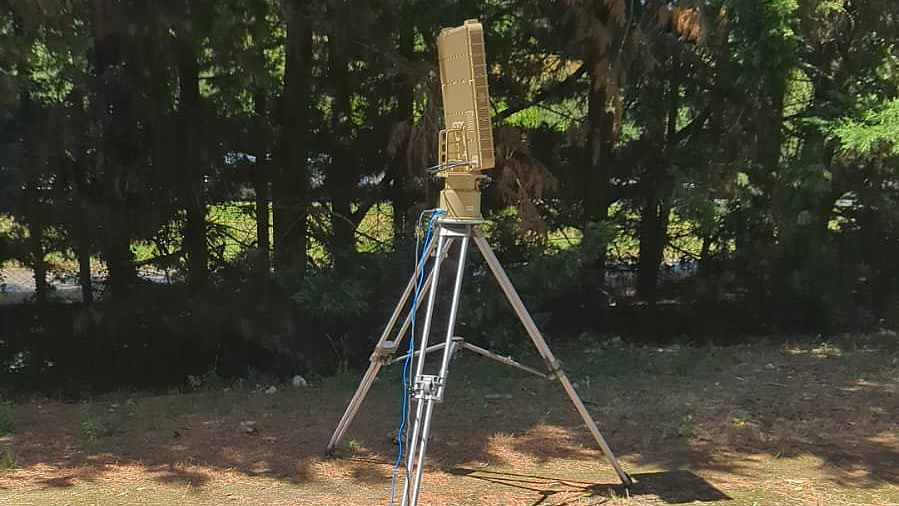
Also be aware of anti radiation munitions if you decide to operate one of these in a warzone. Radarmen have very short battlefield lifetimes because turning on a radar without lots of electronic countermeasures (hell even with countermeasures) is basically like turning on a spotlight that says “blow me up”.
So, one of the really interesting things to me about this approach is that it offers the same asymmetric value proposition that cheap attack drones do to modern pre-drone IADS.
That is: this is a platform that costs 10-15k, and an AGM-88 of modern manufacture costs almost 900k, and a Kh-31 costs about 550k - and, just as importantly, both require a long time to manufacture. So, you could theoretically make a moderately large distributed array sprinkled over a few square kilometers, and even if they’re ALL turned on, it quickly becomes logistically infeasible to knock them all out without spending a silly quantity on antirad munitions, as well as massively attriting your stocks of antirad munitions. And if you turn like 10-25% of them on at a time and cycle through your array, the problem becomes even harder for the attacker. And if you have some sort of process or mechanism - like, oh I don’t know, figuring out how to do light aerial transport with cargo drones, or even figuring out how to mount these distributed array nodes on the drones themselves, and some sort of lightweight tether for providing power - the problem becomes a MASSIVE pain in the ass for an adversary (especially that last idea, which introduces z-axis and immediate maneuverability, such that the array could feasibly detect and altogether avoid an incoming antirad munition).
And that’s the paradigm of modern warfare - not just drones, but also networked and attritable systems that maintain functionality when elements are taken offline
adding to this. I imagine that the emitter by itself costs a fraction, so set-up a huge array of these dumb emitters, and a few active systems randomly within that array. You’d essentially create an interdiction zone.
You’d end up jamming yourself. You can’t really have radars or other strong electromagnetic warfare devices near each other operating on the same frequency since they tend to interfere and wash out each other’s signals.
As a decoy makes sense though since you can send them far away on a drone or something.
You can if they’re all synced up together
I think this is just the wrong intuition. Not a faulty one, but one which is mostly the same as the doctrine which is being exposed as entirely ineffective.
US military doctrine is the “towards complexity” doctrine such that your opponent also needs to follow you into complexity. This worked for the US in the post WWII era because it was coupled with an exponentially increasing economic output.
Whats being show, as doctrine, is “away from complexity” and “towards distributed” approach to warfighting ends up being far more effective.
So coming from, practically, 100 years of “more advanced more complicated technology and approaches are better” being doctrine, its understandable to want to add complexity to systems.
I can’t help but think this shift in doctrine could lead to the fall of an empire, with a new ideology in power rising from its ashes. We saw a very similar pattern during WWI, where changing doctrines led to an imperial collapse and paved the way for a new ideology taking power.
We might be on the verge of seeing history repeat itself.
That’s just not how phased array systems work. The system we’re talking about needs to have excruciatingly tight and correct timings regarding signal transmission and reception. These are beam forming systems, so a multidimensional array of antenna are using to steer the beam, using constructive and destructive interference to “point” the energy where you want it to go. That alone requires extremely tight timing. That’s coupled with a phased array receiver system, so that you can detect very slight changes in the wavelength/ speed of the return signal to apply the doplar effect to detect things like motion. The github states that this system operates at 10.5 GHz, of which one RF cycle is about 95 ps, ~2.5cm. This puts the practical per-element beamforming granularity/error budget is very much in that sub-picosecond to picosecond-equivalent range. That would be practically impossible for anything but a coupled system.
Not completely impossible, I mean, probably US military systems exist in a decoupled system. But its technologically way, way way harder because timings need to be nano to pico second correct.
Maybe they could be synced using RF over fiber. This has been proposed as candidate technology for 6g wireless networks, to enable cell free massive MIMO.
That would mean that you would need to run optical fiber to each of them, though we’ve already seen fiber drones spool out kilometers of the stuff as they fly.
EDIT: I just remembered this interesting article about doing radio interferometry over a fiber network using cheap quartz oscillators instead of atomic clocks. My (layman’s) understanding is that the quartz oscillators are good enough over a few milliseconds, but will fall out of sync with each other over longer time spans. Meanwhile the fiber optic reference signal (distributed from a central atomic clock) can be kept correct on average by reflecting the reference back down the fiber and doing active correction of the changing path length (caused by thermal fluctuations and vibrations along the fiber) but will be incorrect on a millisecond-to-miliscond basis because of light speed lag and the path length being a moving target. So they use the quartz oscillators over small time scales and use the fiber reference signal to keep them synced over long time scales. Surprisingly the article says they actually get a better sync this way than with using multiple atomic clocks.
So perhaps something like that is possible.
If everyone who studied this went into medicine instead of death…
“But I don’t want to cure cancer. I want to turn people into dinosaurs.”
The system being discussed is not explicitly or exclusively useful in military contexts. There are a LOT of places where advanced beam forming and radar capabilities could be useful outside of that. Not to mention: in military applications, this is pretty definitely a defensive system.
Unless I’m missing something in your plan i don’t think that would work well. If these radar stations aren’t surrounded by very serious defensive systems for hundreds of miles in every direction, then they’ll simply be blown up by dumb howitzer shells that only cost around 2000 dollars.
Howitzers are cheap, relatively long range, mobile, and accurate enough. If you don’t have strong enough defenses to prevent the howitzers from moving into range, then they’ll just blow up all your radar stations with cheap shells.
The locating them is the problem I think
Locating the radar base station? No that’s the easiest part. Radar is like turning on a Hollywood style searchlight pointing up into the sky. The instant you turn it on its extremely obvious where the radar searchlight is coming from
Yeah I should correct myself
Finding them isn’t the hard part you are right. Finding a spot that you can shoot them from without being exposed yourself is the hard part. The range on an unguided howitzer is much less than radar, and the guided ones are more than $20,000 and the accurate range is not much longer than the cheap radar.
https://en.wikipedia.org/wiki/M982_Excalibur
Many counter fire radars have tracked their own incoming death. You have a good minute or so from first track until the round impacts. That’s enough time to track the round and send out a counterbattery mission destroying the fucks that killed you buy you’re still dead unless the round happens to be a dud.
Locating radar emissions is a passive process, it doesn’t reveal your own location. That’s why i said the radar array would have to have very strong defenses extending out 30 km in all 360 degree directions from each individual radar station. And if a group has that strong a level of military equipment already then i don’t see why they would need this huge redundant array of radar stations all concentrated in a small area.
That depends very much so on the radar system. In practical terms, almost all the radar systems we’re discussing here are going to be both transmitter and receiver in one design. You can’t simply rely on passive radio energy to detect moving objects in a complex environment. You would want both passive and active beam forming in one instrument; not having both is just leaving some of the most valuable developments in modern radar on the table.
And the specific radar we’re discussing, is an active, pulsed LFM phased-array radar. It does both, because, obviously it needs to do both. Its wouldn’t be useful for its intended use if it cant do both.
Your information about passive radar detection is not up to date. There are tons of passive detection of radar systems that by design do zero emission. The radar array stations will need to emit in order to function, but the enemy can find those radar emitters without emitting any energy of their own
https://daronmont.com.au/products/passive-radar
Basically you deny enemy armor and other infantry support into the area you are working in, which means the infantry can’t operate effectively in that area.
I’m not understanding. Let’s say army A has a radar array of 500 relatively cheap radar stations. They clump them all into a 1 square km area. So now army Z drives some howitzers nearby (which aren’t detectable by ground based radar), waits till a radar station turns on, the passively locates the radar base station, and shoots a cheap shell at it which destroys it.
But if you say army A has the level of military equipment that can locate and destroy howitzers up to 30 km away in all directions, then what benefit does an array of concentrated radar stations provide?
A quad copter with 500g of payload would be just as effective
The drone operator would be in the radar station’s LOS, even if this thing couldn’t detect a drone, which it can…
I guess I’m not sure the point.
Why suddenly are these required to be taken out by anti rad munitions?
It’s radar. They’re practically setting off a beacon of their location through operation.
No I’m not disagreeing with you on the principle and have been making the exact same argument about scaling and cost in regards to the US defense doctrine for years. But there is no special munitions required to take out a small radar system, which is basically a bunch of highly sensitive electronics which must be exposed for the instrument to work. Any basic quad drone with a reasonable payload could easily take one out.
This doesn’t detract from you main point, which I entirely agree with and have been promoting for years.
I’m talking about HARM and friends because in terms of quickly executing a kill chain against a transmitting radar, antirad munitions are the gold standard. Sure, it can be done other ways. But it generally involves a lot more systems with relatively complex integration.
Yeah I mean, this speaks even further to the doctrinal difference I’m trying to highlight.
How are the Ukrainians pushing back on radar systems? Are they relying on anti-rad munitions? Well. No. We’re seeing them using long range drones, which, arguably, is far less complex, much more versatile, easier to produce, and cheaper to produce. The difference highlights the doctrine difference.
This is all really a debate about how one thinks about fighting a war and what one values along the way.
Thanks for the insightful comment!
Could they not “just” use FPV drones with nades to take those flimsy radars out anyway? Instead of expensive ammunition. If it’s possible then it slashes down the price to take out these radars to a few thousands at most
This is absolutely a thing. I remember reading a story about this, this was years ago, but this guy worked for the air force of some nation in heavy conflict. One of the most used weapons in this war was an anti-radiation missile, it would loiter for some time until it detected an emissions target then lock on and destroy it. Whenever they needed to use radar, they would hotwire a bunch of microwave ovens to work with the door open, then plug them in with like six extension cords plugged together. The missiles would lock right onto those microwave ovens and blow them up. He was joking about how the enemy would boast they destroyed 15 aircraft that week on the ground, when his force only had 10 aircraft to begin with.
So what you are saying is one single Styropyro Macro-wave will suffice?
Hmm, considering how cheap these are to make (relatively speaking) could it make a good decoy? Basically set a bunch of these up in random places away from anything important with remote on switches and when missiles start flying power them up one at a time. They’re more expensive than the anti-missile drones (those are supposedly about $1000 a piece) but they might be more effective in their own way.
Possibly but you could just put any radio signal up for a decoy, you don’t need something this fancy. Radar is just radio waves. The fancy part is collimation of the beam and sensing of the return beam. That’s what costs money.
OK, so a basic radio antenna that emits the same kinds of signals a radar would? Why isn’t every army already doing this? Sounds so obvious. Imagine if these things could start attracting missiles that cost millions to fire.
Who says we aren’t? Electronic counter measures and electronic counter counter measures are a large part of modern warfare.
It’s a cat and mouse game.
They are doing it. There is a ton of decoy and anti-decoy research
Some kinds of signal? How about the 5ghz WiFi band that uses some of the same frequencies as radar, I thinks the the channels above 100
So, turn them into ECM?
Turn it on in peacetime anywhere near to anything interesting and you’ll get a visit from your local military police.
Probably one of the spectrum regulators will show up (the FCC in the US) not MPs.
Maybe, but I’m not in the US. The US is not the whole world.
Most of the world has spectrum regulators for that sort of thing, it isn’t only a US thing. MPs aren’t really the people who would be investigating unless you live in some authoritarian regime where the police and federal regulatory bodies are commingled.
I could be wrong but I can’t think of an example where a military regulates spectrum in any meaningful way and a quick web search turns up nothing.
Living near military installations would be the big exception. I live probably about 20 miles from a massive radar facility that can track planes from across the Atlantic ocean, and doing anything within the area to set something like that off would probably have the MPs knocking on your door long before anybody else. I think even flying drones above a certain height isn’t allowed for miles around.
Ah yeah you must be right then because a quick web search (in English I assume) didn’t turn up anything about other countries’ counter-terrorist organisations or the fact that radar is used for missile locks for anti-aircraft missiles. Good comment.
The US is not the whole world.
They never implied that the US is the whole world. They merely mentioned what I assume is the regulatory body that they’re familiar with.
If I said that the regulatory body who would be knocking on your door in France is ANFR (L’agence nationale des fréquence), would you complain about how France isn’t the whole world?
I get that we’re all sick of American-centrism, but that was a really benign comment. They have no way of knowing what your country’s regulatory agency is offhand.
And yet your other comment agrees with my point.
I think the context that you and the original commenter missed is
What do you think that means in the context of radar? What is radar used to measure?
It’s like you just want to disagree with me because someone else downvoted me.
No? I agree with you on the radar. This other comment was simply about repeatedly stating that “the US is not the whole world.” Nobody ever said that it was or implied some kind of US-centric worldview/behavior. The other commenter merely stated who the regulatory body is who would be involved in yelling at you for turning on the radar equivalent of a fog horn if you were in the US, probably because those are the laws and regulations that they’re familiar with.
Near something important? Yeah, you’re most likely getting a hasty visit from the local MPs. But outside of those areas, you’re going to get chewed out by a government branch like the FCC in the US or the ANFR in France.
But saying that isn’t me saying that “France is the whole world” or something. I just happen to know what part of the French government is involved in regulating radio frequencies in the country.