

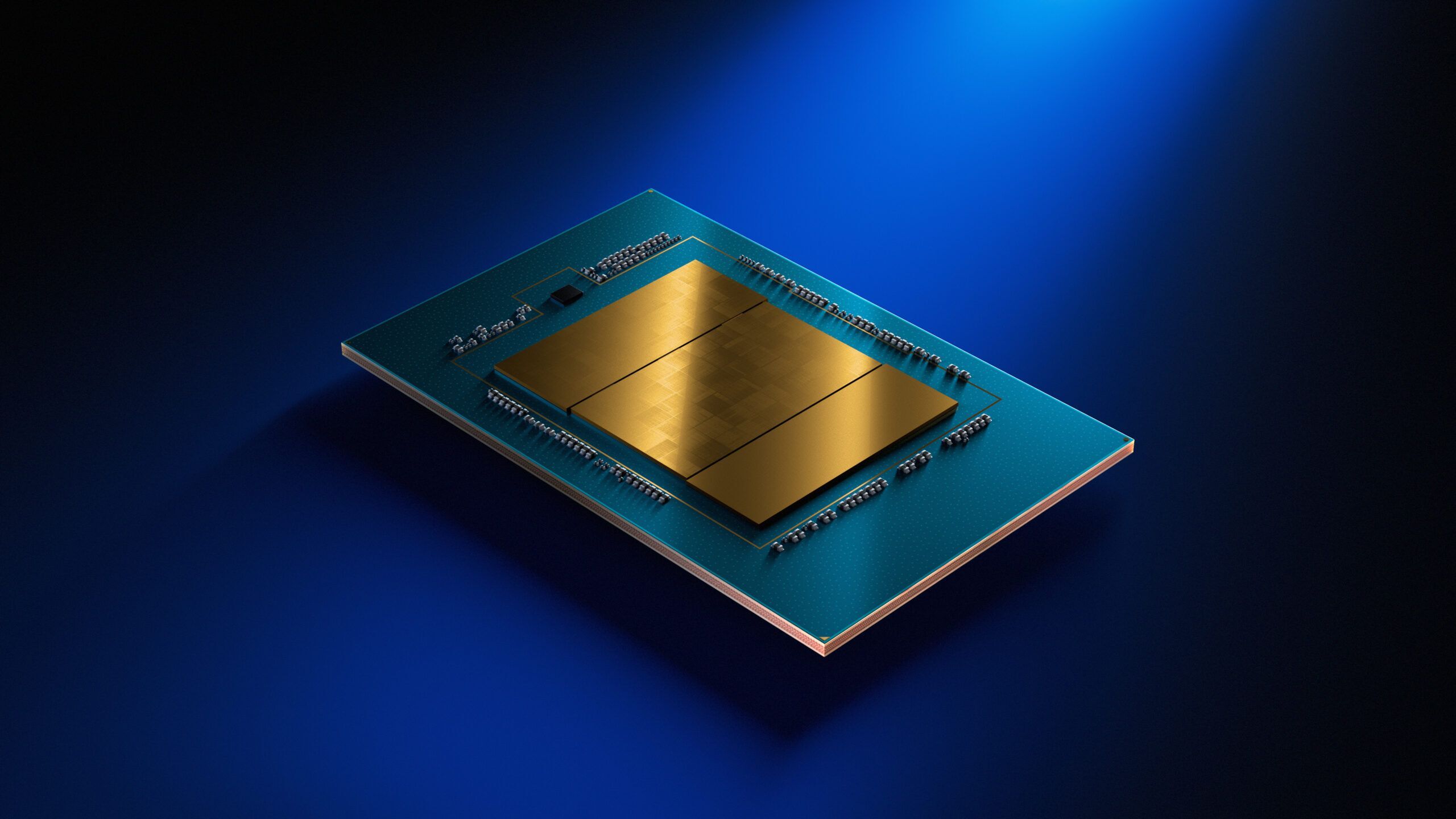
China has begun mass production of next-generation processors based on molybdenum disulfide instead of traditional silicon semiconductors[1]. According to Professor Li Hongge’s team at Beihang University, these chips merge binary and stochastic logic to achieve better fault tolerance and power efficiency for applications like touch displays and flight systems[2].
The breakthrough came through developing a Hybrid Stochastic Number (HSN) system that combines traditional binary with probability-based numbers[2:1]. This innovation helps overcome two major challenges in chip technology - the power wall from binary systems’ high energy consumption, and the architecture wall that makes new non-silicon chips difficult to integrate with conventional systems[2:2].
It’s only a matter of time until somebody figures out how to mass produce a computing substrate that will make silicon look like vacuum tubes. We don’t need to discover any new physics here. Numerous substrates have been shown to outperform silicon by at least an order of magnitude in the lab. This is simply a matter of allocating resources in a sustained fashioned towards scaling these proofs of concept into mass production, something planned economies happen to excel at.
The United States outsourced our manufacturing, including our manufacturing design and development skill, to China many decades ago. My money’s on China.
All hanging off a Dutch company that makes arguably the most complicated machine the human race has ever built. (EUV lithography is absolutely astounding, when you have even a passing understanding of the tolerances required to make it work.)
ASML, manufacturer of photolithography machines.
Only for the highest-end, smallest-process chips, and I doubt they’ll be the world leader for much longer.
But won’t you think about the silicon fab duopoly? They are the true victims in this!
They’ll get bailed out. Only losses are socialized.
My heart bleeds for them.
Oh the poor 1% what will they do…
Yes gallim arsenid transistors wold be about 10 times faster. But also about 100 times more expensive.
(Numbers pulled out of my ass.)
The cost invariably goes down as production of any new technology ramps up though.
The problrm is that this is already calulated st scale.
Silicon isn’t the best material for semiconductors, it never was. What makes silicon special is that it is the cheapest material for semiconductors.
So unless there is some kind of scientific breakthrough with one of the other semiconductor materials, this equation will not change.
Silicon isn’t the cheapest, sand is. The manufacturing price of the silice mono crystal is high and very similar of that from mono crystal fabrication of any other substance. Artificial diamonds as raw material isn’t much more expensive, used in the industry since a long time, manufactured in mass for cutting tools, drills, abrasive material…, nothing to do with the ones for jewelery.
If you look at the price of silicon chips from their inception to now, you can see how how much it’s come down. If a new material starts being used, the exact same thing will happen. Silicon was the first substrate people figured out how to use to make transistors, and it continued to be used because it was cheaper to improve the existing process than to invent a new one from scratch. Now that we’re hitting physical limits of what you can do with the material, the logic is changing. A chip that can run an order of magnitude faster will also use less power. These are both incredibly desirable properties in the age of AI data centres and mobile devices.
Exept the fist transistor wasn’t even silicon it was germanium.
https://en.wikipedia.org/wiki/History_of_the_transistor
Silicon is used because it is inherently cheaper.
Again, silicon was the first one that people figured out how to mass produce. Just because it was cheaper, doesn’t mean that a new material put into mass production won’t get cheaper. Look at the history of literally any technology that became popular, and you’ll see this to be the case.
After considering multiple other options for mass production.
Germanium transistors are still mass produced to this day, but only for the niche products where silicon doesn’t cut it.
The semiconductor industry is still constantly looking for other materials to use. Graphene is a big contender.
You act like the industry can switch to a bunch of materials and have better products but they are just too lazy to do it.
But actually more likely is that through its physics and availability silicon is just the best material for the job. Of course unless some scientific breakthough comes along but it is not here yet.
Looking into history is distorted here because you only see what succeeded.
Won’t make any difference if you are still on windows
they’ll find a way for telemetry to use half of it and the start menu another quarter
now theyll rewrite the right click menu AND windows explorer in react
Rewrite entire os to be an electron app
Call it reactOS.
deleted by creator
😂
Wom’t make a difference with any current OS, none of those would work with the new arquitecture, way different from the current one. One thing is the new hardware and another is the current lack of any soft or OS for it. Not even DOOM would run in it. Maybe in one or two years it would make sense to change your PC.
Another alternative to silice are diamonds, there the chips are with the same arquitecture as those from silice, but with the advantage that they support much more heat to the point that they don’t even need refrigeration, apart the electric apabilities of diamond is way better as those from silice, that permits a way higher speed and stability. The price isn’t much higher as the one from normal chips with sythetic diamonds. They are already in use, even with manufactories in Spain.
They are already in use, even with manufactories in Spain.
That’s not a diamond transistor company. They are making diamond wafers to mount to traditional silicon. It’s a heatsink.
Here’s a good overview of the current state of the art in diamond transistor manufacturing.
New materials doesn’t mean new architecture. They can build RISC-V or ARM chips with that.
And with Trump in charge he will ban these for America.
deleted by creator
Bismuth oxyselenide? You mean it can cure both indigestion and get rid of dandruff‽
No, don’t eat the rocks, we’re trying to make them think!
Take two micro-processors into the shower?
https://en.wikipedia.org/wiki/Abundance_of_elements_in_Earth's_crust
silicon – 28.2% of earth’s crust; 7,200,000 tonnes extracted per year
bismuth – 0.00000085% of earth’s crust; 10,200 tonnes extracted per year
doesn’t it say “molybdenum disulfide” in the text?
molybdenum - 1.2 ppm (0.00012%); 227,000 tonnes extracted per year
The techradar text says bismuth; the azernews.az text says molybdenum
Industrial diamonds made with almost everything which contains Carbon.
And yet Pepto Bismol is found in huge quantities on every drugstore shelf in the world. How will they ever find enough?? 😂
This is the first thing that came to mind when reading the article. Replacing silicon with bismuth sounds like a downside.
Silicon is used for way more than just chips though, I’d be surprised if it’s more than a percent
I’m all for overthrowing the monarchy but my laptop is already full of demons but I do not want them to have a drug problem too that’s be unhealthy I hear
“This allows electrons to flow with almost no resistance, like water through a smooth pipe,” Peng explained.
Um actually even smooth water pipes have a lot of tubulance since all materials aren’t perfectly smooth so the edges of the pipe have a lot of turbulance which dramatically slows down the water from the theoretical maximum.
Marx never considered water pipes aren’t perfectly smooth
I went on a shinkansen recently. It was really cool.
If the party says the pipes are smooth, the pipes are smooth.
Now I wonder what would happen if you coated together a super hydrophobic layer.
dang I never thought of that. I always assumed silicon was basicly the end, except for quantum computers which aren’t very useful for most computing.
Never assume something is the end. There is always something better. It is just one breakthrough away.
—me encouraging our locksmith after we’ve accidentally triggered the prison alarm
Does it run Crysis though?
ONLY GAMERS WILL UNDERSTAND
so, if i understand this correctly, it can do stuff like fast and cheap imprecise arithmetic of floating point numbers by doing something like converting the signal to a continuous (non-binary) voltage, then doing some analogous circuitry, then converting the signal back to digital?
It seems to be an AI accelerator. Without reading the source, to me seems that that’s the game. Interesting.
yeah because AI does a lot of floating-point calculations, and precision is famously not very important there (i.e. google replaced all floating point numbers in their AI models with 8-bit precision fixed-point numbers and the performance is just as good).
Well good to know the chips won’t stick to anything since they’re made out of anti-seize grease.
Sounds like total incompatibility. It will take decades before we could even think about incorporating non binary based systems into our workflow.
I don’t think decades, but some years for sure.