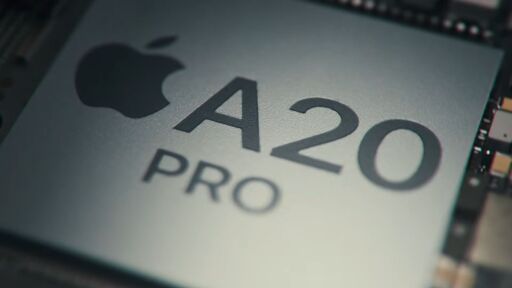
They always do this comparison and it is always misleading. They are the first to get a processor on the new TSMC node, so of course the processor will be faster.
They’re the first to get the fastest chips, so saying their chips are the fastest is… misleading? But also “of course” it’s true?
I’m confused.
I don’t think anybody was misled into thinking it meant this chip would always be the fastest on the market.
Saying the first new CPU on a new node is fastest is uninteresting from a technical standpoint, as there isn’t any competition yet, even if it is not inaccurate.
The average consumer doesn’t care why it’s the fastest. For a time, they’ll have a faster chip than their peers. Only people on Lemmy would say “yeah but that’s only because new nm process, so it doesn’t count!”
If the conversation is between chip manufacturers talking shop, that matters. For everyone else, it’s irrelevant.
For even a semi-informed user, it matters. E.g. you can buy the fastest processor (in this single benchmark, which might be or not be important to you) in a Macbook Pro from Apple for $3000. But knowing that this is only because of the 2nm TSMC node that Apple got first, but Qualcomm, AMD, etc. will also get very soon (a few months), means that you probably will be able to buy an even faster chip in a laptop with Windows or Linux for $2000. Which, depending on what you plan to use the PC, might be just as viable to you.
So I would say it IS important to users to know the facts of the situation in order to make an informed decision on their next purchase.
Wouldn’t that always be the case though? If you wait until next year you will always be able to buy a faster and better computer. It will likely cost more as well. Seem like if you want the ‘fastest’ now, you’d buy something with the A20 pro, but hey tomorrow someone else may come out with something faster.
No. A new node comes out in several years. At least 2-3 years and it is increasing because decreasing the node size is getting exponentially more difficult. So next node will probably only be out in 4-5 years now.
While all the chip designers will be all out with their products on this new node within a few months. Apple was only the first because they paid extra for Tsmc to be first.
Okay, but that Intel CPU was part of the first family of CPUs on Intel’s equivalent node (18A) too. If nothing else, it serves as an interesting Intel vs TSMC lithography comparison. Which one would expect TSMC to win anyway, but at least now we have numbers.
Actually insane they are beating desktop processors with a phone CPU.
Except they aren’t, outside of synthetic geekbench benchmark that is designed to produce this exact result…
Geekbench is basically known for favoring Apple. It’s the consumer pc equivalent of “my dad can beat up your dad” because it is all made up and not real.
Yes, geekbench numbers are completely meaningless and do not reflect reality
Not that crazy to beat a desktop CPU in specific category like this. This article went off the deep end when they made the comparison to the Huawei CPU. If you actually put one of these in a phone and spent any amount of time getting the kind of performance they’re claiming it would almost immediately thermal throttle or cook itself. These comparisons are pointless.
Toms Hardware is a corporate propaganda op anyway.
Exactly what I wanted to say. On paper my pixel 1 was significantly faster then my pc at the time, an ancient core2quad q8400. In a lot of ways the phone did feel faster, then I tried to decompress a large 7z file on both of them and,despite using a mechanical hard drive, my pc took just over half as long.
Now overall, there were a lot of things that chip could manage better than my desktop but the point is that using a single benchmark or benchmark suite that leans into the strengths of the hardware is pointless.
These “benchmarks” are great for marketing, so not pointless. Just pointless for users.
Core Ultra 7 355 is a mobile (laptop) CPU, with a nominal power draw of 25W and a base clock speed of 2.3GHz.
Yeah that’s a different goalpost, but it’s still nuts.
Yeah they have to distribute all that compute for a reason.
What do you mean?
You don’t own your iPhone, and you def ass don’t own the baseband chipset.
Are you saying that there’s a conspiracy to build a giant distributed compute engine using our phones?
What are they using it for?
Fam lookup TEE designs and all of the camera based processing that everyone is doing inherently. Then remove the TEE part.
What does that stand for? I literally can’t look that up, all I get is t-shirts with phones on them, no matter how many apparel-related keywords I tell it to ignore
Edit: I see your reply to that other comment,
I dont get your original comment though:
Yeah they have to distribute all that compute for a reason.
Middle out compression.
…and I can prove it!

Eh, it’s 2 years newer than the AMD architecture, on a better node, and has better memory packaging. I mean it’s great they’re getting this performance, but wait until Zen 6 for a contemporary architecture and node comparison.
I feel like I’m taking crazy pills every time Apple releases a CPU. Their designs are good but most of it is the new TSMC node they use. When others get access to the node the difference is not that large but then the cycle starts again.
I like my iPhone but damn it’s locked down.
I bought it, I should be able to go to GitHub, grab a project, compile it and run it.
I’m surprised that so many technically-adept people find this acceptable.
Not necessarily the bit about compiling software directly on the phone; I can do that and I don’t, but the part where Apple has the last word on what apps can exist (yes, I know there are some very narrow escape hatches).
As a developer I routinely compile projects that Apple has never seen and run them on my iOS devices. It’s not locked down in the sense that it’s impossible, but that the barrier is too high for normal users (who also don’t have a developer program membership).
Im Europe we have alternative app stores on iOS too.
But at the end of the day, even as a technically adept person, I don’t care that much about what my phone can do beyond the actual phone things, and just want it to be a reasonable smartphone that doesn’t need me to be technically adept just to be useable.
deleted by creator
Well if Hitler made universal healthcare for all I’d be very wary as well
Sir I think you’re lost this is a Wendy’s.
If Jack’s beanstalk went sideways we could all have grapefruit with our steak
Wtf
Do Linux distros run on Apple hardware? The hardware seems faster than intel/amd but I hate MacOS.
I don’t think there’s a distro for running Linux on any recent iPhone, which is what this chip is for.
Asahi Linux is the leading distribution for Macs, but it’s a few generations behind with hardware support. M3 support is in the works but still experimental and not fully featured yet.
M3 was moved to offical support this month!
Asahi kinda works, but only up to m2/m3. Apple isn’t very helpful with Linux support.
For Apple silicon, Asahi Linux is the most committed to that, they seem to be able to get things going on Mac but always a few generations behind.
Pretty good if you buy a Mac second hand tbh, Apple hardware is still the best in durability in my experience.
A20 Pro vs Intel Ultra 7 Series 3

And yet, it can’t (be made to) run a full desktop OS or play AAA games. But you can personalise the Siri voice (older phones can do the conversational stuff)… maybe edit photos faster.
Apple went and made a phone you could use for ten years, but next year they’ll be telling you why their new phone is so much better than the last one. They don’t expect you to upgrade every year, but they expect you to want to, and after a couple of generations, they want you to think that you have to.
I have an iPhone 16 Pro Max (2024), and the 18 Pro/Max presentation definitely gave me a bit of phone envy. But I also have a Galaxy S10 (2019), and that does a few things better than the iPhone, even though it’s 5 years difference between them. Apple’s keyboard likes to hallucinate weird results (like changing out common words for names of people I don’t even have in contacts) and edit after the fact. Gboard just works. When it doesn’t, the mistake makes sense (if and of for example). Also, I’ve used the same wallpaper on both phones. It always looks better on the Samsung. Sharper colors and contrast. Hold both up and ask anyone which looks better, they’re gonna point to the Samsung, even if you turn the iPhone’s brightness up all the way.
Phone manufacturers are desperately trying to convince you that you need the latest and greatest. You don’t — unless you want to do AI stuff. And even then, they’re going to charge you for it. And they’re sure you’ll pay, because you’ve already shown your hand by opening your wallet again.
As someone forced to use a spare iPhone for WhatsApp because they flagged my account and I can’t use it on my GrapheneOS phone… That iOS keyboard is an absolute, borderline unusable, piece of shit. That “feature” where tapping the top bar scrolls you up can absolutely go eat shit as well. How is that a feature on a phone that puts the back button right below that functionality??? I ALWAYS scroll up first before tapping out of a chat on WhatsApp, its unbelievably infuriating UX.
The hardware could be a miraculous tech from a utopian future but if it runs proprietary apple software I really couldn’t care less.
And yet, it can’t (be made to) run a full desktop OS
I’m not disagreeing with the rest of your post, but you do realize the MacBook Neo running the desktop macOS is using the A18 Pro, right? The A20 is an iteration on the same design and will likely end up in the next MacBook Neo.
Plus, if game developers targeted ARM instead of x86, im sure their games would actually run great on those A20s, but they’re probably not going to make an ARM version of their game.
I don’t think triple-A is meant to run on those chips in anything but low at 1080p60. Not even double-A
The A20 could theoretically handle 4K gaming. Just depends on the game developer. The iPhone 18 Pro has 7 GPU cores, and it has about 12GB unified RAM to share between the CPU, GPU, and Neural Engine.
Plus the ARM instructuin set is a bit more modern, so there is probably performance gains to be had that x86 couldnt handle
Doesn’t mean anything currently running an A20 can run a desktop OS. Point still stands.
We’ll see what the next Neo runs and how when it releases. The A18 Pro in the Neo is what’s in my phone and it’s said to be between M1 and M2.
I think OPs point is not that it’s unable to, is that Apple won’t let it
“Won’t let it” by putting it in a Macbook and running MacOS on it?
As in you plug your phone into a monitor and it becomes a fully fledged desktop running MacOS, and you don’t have to buy a 2nd device from Apple.
Edit: Like Samsung DEX
Who said anything anything phones specifically? You pulled some random criterion out of your ass.
And by this logic, Google also doesn’t let you run desktop OSes on phone CPUs, because their phones don’t do some random thing that you saw somewhere.
Apple intentionally limits what features iOS and ‘iPadOS’ have versus macOS to sell as many devices as possible. An alternate reality where Apple were consumer-friendly would converge all three operating systems into one, with a limited feature set on smaller screens that expands to the full feature set if connected to an external monitor with a docking adapter.
They could even sell a laptop shell that connects with the phone so you don’t pay for the phone internals twice except the shell having a 2nd battery for the bigger display. The shell could then survive for an even longer time than a regular laptop as the internals keep getting upgraded via the phone instead of a whole new laptop.
And Android is as full-featured as a desktop?
Jobs was pretty much describing iPad as what computers would be like ‘in the future’ in interviews in the eighties. It was his vision for ages. IPhones and iPads allowed more people to use computers than all desktop OSes combined.
And again, what does this have to do with the processor? You people just jump at any opportunity to mention how you hate Apple?
Dex is a really neat concept, but ultimately sucks ass.
Maybe the duo will baby step us towards that. But even iPad OS which supports this for years is rough.
Have you tried the newer one built into AOSP yet? Is that one any better?
It’s been a year or two since I tried it last. Are current Samsung phones using dex or the AOSP one? Or does the Pixel 9a running Graphene OS support it?
It appears OP wasn’t clear they were talking about a phone using the A20 SoC, their message was a direct reply to the article posted which was about the A20 Pro itself and not any particular phone using it. Hence my reply which was also about the A20 SoC and not any particular phone.
I stand behind what I said: The A20 Pro will likely end up in a future MacBook, where it will definitely be running the desktop macOS.
Now, the fact that desktop macOS is becoming more and more like iPadOS/iOS is a discussion for another thread ;-)
I don’t really see how you can read that post and not see they were talking about phones, but you are right that the A20 Pro will almost certainly show up in a MacBook Neo successor at some point.
Edit: And what do you think the benchmark was run on? It was a phone.
I’m doing just fine by not looking at new phones as long as my current one works - ignorance is bliss.
This is where I stand.
I got an S22+ in 2022, I bought the flagship thinking I’d keep it for at least five years. As far as I can tell there is still next to no reason to upgrade.
My wife has an S22. Literally the only problem is the lack of storage. Losing the memory card slot was a mistake. My S10 is her old one. I stuck a 256GB SD card in it and now it has whatever that plus 128GB is. It’s the second most spacious phone I’ve used after my 512GB iPhone.
Memory hasn’t been an issue for me (256 gb), but that is more of a personal use thing. I dont use the camera much, and don’t keep video or audio books on my phone
Your only real reason to upgrade if the phone is still perfectly good is that you’ll stop getting security updates in 5 months (at least that’s how it’s been scheduled by Samsung). A shame because any 2022 flagship is bound to still have solid performance for pretty much any use case I could think of (except maybe high-end games? Who runs those on a phone anyway?)
You’d possibly get an extra year or 2 likely next time with an iPhone (historically longest major version support + sometimes abnormally long security update support, the 2015 iPhone 6s still got security updates until May this year), but there’s no guarantee and if you prefer Android, Samsung’s up to 7 years of promised security updates now for the latest flagships, as is Pixel and if you’re on a popular model unlockable phone, you can go way beyond that with custom ROMs. Samsung doesn’t allow unlocking all of their phones, but if yours is unlockable, you may yet use it for several more years if you so desire. Phones are pretty damn expensive, even moreso now, custom ROMs are great to further increase device lifespan if you can use them.
Apple’s keyboard likes to hallucinate weird results (like changing out common words for names of people I don’t even have in contacts) and edit after the fact.
Never seen that on any of the iPhones in my family, and never heard of that happening on any of my friend’s iPhones despite being the usual tech help contact for them. And this is going back to 2012.
Maybe take it to a Genius Bar and have them correct whatever strange problem that is.
Because that kind of behaviour is extremely unusual.
I had this issue during the very short time I had AI enabled on my iPhone. Autocorrect went INSANE. It was miserable.
I turned AI features all off and autocorrect went back to being serviceable; I don’t have any issues now other than typing on a screen sucks compared to a physical keyboard.
I had AI enabled on my iPhone.
Oooohhhh… maybe that’s where the problem is coming from.
I work in pretty much all sectors of IT, and while I am cautiously optimistic about AI, it was a steaming pile of bullshit when it was first included and it’s still largely unusable/untrustable now. So I have always had it turned firmly OFF for myself, my family, and strongly recommended it for everyone else I helped.
Besides, I’ve noticed that not many people outside of the techbro scene actually want AI. It’s invariably crammed down their howling piehole without their desire or consent.
iOS has been doing that for a few years for me. Word or phrase that seems perfectly fine? Nah. Also the auto fill thing keeps trying to change and to Andrew. No I’m not talking about Andrew 24/7
I have no clue what’s up with auto correct.
Everyone I know with an iPhone has this issue. The iPhone keyboard is known to be one of the worst in the industry.
I have an iPhone 16 Pro Max (2024), and the 18 Pro/Max presentation definitely gave me a bit of phone envy.
I have a 16 base… and I didn’t raise an eyebrow. What kind of app running can a 18 do that a 16 can’t, other than whatever is self inflicted with software bloat?
A LOFIC camera would have gotten me interested, but they didn’t ship that.
Battery life is the only thing I’m interested in. Not only does the 18 perform great, but it gets insane battery too.
I’m not buying it because no SIM card slot, but it does have me interested.
I think physical SIM slots are probably done for, why add more hardware that is “unnecessary” now?
Because not all carriers easily support esim. Last I was in Costa Rica maybe 1 carrier supported esim for prepaid lines, but will the employee at the store know how to set that up? Physical sim? Yeah, they’ll do it in a minute or two. I guess the 18 will force them to learn, but in some fuck ass small town how many people are rocking an iphone 18 and a prepaid line?
I’d love to get a phone that supports mmwave 5g, but the freedom of physical sim is well worth it. Also I spent a fuck ton importing this 15 pro, I’m not just chucking it willy nilly.
I would be so much more interested in phones if I could run Debian on them. Check out my proxmox server rack, its a pile of every phone I could acquire from friends throwing out old phones! Between them they run 20 factorio servers with clusterio.
I’m sure many will disagree but I don’t see a point to this; it’s neat I guess but why?
More speed means you can do more stuff faster
What stuff are you doing on your phone that wasn’t fast enough already?
Most CPUs implement a strategy called “race-to-sleep,” where it throws all the resources it has at a computing task, to finish it as fast as possible, so that it can hurry back to a low power sleep mode.
For that reason, optimizing speed often improves battery life.
Most cad software is single threaded, well most of it is, there are parts that are multi threaded but in general single threaded. So in my case single core speed is extremely important, it’s more important than a GPU. And I mean an actual GPU, I can get away with integrated graphics, but single core speed is the killer
And you’re running CAD software on your phone?
The phone has been out for 10 days and this article is from 6 days before it was released.
Why are we looking at an “early benchmark” from before release instead of an actual real benchmark of the device. I don’t get why Geekbench doesn’t have results for iPhone 18, or why this “early benchmark” calls it “iPhone19,2.”
If true, the single core performance of this chip is almost identical to the single-core performance of the new M6 chip.
Something doesn’t seem right, but I don’t know a lot about Geekbench or iOS benchmarks to know if this seems legit or not.
If true, the single core performance of this chip is almost identical to the single-core performance of the new M6 chip.
The two “super” cores on the A20 pro are the exact same as the two on the M6 asside from some extra L2 Cache on the M6.
Source: https://youtu.be/t8bxkCKNiuA
but can it run linux and real software? what would I want more powerful cpu for if not linux server?
Apple silicon still only supports Apple’s proprietary operating systems but you can run Linux in a virtual machine or use Asahi which is still not recommended for daily use.
They probably optimize for the benchmark… It’s not uncommon
The benchmark itself measures burst compute.
For any sort of sustained workload it’s nowhere near laptops, let alone near desktops.
The whole post, and especially the title and image, are misleading.
It generally is with Apple
I used to sell their gear, and there was always a lot of shitty comparisons and even boasting about things that existed on the competition, but they just didn’t advertise it (because they had it so long)
Wow you must be a real engineer drawing from your vast decades long experience. And not someone sitting on a shitter pulling words out of your ass.
It didn’t take long for more info to come out about the A20, and the suspected compromises that are being made on the iPhone: https://wccftech.com/apple-a20-solder-joint-leak-base-iphone-18-compromises/ . I also used to sell their gear for 3 years
Pretty much every company has been busted cheating on benchmarks, including Nvidia and Intel (its easy to do, just detect the starting frames, or/and the exe). And, I spent all of last week optimising code using benchmarks (and profiling)
On Desktop applications in particular, Apple’s biggest failure has always been GPU. Which is why testers often test things like encoding (it has a chip designed to accelerate video encoding), CPU, and rarely games.
Like my M2 Mac Studio looked awesome in benchmarks (Toms hardware did one too). They didn’t test games, because if they tested things like Raytracing, they would have discovered the M2 never had raytracing built in (and, computers which cost the same price DID at the time)
My Mac Pro looked awesome on paper too (it even needed FB ECC Dimms to work). The GPU was absolute slop compared to what PC’s were shipping, which is why sites only ever seemed to test Apps…
If someone like Steve was testing this, I’d trust it immediately. But the entire premise of the article is around 1 benchmark… And for all we know, they might have been testing against absolute crap products
I don’t really like geekbench. It always feels like it favors apple devices.
Sometimes companies build product to get high scores, rather than to work well in real settings.
Apple has done a remarkable job with their silicon though.
I got an used M1 2020 MacBook Air (base model, no upgrades) back in 2023 and that thing is still going strong. Doesn’t feel slow at all. Not even slightly.
I got a used 2010 thinkpad and it doesn’t feel slow at all (I play solitaire and browse the web on it on Linux Mint)
I think I need not explain the parallel here, right?
I bought an M1 MacBook Air as my first Apple Silicon Mac when they hit the market (longtime Mac user, so direct comparison to Intel Macs). It blew me away. Still have it, despite replacing it with a MBP. At this point, it’s the extra screen off to the side playing videos while I nerd out in my office, though it can do much more.
My kid made a 5 minute short in Blender over the summer on an M1 2020 Air. He only used basic textures but was able to render the thing, create the “score”, and then packaged it all together in iMovie all on that little machine. Blew me away given I was only using it to stream shows and surf the ‘net (as we used to say in the older days). Best little laptop ever. Just waiting on that Linux distro….
Yep, still using my M1 MacBook air as well. Amazing that when I got it it was $800, and it performs just as well if not slightly better than the new Macbook Neo.
The comparison that matters is always left out. Computing performance by dollar cost.
Even higher, since those Apple silicon chips are very efficient.
You misread. OP mentioned price/performance, and I think you’re referring to performance/watt.
Oh, you mean the upfront price per chip, not the operating cost. Funny enough, the A20 chips are no more expensive (and possibly cheaper) than their Intel and AMD counterparts. The main issue is that the A20 is locked inside an iPhone, which is overpriced.
You can’t buy them standalone. There’s no way to compare them.
It does matter but performance per currency alone is also kinda shit of a metric too. Might point you towards getting like 50 atom CPUs but then good luck finding memory for all of them to do anything useful.
Better to show performance between each and then list the cost to let the user decide if it is worth it. Make your charts between hardware in set price ranges is also pretty good.
Are beowolf clusters still a thing? If yes, imagine one made out of those.
Yes, using the Mac Mini.