The battery prototype demonstrated endurance, maintaining a stable structure and perfect reversibility over 6,000 cycles — equivalent to more than 16 years of daily operation — with zero loss in storage capacity.
WTF!? If this battery is just half as good as they claim, it could be a game changer for storing power for solar and wind!
The problem is that 6000 cycles in laboratory are not the same than 6000 cycles in real life scenarios.
It would be interesting to put that battery out in the field and to see how it perform in real life conditions (assuming that they are cheap enough to be produced in large volumes)
If they are really that good you are right, but there are always a lot of revolutionary advance in lab that never leave it.
Indeed: electric vehicle batteries are lasting even longer than estimated. All the constant breaks from use that the batteries get has been interestingly improving their durability (which makes me think that shutting off our phones for 1 whole day per week or even month could improve their lifespan, even for the 40-80% lithium-ion boundary keepers).
There actually was a Chinese EV startup that had battery swap stations: drive up onto the system, and the battery is directly under your car; the swap takes <1 minute. I don’t remember what it was called, though, nor if it ever made it.
Tom Scott did a video on it. In all honesty, there are a number of things about this system that I just don’t see working well in the long term, but it’s an interesting prototype nonetheless.
Tesla did that as well about 10 years ago. They opted to not do it anymore if I recall correctly because they couldn’t control how the batteries were being maintained or what age of battery you would get.
When was hot-swapping batteries normal? What was the backup power source? I’d only ever seen normally swappable batteries where the phone would need to power off and back on.
I’ve never owned a flip phone that I couldn’t plug in and swap the battery with a new one without it turning off. If that wasn’t normal with your phones I’m not sure why, maybe different circuitry?
Regardless making devices easy to repair, and thus open and maintainable was what I was getting at.
Just make hot swapping batteries normal again like it used to be.
In your ideal scenario would you own multiple batteries and keep them at your house, or are you looking for a subscription service where you would just buy the car (batteryless?) and then go to a rental station to have one put in, swapping batteries when they need a charge?
Breaks from use makes perfect sense though, it allows the electrolyte to diffuse evenly. During charge /discharge cycles there’s always more or less active electrolyte being consumed/produced at the anodes and cathodes, resting means it can equalize.
I mostly just applying my undergrad chemistry classes here to make an educated guess, nothing official…
Reactions are limited by the quantity of reagents and the mixing rate. As reagents are consumed (or produced), fresh reagent must move towards (or away) from the active anode and cathode for the reaction to continue.
In flooded liquid electrolyte batteries (like lead acid), mixing is very high and it’s surface area that affects charge/discharge performance. In absorbed mat chemistries like most modern lithium ions, surface area is very high but electrolyte is “trapped” next to its immediate cathode/anode and cannot easily migrate throughout the matrix.
In lead acids this sort of diffusion is extremely fast. In packed lithium ions it is definitely slower. When diffusion is too slow, the lithium ions will form dendrites (little spikes) where a gradient of ions exist because they are being deposited onto the electrode faster than the electrolyte can move ions. Thats usually what kills batteries over time and why ultra fast charge/discharge cycles are terrible for them.
It really depends on the charge/discharge conditions that the particular test is using. You can do testing in the lab that is way harsher than typical usage or you can make it easier. In terms of this cycle testing for Li-ion I would say that typically the lab testing would be harsher than real world primarily because lab testing is done between 0% and 100% depth of discharge constantly where most people are charging their batteries much before then and only cycling them at high rates periodically.
For a press release bragging about a new advancement especially for a product that doesn’t even exist yet, I would guarantee they’re using the ‘easier’ test.
It really depends on the charge/discharge conditions that the particular test is using.
True.
You can do testing in the lab that is way harsher than typical usage or you can make it easier. In terms of this cycle testing for Li-ion I would say that typically the lab testing would be harsher than real world primarily because lab testing is done between 0% and 100% depth of discharge constantly where most people are charging their batteries much before then and only cycling them at high rates periodically.
You are right, but we should see what they want to demostrate in the lab test: that the tech works or to have a way to make a sensational announcement based on some data ?
If you put that battery on the market, the 6000 cycles still stand or they are only a lab result ?
Aside the harsh or easy charge/discharge cycles, what other condition they tested ? A battery on a bench has different problems than a battery on a car on the road.
That said, if the tech works really has announced, it would be great.
Some chemistries can only work if heated up to a certain temperature.
Some cannot supply high currents.
Some perform badly at lower temperatures.
Some are expensive to produce.
Some have a very low energy density per weight or volume.
Some are hard to create consistently and require a lot of balancing.
Some cannot be scaled up easily.
Some are prone to aging regardless of cycles.
Some even require manual maintenance.
It’s hard to make a cell that does everything right. Cycle life is only one out of a huge list of parameters.
That is exactly right, and simplified Chinese is actually extremely popular to learn here now. (Denmark)
And no wonder, they have become leaders of several key (future) technologies.
Counter point: I know exactly one person who learned Mandarin and several dozen who don‘t. Pretty much everyone learned english and (to a lesser degree) a third language that isn‘t Mandarin either. French, Spanish and Japanese are popular, though.
Those are not the metrics that are important for storing wind and solar. Cost per MWh is the important one.
It is great to see, and isn’t an unreasonable jump from lifepo4. They already do 4-6k charge cycles with something like 20% degradation. This is a bigger deal for electronics and vehicles as it would make battery replacements unnecessary.
But cycle life is a central parameter for the cost of a battery, the longer it lasts the more rarely you have to replace it. In the longer term, a battery that lasts twice as long can be practically half as expensive.
No? Even if the new battery is 3x more expensive to build, and has 50 % of the capacity of a Li-ion battery, it can still have an advantage in large scale storage if it lasts for 10x as many cycles without degrading. At the end of the day, it’s a combination of parameters that determine which is the best for a given application, and high resistance to degradation can outweigh other parameters in many scenarios.
And yes IF it is as you said HALF that good, in either direction— the article mentioned ~80% under heavy loads. And that alone would be a game changer.


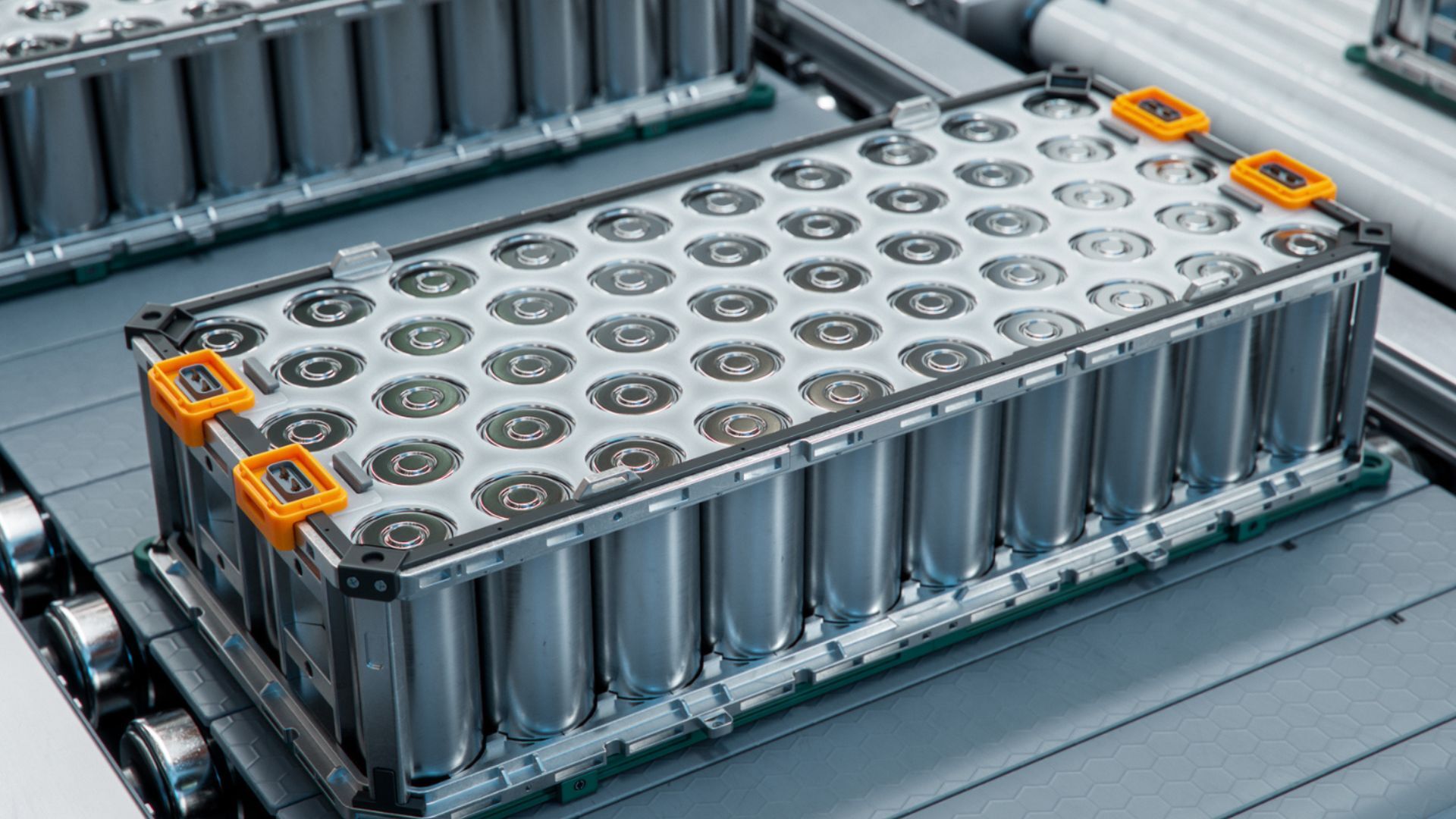
WTF!? If this battery is just half as good as they claim, it could be a game changer for storing power for solar and wind!
The problem is that 6000 cycles in laboratory are not the same than 6000 cycles in real life scenarios.
It would be interesting to put that battery out in the field and to see how it perform in real life conditions (assuming that they are cheap enough to be produced in large volumes)
If they are really that good you are right, but there are always a lot of revolutionary advance in lab that never leave it.
Indeed: electric vehicle batteries are lasting even longer than estimated. All the constant breaks from use that the batteries get has been interestingly improving their durability (which makes me think that shutting off our phones for 1 whole day per week or even month could improve their lifespan, even for the 40-80% lithium-ion boundary keepers).
Just make hot swapping batteries normal again like it used to be.
There actually was a Chinese EV startup that had battery swap stations: drive up onto the system, and the battery is directly under your car; the swap takes <1 minute. I don’t remember what it was called, though, nor if it ever made it.
Update: it’s Nio.
Tom Scott did a video on it. In all honesty, there are a number of things about this system that I just don’t see working well in the long term, but it’s an interesting prototype nonetheless.
https://youtu.be/hNZy603as5w
That’s it: Nio! Yeah, I dislike the reliability on the company, too.
Tesla did that as well about 10 years ago. They opted to not do it anymore if I recall correctly because they couldn’t control how the batteries were being maintained or what age of battery you would get.
Isn’t that Nio?
Edit: didn’t see it had been answered already
There was one like that in Taiwan for scooters.
When was hot-swapping batteries normal? What was the backup power source? I’d only ever seen normally swappable batteries where the phone would need to power off and back on.
I’ve never owned a flip phone that I couldn’t plug in and swap the battery with a new one without it turning off. If that wasn’t normal with your phones I’m not sure why, maybe different circuitry?
Regardless making devices easy to repair, and thus open and maintainable was what I was getting at.
Somehow, I forgot about charging cables.
Somehow, charging cables returned
…in POG form!
Gogoro a moped/scooter company in Taiwan has these. Little stations all over the country where you can swap your battery out, it was pretty amazing.
In your ideal scenario would you own multiple batteries and keep them at your house, or are you looking for a subscription service where you would just buy the car (batteryless?) and then go to a rental station to have one put in, swapping batteries when they need a charge?
Breaks from use makes perfect sense though, it allows the electrolyte to diffuse evenly. During charge /discharge cycles there’s always more or less active electrolyte being consumed/produced at the anodes and cathodes, resting means it can equalize.
Fascinating, I didn’t know that that’s the reason… Would you happen to have any data on how long this diffusion process takes?
I mostly just applying my undergrad chemistry classes here to make an educated guess, nothing official…
Reactions are limited by the quantity of reagents and the mixing rate. As reagents are consumed (or produced), fresh reagent must move towards (or away) from the active anode and cathode for the reaction to continue.
In flooded liquid electrolyte batteries (like lead acid), mixing is very high and it’s surface area that affects charge/discharge performance. In absorbed mat chemistries like most modern lithium ions, surface area is very high but electrolyte is “trapped” next to its immediate cathode/anode and cannot easily migrate throughout the matrix.
In lead acids this sort of diffusion is extremely fast. In packed lithium ions it is definitely slower. When diffusion is too slow, the lithium ions will form dendrites (little spikes) where a gradient of ions exist because they are being deposited onto the electrode faster than the electrolyte can move ions. Thats usually what kills batteries over time and why ultra fast charge/discharge cycles are terrible for them.
Dang, your education paid off! I recently disabled fast-charging on my phone (ironically before reading any of this), so am I doing good, dad?
Haha yeah, that’s a good way to keep batteries more healthy.
It really depends on the charge/discharge conditions that the particular test is using. You can do testing in the lab that is way harsher than typical usage or you can make it easier. In terms of this cycle testing for Li-ion I would say that typically the lab testing would be harsher than real world primarily because lab testing is done between 0% and 100% depth of discharge constantly where most people are charging their batteries much before then and only cycling them at high rates periodically.
For a press release bragging about a new advancement especially for a product that doesn’t even exist yet, I would guarantee they’re using the ‘easier’ test.
True.
You are right, but we should see what they want to demostrate in the lab test: that the tech works or to have a way to make a sensational announcement based on some data ?
If you put that battery on the market, the 6000 cycles still stand or they are only a lab result ?
Aside the harsh or easy charge/discharge cycles, what other condition they tested ? A battery on a bench has different problems than a battery on a car on the road.
That said, if the tech works really has announced, it would be great.
I’ve seen some incredible innovations in batteries performing really well in cold temperatures. So the idea of these becoming battle tested seems more feasible today than it did even a couple years ago.
There’s always a catch, details matter.
Some chemistries can only work if heated up to a certain temperature.
Some cannot supply high currents. Some perform badly at lower temperatures. Some are expensive to produce. Some have a very low energy density per weight or volume. Some are hard to create consistently and require a lot of balancing. Some cannot be scaled up easily. Some are prone to aging regardless of cycles. Some even require manual maintenance.
It’s hard to make a cell that does everything right. Cycle life is only one out of a huge list of parameters.
If all of the claims from Chinese tech companies and research was half as good as they claim we would all learn Mandarin by now.
That is exactly right, and simplified Chinese is actually extremely popular to learn here now. (Denmark)
And no wonder, they have become leaders of several key (future) technologies.
Counter point: I know exactly one person who learned Mandarin and several dozen who don‘t. Pretty much everyone learned english and (to a lesser degree) a third language that isn‘t Mandarin either. French, Spanish and Japanese are popular, though.
Have you heard of a man named Elon Musk? He’s the king of over promising. US company’s put out just as much garbage “look we solved X” as China dude.
Classic Fediverse. Can‘t have China critique without the token whataboutism response.
They teach Mandarin in more US high schools every year
Those are not the metrics that are important for storing wind and solar. Cost per MWh is the important one.
It is great to see, and isn’t an unreasonable jump from lifepo4. They already do 4-6k charge cycles with something like 20% degradation. This is a bigger deal for electronics and vehicles as it would make battery replacements unnecessary.
But cycle life is a central parameter for the cost of a battery, the longer it lasts the more rarely you have to replace it. In the longer term, a battery that lasts twice as long can be practically half as expensive.
Assuming the manufacturing costs (materials + utilities + other fees + labor + profit extraction) for the two types of batteries are equal, yes.
No? Even if the new battery is 3x more expensive to build, and has 50 % of the capacity of a Li-ion battery, it can still have an advantage in large scale storage if it lasts for 10x as many cycles without degrading. At the end of the day, it’s a combination of parameters that determine which is the best for a given application, and high resistance to degradation can outweigh other parameters in many scenarios.
IF is doing quite a bit of heavy lifting there.
And yes IF it is as you said HALF that good, in either direction— the article mentioned ~80% under heavy loads. And that alone would be a game changer.
Energy storage is the “oil” of the future.
IF — we shall see. But I’m hopeful