As a jazz musician once said, you’ve gotta know the rules to break them.
You need to learn the fundamentals first before you break them.
It’s almost like English teachers are supposed to teach traditional writing norms. You know, like, as their jobs or something …
Given Lemmy’s demographic we can put it like this:
If you invent an entire programming language from first principles, you’re probably pretty smart.
If you’re in a a class at uni learning C++ and you submit code written in your new language, then you’re going to fail
Get your homework published and fight your teacher.
English prof up on a soapbox here.
Comments like “you have to learn the rules before you break them” are kind of missing the mark. For the most part, those of us who teach English aren’t particularly concerned with “rules” (with the exception maybe of English as a second or foreign language, where conventions/rules are used to scaffold learning rather than as universal truths). English teachers are familiar with linguistics and the fluid, messy nature of language and all the fun things we can do with it. In short, the grammar Nazis you encounter online are VERY unlikely to be English teachers, who are often the first to point out that language is constantly changing and that what’s considered “correct” depends heavily on … everything, really.
But we’re talking here, ostensibly, about a “class.” And if we’re talking about a class, we’re talking about a syllabus. Specific outcomes on which a course is responsible for improving and checking proficiency. Your English class isn’t necessarily about “learning English,” especially if English is your first language. It’s about getting you to become proficient at doing a specific selection of specific things with your language. Very often these things aren’t even about rules or grammar, but that doesn’t mean the expectations aren’t strict- and what most people read as strictness is usually just specificity.
It’s damn near impossible to know whether a curriculum, teacher, method, or activity is successful without an outcome to measure. Lack of specificity makes measurement difficult and potentially unfair. If you’re told to “write a persuasive essay,” what exactly does that mean? What separates an A from a C? How does the teacher justify that distinction, and how does the student know what they need to improve? Without very specific target structures or a “can do” inventory, assessment becomes messier and we leave students guessing about what an given teacher might want from them, which isn’t especially fair (or useful, from a pedagogical POV).
A teacher can understand perfectly well that language is flexible, that different contexts call for different kinds of language, and that conventions change over time, while still expecting students to demonstrate a particular skill according to given criteria. There isn’t one correct way to use English, but a class DOES needs to establish what it’s trying to do, what students are expected to be able to do, and how anyone can tell whether they’ve been successful. That’s not necessarily prescriptivism, it’s just how a curriculum works.
And this is why I taught math…
Math teachers also didn’t like how I arrived at my answers. I made little games and rules to try and predict the solution in a roundabout way rather than just doing the calculations “straight.”
And yeah it wasn’t as effective as the students following direction, but I was definitely having the most fun.
I am all about having fun playing with numbers. I did have students like you. It could be a real effort sometimes to get them on the right path. But the reasons I wanted you on that path was because I was trying to teach you shortcuts to make doing The Mathtm easier.
If you are a kid sitting in my math class I will tell you that you already learned everything you needed to know about algebra, (geometry is something different and sometimes more wild and fun), when you learned how to add and subtract. Everything else you were being taught was just a short cut to make the maths faster and easier to do. So it’s important to learn those shortcuts. Hey, mathematicians are nothing if not lazy. And we all want to be lazy mathematicians right?
I was also a little bit less concerned about getting the answer right than I was interested in teaching you to understand how you got that answer. Explain to me what steps did you take to get to the answer. If you can do that, that becomes an important skill in getting the right answer far more often than you will get a wrong answer.
And finally, and a point where I did cross into the world of “The English Teacher”, insert your native language here please. Neat penmanship counts in math. It makes going back and seeing what you’ve done far, far easier. Boys, as a very general rule, struggle with this a lot. Not that girls can’t also, they do. And as a member of the Bar Sinister, writing ain’t meant for lefties - The Struggle is Real. But keeping your math writing in neat columns and rows goes a very long ways to making math so much easier. Once I could get those boys to slow down and be neat and orderly, they would often be amazed at just how good they actually were with math and how easy it became. They could often quickly elevate themselves from being a struggling D student to a B or even an A student just on hand writing alone.
So remember Kiddies, You can’t blow things up until you learn the math!
You have to know the rules, why they exist, and what breaking them implies.
If you are in a class designed to teach the rules, it doesn’t even matter if you already did all 3 steps. You’ll fail the class because the class is testing if you CAN follow the rules.
But I signed up for a writing class not a following the rules class. Basically all classes are follow the rules classes if we are going to look at it like that
I guarantee your writing class has a syllabus. The problem here is a disconnect between what you think the syllabus says and what it actually says (this may not be your fault- a lot of teachers are notoriously shit at communicating the purpose of the syllabus).
A young man asked Mozart how to write a symphony. Mozart replied, “You are too young to write a symphony.” The man said, “You were writing symphonies when you were 10 years of age.” Mozart said, “Yes, but I didn’t ask how to do it.”
TLDR;; if you’re a student then you’re a student, if you disagree, don’t ask, just do it and you will be recognized if your aim is true.
I think you kinda have to learn the rules and prove you know them before you go wild breaking them.
That’s not always the case. Sometimes a writer is like Jimi Hendrix where there’s no need for elaborate theory backing them because they can just straight up fucking play. But it’s usually the case, and the overwhelming majority of teachers are teaching extremely usual people.
I remember in my one college-level creative writing class I had to read other people’s work and it read like an eight year old wrote it.
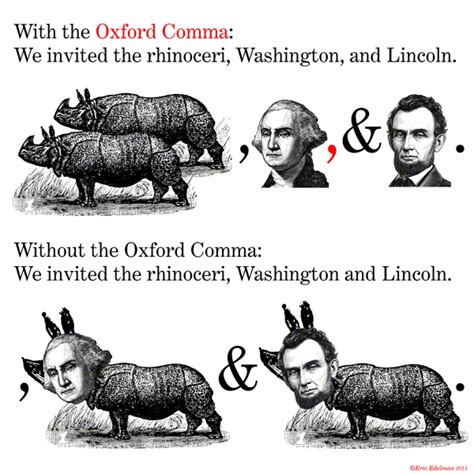
I always preferred the “Strippers, JFK and Stalin” version that I’m too lazy to find an image for
When saying the second why use a comma at all?
Generally, you don’t need one here.
I think people put them there to force a pause, which does make sense, verbally.
Yeah, you’re not good enough at it to do that.
99.99% of all MF’s that say some shit like “Yeah I got bad grades, but if they tested critical thinking then I would have cum loud or whatever”
Yeah ok brother. You couldn’t critically think your way through a 3 page structured essay but I’m sure you were just holding back.
Novels are art. English teachers are not teaching you how to write as an art form. This is because our schools are designed to make good little worker bees. They are teaching you language so that you can then go on to learn technical writing. Now, I do think they should split the two apart, and let kids experiment and have fun with writing. That does not mean that they are wrong. Technical writing requires precision and a strict adherance to rules. It is the same concept as it being entirely fine to have a bit of fun when painting a mural, but not when you’ve been hired to paint someones house.
I’m gonna say it: Jack Kerouac sucks. I’ve read many different authors, but none have been as annoyingly unreadable as him. You’re supposed to “ride the wave of his thoughts?”. No thanks. To me, that just sounds like a vain excuse for bad writing.
If you’re going to the trouble of writing something, my assumption is that you want to communicate. We can only communicate clearly with each other, if we all agree on and use the same word spellings and grammar rules. Otherwise, why bother?
One of the more frustrating things I see daily is titles that don’t make it clear whether OP is asking a question, or about to present an explanation.
“Why my dogs throw up in the house” instead of “Why do my dogs throw up in the house*?*”
(I don’t know how to italicize the question mark.)
Irvine Welsh has entered the chat.