That is only the case because your console is connected to the internet. For example, I can dust off my old PS3 today and play the version 1.0 release of GTA V after installing it from the disc because the console is offline, meaning there won’t be any prompt asking me to update the game to the latest version, and it simply works.
You might argue that this is a bad example and that GTA V runs better on modern hardware, so let us consider Bloodborne on the PS4 instead, a title you will not find anywhere else and for which current emulation remains, at best, sketchy. I can insert that disc into my PS4 unplugged from the internet and play it immediately without any mandatory update.
Killing physical support means the end of this possibility for further releases, not that Sony has many exclusives these days, but for the handful of PS6 games that won’t make it to PC.
It won’t really affect me, but I understand the appeal of a physical artifact servicing as time game’s license for those who like to lend, sell, trade, library, etc.
And those same benefits are why the corporations can’t wait to do away with it. It’s been quite a while since Microsoft tried the same thing and people freaked out enough that they reversed course.
It’s worth pointing out that Microsoft didn’t try the same thing. Microsoft tried to move to “physical as digital”, where they retained the benefits of physical copies such as resale and loaning.
I specifically remember that their plan was essentially CD Keys. You’d buy a physical game and it would have a code inside, or the discs would have unique identifiers that force linked to your account, or whatever.
So yeah, essentially physical media with a digital license. If you were going to be able to resell your game it was going to have to go through microsoft, or maybe you could lend a friend your disc and that lets them buy their own license for a small discount to play it.
It was keys in a box, but they had a framework to allow physical retailers to remove licenses from Xbox accounts and refresh the license key for resale. They also had a system for you to loan your digital games out to your friends via their gamertag. When you digitally loaned it to them, you could not play it and they could. Iirc it would automatically revert after 30 days if you didn’t extend, but you could choose how long to loan it for.
They abandoned it all after the ridiculous crashouts by people who couldn’t see where the future was heading, and now you get digital with no resale and no loaning.
I’ll just point out that they/we did not have a system like that, but just promises of it from a tech giant. (except of course for whatever they had designed internally up until that time) So even as somebody who doesn’t really sell games, I get why people weren’t thrilled with the idea of microsoft being the ever-present broker in the transactions.
It was a new system, one never done before but not outlandish and easy to see how it would work. People just can’t understand and fear new things. Microsoft are, to their own detriment, too forward thinking. The Intended XB1 digital system was as close to a perfect one as you can get. benefits of both physical and digital wrapped in one.


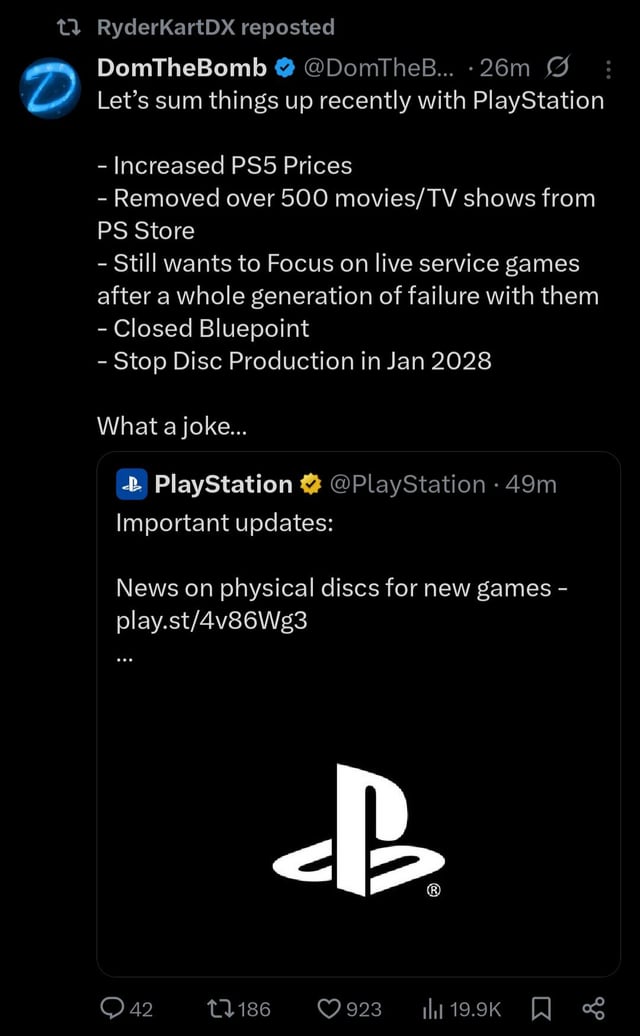
I don’t understand why anyone cares.
I can’t think of a single game that didn’t require an install and then updates before playing anyways.
Wow you’re young
Games on GOG come with offline installer that can be used to install the most reacent version.
But you’re right, many games do require day 1 patches or even game data to be dowloaded but that makes these worse / lower in quality for many.
That’s gog, not consoles.
That is only the case because your console is connected to the internet. For example, I can dust off my old PS3 today and play the version 1.0 release of GTA V after installing it from the disc because the console is offline, meaning there won’t be any prompt asking me to update the game to the latest version, and it simply works.
You might argue that this is a bad example and that GTA V runs better on modern hardware, so let us consider Bloodborne on the PS4 instead, a title you will not find anywhere else and for which current emulation remains, at best, sketchy. I can insert that disc into my PS4 unplugged from the internet and play it immediately without any mandatory update.
Killing physical support means the end of this possibility for further releases, not that Sony has many exclusives these days, but for the handful of PS6 games that won’t make it to PC.
And there were ps5 discs that did this. I played Astrobot for a month with no downloads or updates.!
I agree it wasn’t the norm, but it was possible.
Were there any ps5 games that could play from the disc offline anymore?
I guess that was my point: that ps5 players already were used to having to deal with online content.
As I mentioned above, whilst not standard, yes there were titles that could be played without updates.
Fair point, I don’t own a PS5 so I can’t tell.
It won’t really affect me, but I understand the appeal of a physical artifact servicing as time game’s license for those who like to lend, sell, trade, library, etc.
And those same benefits are why the corporations can’t wait to do away with it. It’s been quite a while since Microsoft tried the same thing and people freaked out enough that they reversed course.
It’s worth pointing out that Microsoft didn’t try the same thing. Microsoft tried to move to “physical as digital”, where they retained the benefits of physical copies such as resale and loaning.
I specifically remember that their plan was essentially CD Keys. You’d buy a physical game and it would have a code inside, or the discs would have unique identifiers that force linked to your account, or whatever.
So yeah, essentially physical media with a digital license. If you were going to be able to resell your game it was going to have to go through microsoft, or maybe you could lend a friend your disc and that lets them buy their own license for a small discount to play it.
It was keys in a box, but they had a framework to allow physical retailers to remove licenses from Xbox accounts and refresh the license key for resale. They also had a system for you to loan your digital games out to your friends via their gamertag. When you digitally loaned it to them, you could not play it and they could. Iirc it would automatically revert after 30 days if you didn’t extend, but you could choose how long to loan it for.
They abandoned it all after the ridiculous crashouts by people who couldn’t see where the future was heading, and now you get digital with no resale and no loaning.
Useful details, thanks.
I’ll just point out that they/we did not have a system like that, but just promises of it from a tech giant. (except of course for whatever they had designed internally up until that time) So even as somebody who doesn’t really sell games, I get why people weren’t thrilled with the idea of microsoft being the ever-present broker in the transactions.
It was a new system, one never done before but not outlandish and easy to see how it would work. People just can’t understand and fear new things. Microsoft are, to their own detriment, too forward thinking. The Intended XB1 digital system was as close to a perfect one as you can get. benefits of both physical and digital wrapped in one.
It sounds like a lot of good thought and design went into it.
The biggest problem was/is always going to be consumers wary of trusting a tech company not to mess it up because of greed.