"It really seems like anyone with some renders and a white paper written by someone being gassed up by an overly agreeable AI can get VC funding these days."
Two main problems with data centers. Power and cooling. In space the power is doable. The cooling is a major pain in the ass and always has been. There are only three ways to get rid of heat. Conduction, convection, and radiation. The first two don’t work because of the vacuum thing. The third is horribly inefficient. Just look at the ISS and the giant fins that only dumps about 70 kW of waste heat through radiator “wings” that weigh several tons. A single rack in a high density compute rack can generate 100kW by itself.
So yeah given the expensive and how inefficient it is, it’s a terrible idea.
Edit: I’m a system architect so dealing with data center heat is something I’m familiar with.
These chucklefucks are just trying to get some sucker… er I mean investor to fund the whole thing so their respective space companies can do the job.
And after doing to some very cursorary research other issues like…
Radiation and reliability - apparently cosmic radiation is a bitch
Lifecycle costs - I should have thought about this one. It’s not like when a drive dies in space you just drive down to the DC to replace it. And not mention we recycle out compute about every 5-6 years or so.
Connection - somebody mention this already in the thread but yeah you ain’t hanging a fiber cable to a satellite
Free space laser communications are possible, but even then you are only talking about 10s of GB/s, and you cant add more lasers or receivers on a satellite already in orbit.
Doesn’t help, your laser (or RF comms if you are using them) can still only send out a fixed amount of data per second, it doesnt matter if it is being sent to the ground or another satellite, once it is launched there is a hard cap on how much data can flow into/out of it in a given time and there is no way to improve that.
If it was a solved problem it would be widely used, but it isn’t. Ever looked at the reports of starlink speeds? It’s not reliable at all, everything other than a fully clear sky with cold weather (meaning less moisture and particles in the air) affects the communication. It physically can’t be a good or better alternative to fiber (or anything else that isn’t wireless).
Yeah… Terrestrial 5G towers with a fiber backbone for some proportion of them… are… stupendously more cost effective at getting a decent level of internet to a lot of people.
Also doesn’t cause Kessler Syndrome, which is, you know, good.
Now, such a system will still suffer in more abberant atmospheric conditons, but to a far lesser extent.
Literally the only actual ‘use case’ I can think of where StarLink ‘makes sense’ as a better solution is … you are a boat that is actually moving most of the time.
If you’re a house boat… terrestrial 5G probably exists near your mooring.
Either that or you truly, truly live far away from civilization.
… but we already had satellite internet that did those things.
Solar sail effect is going to be dwarfed by regular atmospheric drag in low earth orbit. At perfect right angles the radiation pressure on the panels is 4.5 micro-Pascals. Meanwhile, in low orbit there’s enough residual atmosphere to generate a dynamic pressure (for drag) of 5 milli-Pascals, give or take (and strongly depending on the space weather).
So atmospheric drag is around 1000 times more than photon pressure. And the drag is big enough to be noticeable over weeks and months, requiring regular boosts to stay in orbit.
Not to my knowledge. But I assume this is nothing new and any reasonable person could come up with the same thing. I did google the ISS thing so that part may have come from there.
Basically they’d need about as much in radiator fin surface area as they would have in solar panel area. The ISS has 8 solar array wings, 35m x 12m, that can produce about 30 kW each, or 240 kW total, in sunlight (which is only half the time). The ISS has a complex cooling system, but relies on 4 radiators about 3.1 m x 13.6 m to reject up to 14 kW of heat each (56 kW total) for cooling the solar arrays themselves. The main cooling system uses 6 radiators, each 23.3 m x 3.4 m, to reject 70 kW of heat (from this report it sounds like each radiator may be capable of rejecting more than 1/6 of the heat but that the system as a whole needs to be kept under 70 kW of heat rejection).
So that seems like about 650 square meters of radiators can provide about 120 kW of heat rejection.
Today, a 72-GPU Blackwell server is 130 kW in a single server rack. The next generation rolling out now has 72 Rubin GPUs in a 230 kW server, in a single rack. And that’s not even a “data center.” That’s just a single (albeit very powerful) server. How many can you string together, with networking equipment beaming data connections back down to the ground, before the ratio of solar panels and radiators to the actual ship size becomes unworkable?
That said, it’s technically possible, especially if you can radiate the heat at higher temperatures than the ISS does, as the Stefan-Boltzmann law shows that the hotter the radiator, the more heat it can reject. Just completely infeasible from an engineering and economical standpoint, for any data center that hopes to be relevant in an age of 100+ MW data centers.
Radiators work because they have something to radiate heat into. Space is famously empty, so a radiator the size of a planet would only work as a heat sink until the total heat in the system was high enough to make everything glow like a heating element, at which point you dump waste energy as visible light.
You can radiate heat into the vacuum of space, it’s just extremely slow compared to doing it into atmosphere. Vacuum is not a perfect insulator in this regard.
Think of it this way, if a vacuum was a perfect insulator, how would the sun radiate heat to Earth?
Your car radiator is actually using convection to convect heat into the air.
The spacecraft radiators use radiation to dump heat by emitting infrared photons. Photons do not require a medium. This type of radiator works by maximizing the area of hot surface exposed to empty space (which has an effective temperature of 3 K). They have to be pointed into a dark area and away from the sun. There’s no advantage to fins, because you want to maximize area perpendicular to the dark sky.
Both devices are called radiators, but they are different kinds of devices.
In order to understand why space is “cold”, you have to understand how we, as humans, perceive temperature. What we feel as hotness or coldness is just how excited the molecules in the atmosphere are. Molecules very excited? It’s hot. Molecules very still? Cold.
Space is vast. Incomprehensible to our puny human minds that have evolved to exist on this tiny mote of dust. Most of space is devoid of matter. Sure there’s hydrogen and helium out there just floating around, but not enough of it for us to be able to feel. So space feels like cold, and indeed, is quite cold. But as the above poster explained, losing heat in space is fundamentally different than how we lose it on earth.
Your body generates heat to keep your squishy organs running smoothly. The way we prevent ourselves from overheating is we rely on perspiration and evaporation, but that only works if we have Earth-like conditions where airflow can carry that excess heat way from our bodies.
In space, there is no airflow. Your skin would freeze while your blood boils.
The same issue is present with our technology. Radiating heat is very, very inefficient in space because we need something to carry it away from the source that is generating it faster than it can generate it. At least with the tech, we can turn it off to let it cool slowly over time, but it doesn’t solve the fundamental problem of having no way to efficiently cool an entire AI datacenter that is meant to be used to fill a continuous demand here on Earth.


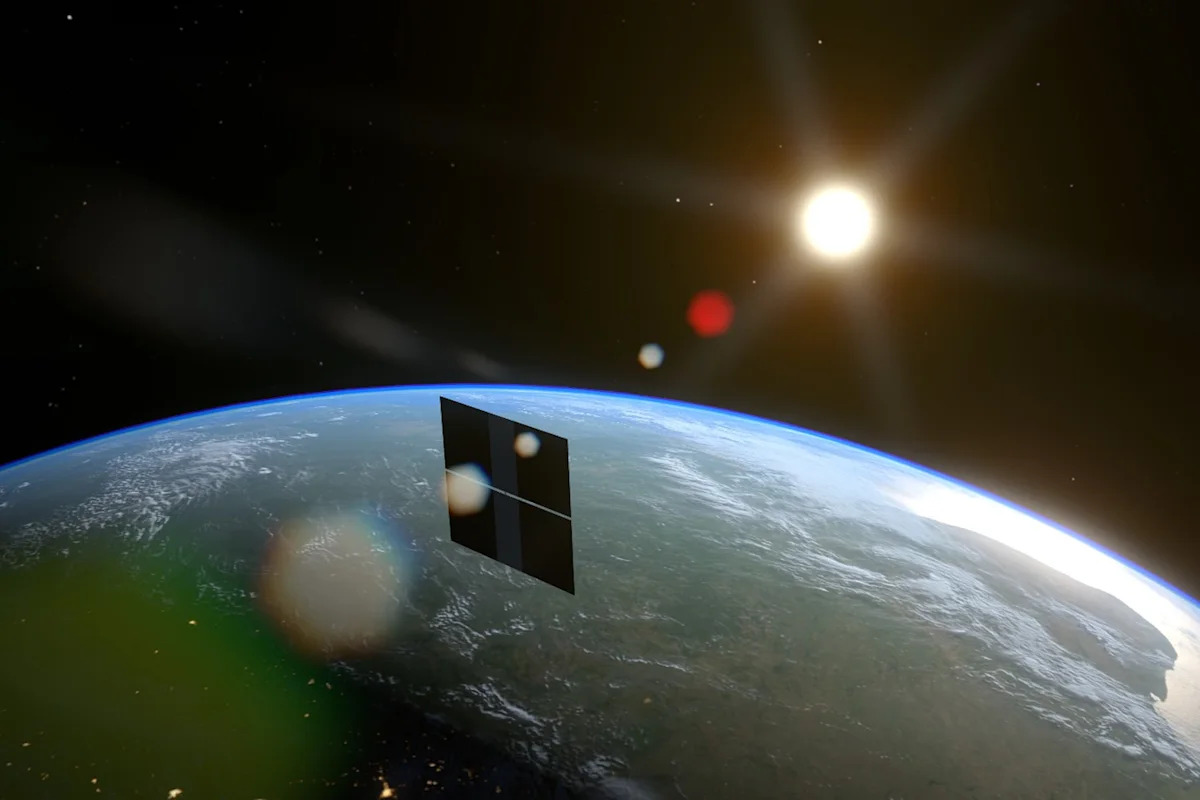
Two main problems with data centers. Power and cooling. In space the power is doable. The cooling is a major pain in the ass and always has been. There are only three ways to get rid of heat. Conduction, convection, and radiation. The first two don’t work because of the vacuum thing. The third is horribly inefficient. Just look at the ISS and the giant fins that only dumps about 70 kW of waste heat through radiator “wings” that weigh several tons. A single rack in a high density compute rack can generate 100kW by itself.
So yeah given the expensive and how inefficient it is, it’s a terrible idea.
Edit: I’m a system architect so dealing with data center heat is something I’m familiar with.
You’re just too small minded to comprehend the grand vision of business genius™ Elon Musk!
And Bezos apparently…
https://www.marketwatch.com/story/bezos-says-the-only-thing-holding-back-orbital-data-centers-is-cost-not-science-as-he-says-ai-will-create-jobs-fc49d5d5
These chucklefucks are just trying to get some sucker… er I mean investor to fund the whole thing so their respective space companies can do the job.
And after doing to some very cursorary research other issues like…
Cant you see, were just around the corner for AI Humanoid Robots in FullSelfDriving™ Teslas heading towards their data center job in space
/s
There’s also the very real problem of data transfer.
On land you just lay down another fiber optic cable and you can double your data transfer rate.
In space, you have to deal with cross talk and interference on a limited spectrum.
Free space laser communications are possible, but even then you are only talking about 10s of GB/s, and you cant add more lasers or receivers on a satellite already in orbit.
But if you have a constellation of thousands of LEO communications satellites to leverage…
Doesn’t help, your laser (or RF comms if you are using them) can still only send out a fixed amount of data per second, it doesnt matter if it is being sent to the ground or another satellite, once it is launched there is a hard cap on how much data can flow into/out of it in a given time and there is no way to improve that.
That’s what the lasers are for. It’s a solved problem.
Not really, because it can’t be solved, just worked around.
Lasers are still subject to the inverse square law, but with a slightly different multiplier.
Also, lasers still have the bandwidth issue of not being able to double up the communication lines due to cross talk and other fun physics issues.
There’s a reason why fiber will never go out of style.
If it was a solved problem it would be widely used, but it isn’t. Ever looked at the reports of starlink speeds? It’s not reliable at all, everything other than a fully clear sky with cold weather (meaning less moisture and particles in the air) affects the communication. It physically can’t be a good or better alternative to fiber (or anything else that isn’t wireless).
Yeah… Terrestrial 5G towers with a fiber backbone for some proportion of them… are… stupendously more cost effective at getting a decent level of internet to a lot of people.
Also doesn’t cause Kessler Syndrome, which is, you know, good.
Now, such a system will still suffer in more abberant atmospheric conditons, but to a far lesser extent.
Literally the only actual ‘use case’ I can think of where StarLink ‘makes sense’ as a better solution is … you are a boat that is actually moving most of the time.
If you’re a house boat… terrestrial 5G probably exists near your mooring.
Either that or you truly, truly live far away from civilization.
… but we already had satellite internet that did those things.
Agreed on the downlink.
I thought this was about the node to node communications. Blue origin and probably others are also using it for in orbit communication.
Other than the fact that the speed of light is a non negotiable constant.
What if we run a really long tube down to earth to send water back and forth? You gotta think like Elon to be innovative.
iirc the power is not very doable, You’d need hundreds of times as many solar pannels as are on the ISS to power a single modest data centre.
And at that point wouldn’t the solar panels act as a sail and fuck with the data centers orbit?
Solar sail effect is going to be dwarfed by regular atmospheric drag in low earth orbit. At perfect right angles the radiation pressure on the panels is 4.5 micro-Pascals. Meanwhile, in low orbit there’s enough residual atmosphere to generate a dynamic pressure (for drag) of 5 milli-Pascals, give or take (and strongly depending on the space weather).
So atmospheric drag is around 1000 times more than photon pressure. And the drag is big enough to be noticeable over weeks and months, requiring regular boosts to stay in orbit.
Maybe? Probably? For all I know, a solar-sail effect might help it stay in orbit.
Send it to a cold moon like Europa. Free cooling, plus A.I. is kept at a safe distance
Ummm….
Even better, the A.I. problem is solved. Hooray!
“give me a recipe for dinner”
…
…
…
(2 hours later for signal round-trip)
“Here you go:…”
Well of course, first you invent the ansible.
Do you have a podcast? I saw a podcast clip on tiktok saying almost verbatim the same thing
Not to my knowledge. But I assume this is nothing new and any reasonable person could come up with the same thing. I did google the ISS thing so that part may have come from there.
Yeah but space is cold. Just put the hotness out into space and it’ll freeze just like in the movies.
/s
It would also be extremely vulnerable to rockets.
Basically they’d need about as much in radiator fin surface area as they would have in solar panel area. The ISS has 8 solar array wings, 35m x 12m, that can produce about 30 kW each, or 240 kW total, in sunlight (which is only half the time). The ISS has a complex cooling system, but relies on 4 radiators about 3.1 m x 13.6 m to reject up to 14 kW of heat each (56 kW total) for cooling the solar arrays themselves. The main cooling system uses 6 radiators, each 23.3 m x 3.4 m, to reject 70 kW of heat (from this report it sounds like each radiator may be capable of rejecting more than 1/6 of the heat but that the system as a whole needs to be kept under 70 kW of heat rejection).
So that seems like about 650 square meters of radiators can provide about 120 kW of heat rejection.
Today, a 72-GPU Blackwell server is 130 kW in a single server rack. The next generation rolling out now has 72 Rubin GPUs in a 230 kW server, in a single rack. And that’s not even a “data center.” That’s just a single (albeit very powerful) server. How many can you string together, with networking equipment beaming data connections back down to the ground, before the ratio of solar panels and radiators to the actual ship size becomes unworkable?
That said, it’s technically possible, especially if you can radiate the heat at higher temperatures than the ISS does, as the Stefan-Boltzmann law shows that the hotter the radiator, the more heat it can reject. Just completely infeasible from an engineering and economical standpoint, for any data center that hopes to be relevant in an age of 100+ MW data centers.
All they’re sending up is 1 server rack. 125kw avg, 150kw peak.
Radiator needs to be ~twice as big as ISS, but we probably have improved their efficiency in recent years so maybe not twice?
The radiators would be about the same size as the solar panels. Both would have to be huge to run a rack full of GPUs.
Radiators work because they have something to radiate heat into. Space is famously empty, so a radiator the size of a planet would only work as a heat sink until the total heat in the system was high enough to make everything glow like a heating element, at which point you dump waste energy as visible light.
You can radiate heat into the vacuum of space, it’s just extremely slow compared to doing it into atmosphere. Vacuum is not a perfect insulator in this regard.
Think of it this way, if a vacuum was a perfect insulator, how would the sun radiate heat to Earth?
Your car radiator is actually using convection to convect heat into the air.
The spacecraft radiators use radiation to dump heat by emitting infrared photons. Photons do not require a medium. This type of radiator works by maximizing the area of hot surface exposed to empty space (which has an effective temperature of 3 K). They have to be pointed into a dark area and away from the sun. There’s no advantage to fins, because you want to maximize area perpendicular to the dark sky.
Both devices are called radiators, but they are different kinds of devices.
The radiators dissipate the heat as infrared radiation. They work as long as they are pointed away from the sun or earth.
If they couldn’t get rid of the heat, there would be no satellites or space stations.
they are trying ti in the ocean, they have to deal with corrosion , animals gettin encrusted on the surfaces, plus transportation and logistics.
Question
With space being so cold, doesn’t that keep temps low? How does it all work
Space really isn’t cold. Temperature is a measure of how fast particles (atoms, molecules) are moving.
In a perfect vacuum with no particles at all, you literally couldn’t define a temperature, because there’s nothing around to jiggle
In order to understand why space is “cold”, you have to understand how we, as humans, perceive temperature. What we feel as hotness or coldness is just how excited the molecules in the atmosphere are. Molecules very excited? It’s hot. Molecules very still? Cold.
Space is vast. Incomprehensible to our puny human minds that have evolved to exist on this tiny mote of dust. Most of space is devoid of matter. Sure there’s hydrogen and helium out there just floating around, but not enough of it for us to be able to feel. So space feels like cold, and indeed, is quite cold. But as the above poster explained, losing heat in space is fundamentally different than how we lose it on earth.
Your body generates heat to keep your squishy organs running smoothly. The way we prevent ourselves from overheating is we rely on perspiration and evaporation, but that only works if we have Earth-like conditions where airflow can carry that excess heat way from our bodies.
In space, there is no airflow. Your skin would freeze while your blood boils.
The same issue is present with our technology. Radiating heat is very, very inefficient in space because we need something to carry it away from the source that is generating it faster than it can generate it. At least with the tech, we can turn it off to let it cool slowly over time, but it doesn’t solve the fundamental problem of having no way to efficiently cool an entire AI datacenter that is meant to be used to fill a continuous demand here on Earth.
I actually understand that. Thank you a detailed thoughtful reply
The solution, then, is a downsized dc.