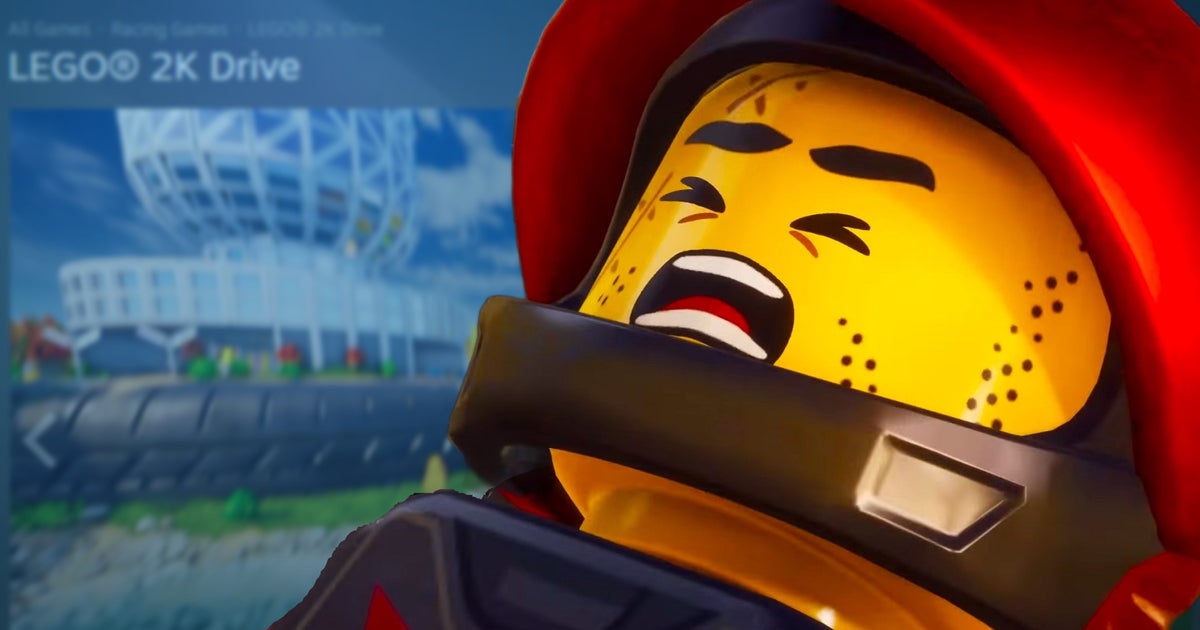
Despite Stop Killing Games' efforts, publisher 2K is delisting Lego 2K Drive this week on PC and consoles, with the online services shutting down in 2027.
Indeed not really Stop Killing Games territory. You can’t really force a company to keep selling a game they don’t want to sell (or even contractually can’t sell) anymore.
It’s about preventing them from rendering sold copies inoperable.
Stop Killing Games absolutely uses partially disabled games (which this game will be after 2027) as part of their data/talking points to make their case to legislators. The delisting is a framing device of the article but not the main point, in my opinion. It draws attention to the delisting, but also the servers going offline and how that contrasts to the currently advancing Stop Killing Games movement. It does not at any point suggest that Stop Killing Games would apply to this specific game, but it’s still relevant because it’s two thinks happening concurrently in time that would affect each other. It’s a framing device.
I think it’s really important to highlight because it gets consumers asking, “what if it didn’t have to be this way?” What if this game wasn’t designed in such a way that 2K could partially disable it when they no longer found it profitable? What if 2K was forced by legislation to sunset their servers in a responsible way that allowed someone else to take over, such as by releasing server files? What if the game was designed in the first place to allow mods or direct peer-to-peer car sharing?
Stop Killing Games also uses the fact that game publishers often don’t disclose lengths or time before shut-downs and such as part of their case to legislators, which is a fairly large part of their argument in the European push especially. In this case, 2K has given around a year warning, but what if they were required by legislation to inform the consumer before purchase how long their game would have full functionality? Publishers don’t want to do that, and don’t do that, because they know it would negatively affect the value of their game, but it’s extremely consumer hostile. Imagine you bought the game and less than a month later, they announce they’re shutting down half the game’s functions in X days, and there’s no way for anyone else to be able to restore those functions.
That’s exactly the kind of thing that Stop Killing Games is advocating against. Even if their push wouldn’t apply to this game specifically, using it as another point of data helps their case, and the press shining more and more light on the games doing this and the SKG movement is good, imho.
2K games is delisting casual racing game Lego 2K Drive this week, but it’ll remain playable online for another year and work offline once support ends.
Assuming “work offline” means players don’t lose any game modes, this is literally a best case scenario. Stop Killing Games wouldn’t/can’t ask for any more. They could literally use this as an example of what should be done.
what if they were required by legislation to inform the consumer before purchase how long their game would have full functionality?
This is often something that can’t be known. They might be prepared to host the servers for a decade if it makes financial sense, or if there are only 20ppl online a week after launch, they’ll probably have to shut it down in a month, and possibly go bankrupt. As long as they don’t prohibit [those 20] buyers from continuing to play the game, it doesn’t matter. Stop Killing Games can’t make them know the future, but it can make them provide a way for the community to continue without them regardless of what happens.
Stop Killing Games is selling legislation that would be satisfied by this scenario, correct. That does not mean that they cannot seek or want more, though. Ross often touches on this. Games don’t have to be designed this way. For example, peer to peer connections used to be more common in games. They are designed the way they are now largely so they can collect data from you. It is consumer hostile.
As for the second part, this again comes back to games not having to be designed that way. In Europe, consumers already have more lawful protections when purchasing software than in other parts of the world. And part of SKG’s argument to legislators right now is that game company’s terms are already illegal under EU law, or at the very least unclear.
If a game was designed with responsible end of life plans, for example, a company could absolutely make promises about how long a game will last. For example, guaranteeing one year of first party support and then release of necessary files for any third party support.
They are designed the way they are now largely so they can collect data from you. It is consumer hostile.
You mean with centralized servers? No, it’s so they can be server authoritative to guarantee some level of stability, matchmaking, cross-game state, anti-cheat, etc. Ex. you would not be able to have the Arc Raiders experience with p2p servers. As for your data, they can gather that regardless, this would not be a cost effective way to do it.
No one here is disagreeing with the motives of SKG. The discussion at hand is whether this article you posted refers to a scenario that would be improved by the SKG initiative. And it sounds like you agree it satisfies what SKG wants. So the headline should read more like “2K is doing <blah> which is good. Reminder that SKG is trying to guarantee this.”
That does not mean that they cannot seek or want more, though.
For SKG, all that matters to me is what becomes a government-enforced requirement. We can advocate for more all we want, but we were already doing that, and will continue to. Ross can believe whatever he wants about what a company should do, but if SKG isn’t advocating for it as legislation, then I don’t see it as relevant to the initiative.


Indeed not really Stop Killing Games territory. You can’t really force a company to keep selling a game they don’t want to sell (or even contractually can’t sell) anymore.
It’s about preventing them from rendering sold copies inoperable.
Stop Killing Games absolutely uses partially disabled games (which this game will be after 2027) as part of their data/talking points to make their case to legislators. The delisting is a framing device of the article but not the main point, in my opinion. It draws attention to the delisting, but also the servers going offline and how that contrasts to the currently advancing Stop Killing Games movement. It does not at any point suggest that Stop Killing Games would apply to this specific game, but it’s still relevant because it’s two thinks happening concurrently in time that would affect each other. It’s a framing device.
I think it’s really important to highlight because it gets consumers asking, “what if it didn’t have to be this way?” What if this game wasn’t designed in such a way that 2K could partially disable it when they no longer found it profitable? What if 2K was forced by legislation to sunset their servers in a responsible way that allowed someone else to take over, such as by releasing server files? What if the game was designed in the first place to allow mods or direct peer-to-peer car sharing?
Stop Killing Games also uses the fact that game publishers often don’t disclose lengths or time before shut-downs and such as part of their case to legislators, which is a fairly large part of their argument in the European push especially. In this case, 2K has given around a year warning, but what if they were required by legislation to inform the consumer before purchase how long their game would have full functionality? Publishers don’t want to do that, and don’t do that, because they know it would negatively affect the value of their game, but it’s extremely consumer hostile. Imagine you bought the game and less than a month later, they announce they’re shutting down half the game’s functions in X days, and there’s no way for anyone else to be able to restore those functions.
That’s exactly the kind of thing that Stop Killing Games is advocating against. Even if their push wouldn’t apply to this game specifically, using it as another point of data helps their case, and the press shining more and more light on the games doing this and the SKG movement is good, imho.
From the article,
Assuming “work offline” means players don’t lose any game modes, this is literally a best case scenario. Stop Killing Games wouldn’t/can’t ask for any more. They could literally use this as an example of what should be done.
This is often something that can’t be known. They might be prepared to host the servers for a decade if it makes financial sense, or if there are only 20ppl online a week after launch, they’ll probably have to shut it down in a month, and possibly go bankrupt. As long as they don’t prohibit [those 20] buyers from continuing to play the game, it doesn’t matter. Stop Killing Games can’t make them know the future, but it can make them provide a way for the community to continue without them regardless of what happens.
Stop Killing Games is selling legislation that would be satisfied by this scenario, correct. That does not mean that they cannot seek or want more, though. Ross often touches on this. Games don’t have to be designed this way. For example, peer to peer connections used to be more common in games. They are designed the way they are now largely so they can collect data from you. It is consumer hostile.
As for the second part, this again comes back to games not having to be designed that way. In Europe, consumers already have more lawful protections when purchasing software than in other parts of the world. And part of SKG’s argument to legislators right now is that game company’s terms are already illegal under EU law, or at the very least unclear.
If a game was designed with responsible end of life plans, for example, a company could absolutely make promises about how long a game will last. For example, guaranteeing one year of first party support and then release of necessary files for any third party support.
You mean with centralized servers? No, it’s so they can be server authoritative to guarantee some level of stability, matchmaking, cross-game state, anti-cheat, etc. Ex. you would not be able to have the Arc Raiders experience with p2p servers. As for your data, they can gather that regardless, this would not be a cost effective way to do it.
No one here is disagreeing with the motives of SKG. The discussion at hand is whether this article you posted refers to a scenario that would be improved by the SKG initiative. And it sounds like you agree it satisfies what SKG wants. So the headline should read more like “2K is doing <blah> which is good. Reminder that SKG is trying to guarantee this.”
For SKG, all that matters to me is what becomes a government-enforced requirement. We can advocate for more all we want, but we were already doing that, and will continue to. Ross can believe whatever he wants about what a company should do, but if SKG isn’t advocating for it as legislation, then I don’t see it as relevant to the initiative.
The headline can already be interpreted the way you say as it’s written. The point is that they are related events, and worth framing together.
You also seem quite dismissive of Ross’ opinion considering he spearheaded the movement for a decade or so before it really took off in the last year.
Anywho, we clearly agree on much just not the merit of the article it seems. Have a good one!
Alright, yeah if that was the intention of the headline, then fine enough. I think I’m not the only one in this thread who didn’t read it that way.
Cheers.