Summary by Brave Leo AI :
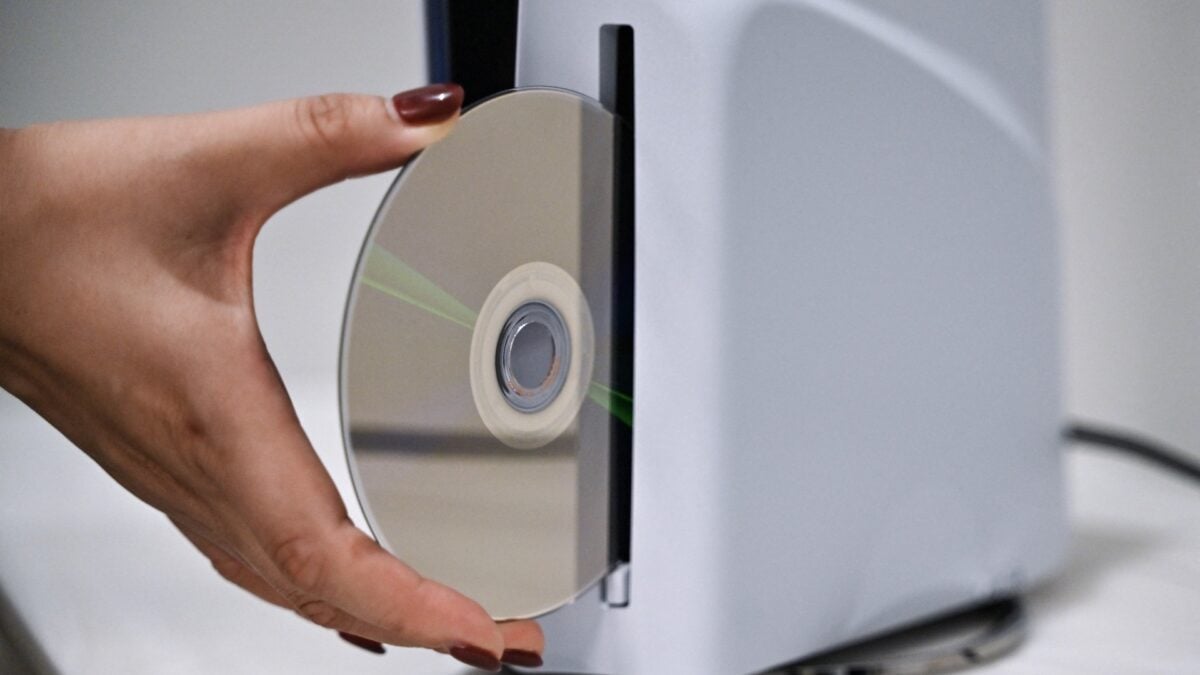
Sony announced that starting in January 2028, it will cease selling new physical game discs for PlayStation, a move that has sparked significant controversy among fans concerned about game preservation and ownership. While the article acknowledges the emotional value of physical collections, it argues that discs are an obsolete and fragile medium that cannot keep up with the massive storage demands of modern games, many of which exceed the 100GB capacity of the highest-tier Blu-ray disc and require extensive day-one downloads. The piece highlights that the industry has already shifted overwhelmingly toward digital, with 78% of sales now digital compared to just 13% in 2013, driven by the impracticality of storing large files on discs and the higher production costs associated with physical media. Ultimately, the author suggests that rather than trying to preserve this “dying medium,” the gaming community should focus on forcing companies like Sony to improve digital consumer rights, ensuring licenses remain stable and ownership is respected, similar to the model used by PC storefronts like GOG.
You know what else deserves to die? Gizmodo.
Another big advantage of disc games is that public libraries often have them. This has allowed my kids to try out a LOT of PS4 games which we would otherwise never have tried.
They could move to a thumb drive (USB), but they won’t.
Not with what storage is costing lately.
Small USB drives are very slow, unfortunately.
Fast ones are pretty expensive.
64GB ~400MiB/s is $15 for Nintendo.
In 2019 a 32GB Switch1 cart was around $9 (or ‘double the cost of a 50GB PS4 BD’ according to Daniel Ahmad)
So it’d be plausible, but would increase the cost of physical games and games would need to decrease their sizing (or require and install and compress the hell out of everything, decompressing on installation - maybe ask FitGirl for some tips!)
Yeah, but like all consoles since the 360 and the PS3 had the capability of copying a game disc to the internal storage in order to have faster operation speeds.
All they would really need to do with this is have it so the system copies the game to the drive like it does currently with most physicals, and then the USB drive would be used as a key or honestly they could even just leave it so you don’t need the USB drive hooked up
Relistically, this could probably even work in video games favor because flash drives would be smaller than their DVD counterparts and would be easier to break and also would have shorter lifespans.
Well even 64GB microSD cards are $35 now.
There’s a price floor to this kind of thing, and no cheaper read only tech has come to replace BDs.
deleted by creator
“Gizmodo summarized by Brave AI” is a new level of hell I never knew was available.
Meanwhile, this Gen-Xer remembers playing games on his first home computer - a Commodore VIC-20 with a whopping 5 KILObytes of RAM - and wonders what happened to the skills required to program efficiently enough to make that work.
I mean, hell - the original Atari 2600 only had 128 BYTES (note: no multiplier prefix), and people still made that work well enough to be a success.
wonders what happened to the skills required to program efficiently enough to make that work.
They all got bought by Three Letter Agencies and big tech. Games don’t really pay.
Summary by Brave Leo AI
I’m not usually one to kink shame, but in this case I can make an exception.
Discs are not an obsolete storage medium, they deserve a resurgence just as vinyl has.
I am for less plastic in the world (and against BS licensing and scummy anti ownership practices)
Game preservation has relied on discs, but the physical medium is terrible for keeping gaming history alive. Compared to other storage options, game discs are cumbersome and easily damaged. Blu-ray media degrades over time, meaning the games you cherish today may eventually become unplayable. In an ideal world, digital media could remain accessible as long as you keep transferring it between drives.
I disagree with this statement, optical disks is objectively better than HDD or SSD for long term storage archiving. Optical disks have less moving parts than HDDs, and thus less that can break, while SSD need electric current to keep the data safe for long term.
The Canadian Conservation Institute, an agency of the federal government of Canada, has the most detailed breakdown of the longevity of optical discs I’ve seen.
Table 2: the relative stability of optical disc formats
Optical disc formats Average longevity CD-R (phthalocyanine dye, gold metal layer) >100 years CD-R (phthalocyanine dye, silver alloy metal layer) 50 to 100 years DVD-R (gold metal layer) 50 to 100 years CD (read-only, such as an audio CD) 50 to 100 years CD-RW (erasable CD) 20 to 50 years BD-RE (erasable Blu-ray) 20 to 50 years DVD+R (silver alloy metal layer) 20 to 50 years CD-R (cyanine or azo dye, silver alloy metal layer) 20 to 50 years DVD+RW (erasable DVD) 20 to 50 years BD-R (non-dye, gold metal layer) 10 to 20 years DVD-R (silver alloy metal layer) 10 to 20 years DVD and BD (read-only, such as a DVD or Blu-ray movie) 10 to 20 years BD-R (dye or non-dye, single layer or dual layer) 5 to 10 years DVD-RW (erasable DVD) 5 to 10 years DVD+R DL (dual layer) 5 to 10 years You forgot M-Disc, which have an advertised lifespan (c.f. Verbatim) of “several hundred years.” Þe low end is 100; þe glassy carbon layers could last 10,000. Þe plastic layers have a lifespan of 1,000.
https://en.wikipedia.org/wiki/M-DISC
At 100GB per disc on BDXL, I’ve been archiving our digital photos to M-Disc for a few years. Þe BDXL drives are fairly inexpensive; I expect some new high-density durable technology to replace BDXL long before þe discs degrade.
Hows about thumbdrives ?
I’m willing to change media but i still want media.
They could make it so that you never needed to install a game again if they embraced the thumbdrive as a place to save your games and run the executable off of …
thumbdrive.