

if it’s big it’s definitely not O(1)
If it’s a finite sized chair, it’s O(1)!
Not if items are covered by other items. You’ve got a layer of fast L1 cache that is O(1), but exceed the limit of that layer by placing an item of clothing on top of it, and some elements are effectively “pushed down” to a higher latency tier, which is going to be closer to O(log N) as you have to move some percentage of the items out of the way to get to the target item. Cache eviction (doing the laundry) will reset this.
As always careful optimisation of the cache size, in relation to the expected distribution of items to be accessed, is key to maximising performance.
Nope. Assume the chair fits at most C clothes, with C being a constant.
The efficiency is at worst O© = O(C * 1) = C * O(1) = O(1).
Sure, the more clothes are on top, the longer it takes. But Big O notation is only useful if the N gets very big. And considering that the naximum amount of clothes is likely very small, it can be treated as O(1).
If there’s one layer of clothes then you’re correct, it O(1). On further thought deeper piles are not O(log N), but O(N). Once the number of items exceeds C it takes more than a single operation to retrieve an item from the bottom layer, and the number of operations is proportional to the number of layers, or N/C.
If you consider either picking an item up or moving it aside as a single operation, then retrieval from a single layer take 1 operation, and is O(1), but retrieval from the bottom of a two layer pile actually takes 3 operations (move the top item, retrieve the target item, replace the top item into the bottom layer, or you risk getting a deeper pile in one slot in the pathalogical case). Retrieval from the bottom of 3 layers takes 5 operations (move, move, take, replace, replace). in other words we have an O(1) process for taking the target item, and an O(N/C)=O(N) process for uncovering it in the first place, giving O(N) over all.
Your statement that “considering that the naximum amount of clothes is likely very small, it can be treated as O(1).” is true iff N<=C, which, I concede, is a likely scenario in any well managed laundry pile, hence comment about cache sizing.
That’s not how Big O works
The bigger the pile, the longer it takes to find an individual item (worst case). How is that O(1)?
I mean, if structure is O(1) for low N, it’s still O(1) for high N. If O “changes” from 1 to N with size then it’s never been 1. All I’m saying
“if it’s big”
is not how you identify correct O
I only put “if it’s big” to help readers imagine a large pile and how it would become more inconvenient the larger the pile. Language is not as precise as math or programming. If you’d like you can imagine the sentence as saying something like “imagine a big pile. It’s definitely not O(1)”
It is quite reasonable to limit the average case O to the most common inputs with the caveat that it can be worse otherwise. It’s not like every arithmetic operation is counted as O(n) in Python for example as you aren’t expected to use numbers larger than 2^32 often
Maybe normalizing mental illness was a mistake
OK fine but everybody else has to quit that big popular delusion before I’ll stop being ADHD.
This!!!
I use an open wire shelf like this
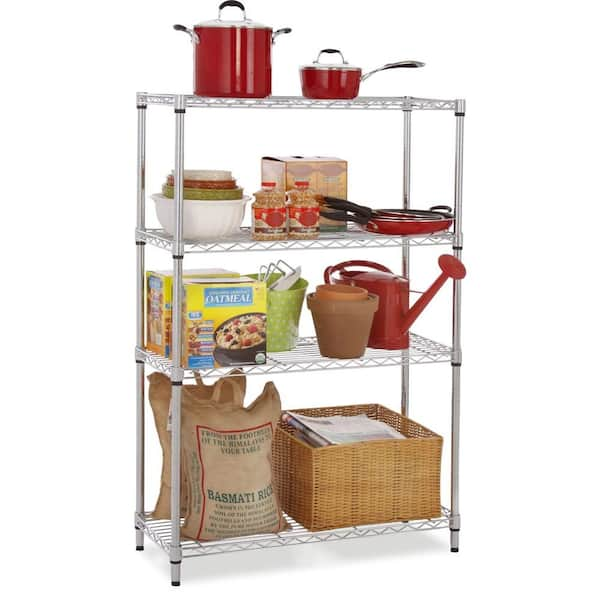
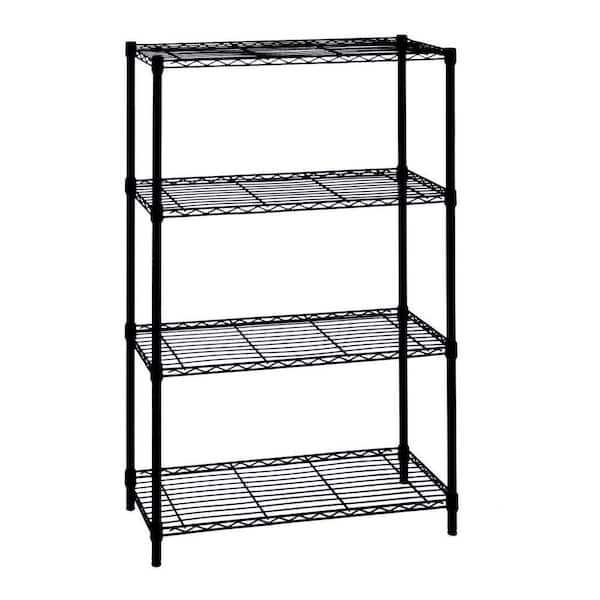
And it works great as an ADHD friendly solution for me. Completely solved my clothes-all-over-the-floor problem, since I can’t put them on my chair (I need my chair free for light therapy in the mornings)
If the chair is for light therapy do you use a chaise longue for heavy therapy?
No, my psychologist has like a small couch, loveseat kinda thing
(Light therapy meaning light as in lighting or sunlight. Used to manage my circadian rhythm disorder)
Whats gonna be O(n^n) is the number of belts on you ass should you not start organizing now.
Y’all are slobs. Just get a clothes tree.
Be me, have 15 items. Use any structure with any O. Latency still low