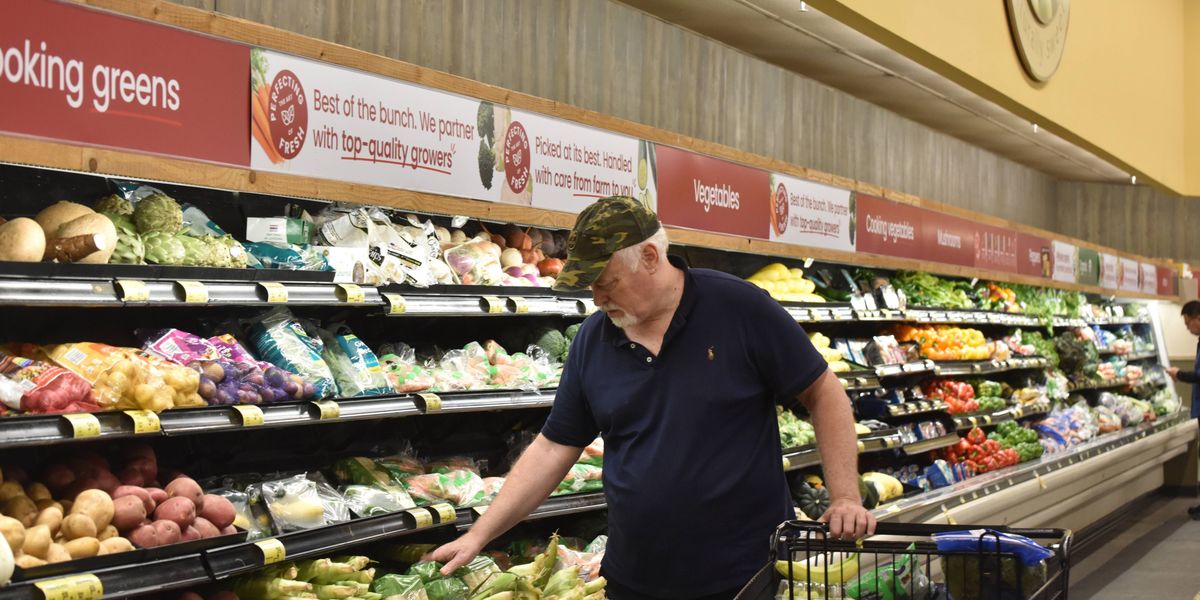
A new law will ban retailers from using shoppers’ personal data to hike grocery prices—but consumer advocates warn it contains loopholes that companies could exploit.
Why only for groceries?
In the interest of keeping markets fair, it should be illegal across the board to change prices depending on who the customer is*. The price is the price, as it should be in a free and fair market.
*Though I think I’d still allow for rewards/loyalty card programs and coupons given to frequent customers and that sort of thing – with the distinction being it’s something that the customer explicitly opts in to. And a restriction that these programs can only ever lower prices, never raise them.
Don’t let perfection be the enemy of good. Keep pushing for better consumer protections.
I actually would like to prevent loyalty card programs from lowering your price. Just call it a sale.
They want to harvest your data and sell it. And you know as sure fuck they aren’t going to shit to protect it.
They want to harvest your data and sell it.
Well, yes. But they’re doing this anyway. If you’re paying with a card (and most people do), they’re using your credit card number as an identifier to track you across all the purchases you made across all their stores. These days, they may also be using facial recognition for the same purpose, to even catch the people paying with cash. Making rewards program memberships and the like illegal would barely slow down their data collection at all.
It may not slow down the data collection much, other than perhaps people using different cards at different times, but if you aren’t in a loyalty program, the only place they could market specifically to you would be at the checkout.
Unless I guess they are upfront about facial recognition and have screens in store… which just sounds awful.
Step by step it will get there. This needs to be told to whoever got this to happen! And also to improve this
Step by step is the typical weak Democrat policy. They make tiny incremental changes that are so small that nobody will ever notice. The Democratic party needs to pass legislation that is not afraid of making changes because big changes are needed desperately.
I’m not talking tiny incremental steps I’m talking massive steps, and steps in general but I agree that is a weak component of current Democrat policy
Rewards programs are also a scam, in a way. The company isn’t giving shit away for free, not these big corporations who run those things. Either you’re paying for it and getting your own money back, or other customers are paying for it. All so they can get a monopoly on your wallet.
Well, you (and everyone else) are paying for it through retail markups and profit margins … but you’re going to be paying that anyway under capitalism.
What the store gets out of it is:
A) They hope their rewards program will motivate you to shop at their store, rather than going to any competitor’s, since you have a rewards card for their store and hopefully not the others. So the rewards program could increase their market share a bit, at the cost of a few discounts.
B) They’re using it to track you, of course. It provides more analytics for them to further optimize selling you shit, and they might also be selling the data to 3rd parties.
I await the inevitable Republican backed federal law that preempts state laws and makes it legal except under a very narrow case that somehow would be beneficial to consumers.
We must do it.
For the children.
/s
No sales tax on groceries purchased with tips
But they want to get rid of income tax and only tax consumption.
I propose no sales tax to be paid by the buyer at all. Ever. Why am I taxed when I make my money and then taxed again when I use my money? Make sellers pay sales tax, and have the pricetag be the full price!
You… eh… what?
How is this even a thing? What kind of hellhole do you poor us-americans live in?
Yeah dog, is not just our government… Well, I guess this is because of the lack of a government for the people. But yeah for more than a few years shopping for groceries has become where do you personally get the lowest prices. I get different discounts from my partner.
We now shop at a store that doesn’t play this type of game but many people live in an area that only contains stores like this.
you know they just copy airlines, right?
Companies just have way too much data about people.
It should be illegal to store/compile data that isn’t directly related to the good, services or products that you’re offering.
We’re getting to the point where everything about you, down to your real-time location, is available to anyone with enough money. That’s just not a power that we should allow to go unregulated.
We really need a non profit that buys data on politicians and Billionaires and then just make an app for people to follow them around and harass them to get this banned.
This guy has the right idea:
https://en.wikipedia.org/wiki/ElonJet
Though his posts on Twitter have a 24h delay due to their change in community guidelines.
You can get live information from their website: https://grndcntrl.net/
This is the real crux of the issue. Data collection and algorithmic incentives are destroying society.
all companies are in the data business now. that IS the business.
i told a friend maybe 2 years ago that mcdonalds app and changing to digital drive thru menus would mean they could change prices at any time and even per customer. he thought it would be “too difficult”
he thought it would be “too difficult”
A lot of people’s reluctance to focus on privacy is because they don’t understand the scale of the problem or the downstream consequences.
That isn’t too surprising, it’s an incredibly complex topic and the companies that benefit from our collective ignorance go out of their way to gaslight everyone.
They don’t call it a ‘We’re stealing all of you data’ disclosure they call it a ‘Privacy Notice’. They announce that they’ve added the option to opt-out (a Dark Pattern) of some new privacy destroying feature instead of announcing the privacy destroying feature. Bit by bit, people are bombarded with a bunch of messaging that makes them think that companies are looking to protect your privacy.
“Your privacy is valuable to us” is probably the most honest thing they say, it is incredibly valuable… many hundreds of billions of dollars worth of value.
Wtf is that shit even.
Imagine having to hire someone who gets lower prices to do your shopping.
Canada needs this. Also either a full fucking ban on the remote-updated epaper price tags, or at the least very strict rules on when they can be updated (i.e. once a day before opening or after closing to the public)
And 24 hour stores can update their prices at midnight, but the lower of the two prices is still effective for the first 2 hours, in case anyone was actively shopping during the change.
Who wrote the law in the first place? That should tell you enough.
I live in MD. I dont know how this affects me since I dont mobile order anything, but the precedent sounds good to set
These include electronic shelf labels, which advocates have warned could allow companies to instantly change grocery prices based on the time of day, weather, and other factors that influence consumer demand.
“Digital price tags are replacing paper ones. It’s happening because we are having cameras that are watching aisles, it’s happening because we have apps that are moving from search-based to predictive,”
You are not immune.
Surveillance pricing usually makes people think per-person pricing, but the law goes further than just that.
I worked on an electronic shelf label project at a (now defunct) retail project. I’m less worried about them trying to target prices per user while in a store because there are some difficult hardware and software challenges trying to show a price to one person (like what if two people are looking at it.) Showing a per-user price per app is trivial. There’s also laws in most states that require you to pay the price shown on the price tag and trying to target per person risks failing that, though that depends on state enforcement. The system I worked at linked the prices to the point of sale system to ensure you paid the lowest price shown on any price tag in the last few hours (though that was company policy to make complying with the law easier.)
What I am worried about is prices dynamically changing based micro trends like water getting more expensive on warm days. Some people might say that increase prices means increased supply to meet that demand, the real risk is retailers being able to micro optimize prices to better capture consumer surplus as profits. A consumer is un-prepared for that and the consumer will not benefit.
- big grocery state lobbying intensifies. . .
Let’s ban other theoretical concepts as well! /s The simple solution is to bring back cost accounting and make it transparent. A system where everything needs to be kept secret to fleece the masses is not a system I’d want to support in my country (but look…here we are).
Im amazed that that would happen in the USA.
The absence of haggling was one of our cultural high-points, on the opposite end from “tipped wages”.
I don’t even get how it would work in practice. If me and another person are staring at the price tag of a block of cheese, and I’m rich and they’re not, does it laser beam a price into my eyeballs and a different, lower price into theirs? Cause otherwise when I take the block of cheese to the register and suddenly it’s double the price, I’m putting the cheese back cause I saw the lower price.
Is this just for online orders? Or how do they get my data if I’d just walk into the store without using their app and paying cash? Facial recognition? If so that’s very dystopian.
Potentially face recognition, but primarily through the signals your phone outputs, like WiFi and Bluetooth signals.
If you don’t use a rewards or loyalty program, you’re already paying the highest price for the items.
it’s just as dystopian with a browser
A lot of stores here in the UK already employ facial recognition if you walk in.
It stops known shoplifters throughout stores (so if you shoplifted in a Nottingham Tesco’s, be prepared to be banned from Sainsbury’s in Swansea), but it also tracks your shopping so it’s being sold as a convenience feature - you walk up to a till and it already knows what’s in your basket and how much you need to pay.
Oh and while you walk through the stores, you get targeted advettisements that’s already connected to your online identity. You looked up symptoms of PCOS? Have fun being blasted with hair removal product ads throughout your shopping.
It’s pretty fucking dystopian, yes. My local corner shop doesn’t need to know my shopping habits. It won’t sell me more milk or bread. And I won’t be buying that new type of chicken nuggies no matter how hard they try to sell it. I’m perfectly happy with what I want to buy, I don’t need or want optimised ads.
so if you shoplifted in a Nottingham Tesco’s, be prepared to be banned from Sainsbury’s in Swansea
This got a genuine chuckle from me, I love a bit of good writing in the wild!
there is a woman here, in a country town, who was banned from EVERY shop in town because she was a serial shoplifter. https://www.9news.com.au/national/shoplifter-banned-from-entering-every-gunnedah-retail-store-a-current-affair/6872ca17-b120-4482-9de4-3f78bdaf4060
I was in a small town in Maine that did that informally, there were a handful of shops and a ban at one store was applied everywhere. They all had signs warning about the policy. It was apparently very effective.
Facial recognition is just one way to begin or build upon a profile, but there are others. Cameras would also be looking for things like specific brands of clothing being worn. Raggedy, no-name work shirt? You get a pass. $80 Carhartt jacket? Maybe we add a buck fifty onto that tub of Folgers you rely on to get through the day. Wearing the latest $300 T-shirt drop from the Foofoo X MTBLZ brokemaxxing collab? Hell, I’d personally wanna charge you extra on principle.
Even without cameras and their “AI” trying to gauge your wealth, past purchases can just as easily be associated with the credit/debit cards used to pay for them in order to build a profile. If they know what you regularly buy they can start nickel and dime’ing those things to test the limits of what you’re willing to spend. I feel like I also heard about some stores using Bluetooth or NFC triangulation. So your phone, smart watch, fitness tracker, etc could essentially serve as their means to watch you movements. They know the moment you entered, how long you lingered in a specific spot in any given aisle, and what register you checked out at. Now there’s a profile for those devices. Paid with debit/credit again? Then those devices and the purchasing method are connected and the overall profile has grown.
I’m kind of curious how much longer places are going to accept cash. It’s anecdotal but, from grocers to department stores, there never seems to be more than a single staffed checkout lane around here anymore. Then, of course, the self checkouts don’t accept cash (or the few that do seem to always be out of service). Probably equal parts “we don’t want to pay more employees” and “we want your data” motivating that shift.
We’re decades into dystopian already.
More states really need to get on board with this
I’m happy to see the first state do this, hopefully we can get the ball rolling on more.