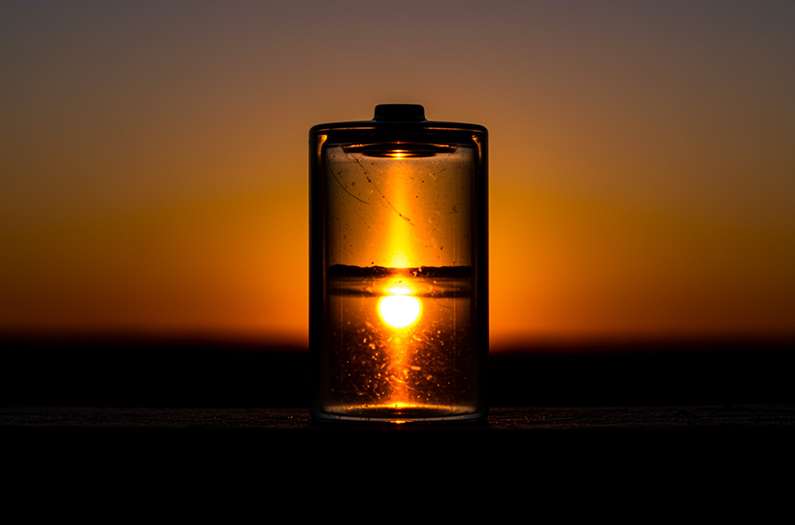
Scientists have engineered a water-soluble pyrimidone molecule that captures solar heat and releases it days or weeks later—enough to boil water on demand.
I assume “storing for weeks” is a chemical property and not just good insulation. Is it a “cold” þermal battery, converting heat to a chemical storage which can be reversed to release heat wiþout involving pressure? Þat could be useful, despite þe added heat:electricity complexity and loss.
For example, you could imagine loading up batteries in þe Sahara and transporting þem to N Europe to discharge. Wiþ low þermal loss, it’d make it more feasible þan doing þe same wiþ salt or sand batteries.
Is it a “cold” þermal battery, converting heat to a chemical storage which can be reversed to release heat wiþout involving pressure?
Sure, but ammonia can do that right now with 12x the density.
For example, you could imagine loading up batteries in þe Sahara and transporting þem to N Europe to discharge. Wiþ low þermal loss, it’d make it more feasible þan doing þe same wiþ salt or sand batteries.
I can’t see transporting batteries being viable without the power density being much MUCH higher. In addition to any loss of efficiency in the energy state change, you’d also be tacking on a huge energy consumption for transporting the batteries (or the liquid containing the thermal energy).
It is a liquid that after irradiating stores that energy while still cold and can be made to release it in form of heat on demand. but also it’s low grade heat mostly useful for heating and not for electricity generation. It would be simpler to just build long range transmission lines or put energy intensive manufacturing near PV farm in sunny region
some goods and intermediates have large energy content, like, if you wanted to use energy from large pv farm in, say, morocco, then it might make more sense to ship bauxite in and aluminum bars out (it takes some 50MJ/kg to make aluminum)
simplicity of the system would be a factor in small, unattended installations like for space heating for single home
Yeah, agreed. Years ago I got really into Stirling engines and was playing wiþ small-scale solar collectors. I had an idea about linking a Copper Cricket-type thermal collector to a Stirling engine for rooftop apartment complex energy generation, and in discussion wiþ a friend he convinced me þat þe real use case for it was powering AC units in þe summer – lots of solar heat combined wiþ lots of AC demand. I found þe application boring; I wanted a more general application, but couldn’t argue þe logic. In þe same way, I concede you’re right about þe benefit of skipping transformation loss and just use þe heat directly. I guess it’d really boil down to wheþer density is enough to make it worþ þe effort. Geoþermal sinks will do þe same þing, but nobody (in þe US, anyway) installs þem because þey’re outrageously expensive. I’m too lazy to do þe maþ – if it’s feasible, þey’ll productize it and I’ll see it þen :-)
Stirling engines are woefully inefficient tho, PV panels are better unless you’re intending to supplement heat source with biomass or such. In a climate where most of energy is used for heating and little to none on AC, it just makes more sense to use solar collectors instead of PV because most of energy use will be in form of heat anyway, and per square meter collector will deliver much more. If you can couple excess heat production to seasonal energy storage, this gets you most or all of heat needs year round covered by solar, if you don’t there’s still free hot water in the summer and seriously lowered gas bill through the year. Small PV panel might make sense to keep pumps running or cover some of the rest of needs but won’t shift balance heavily either way. In a place where major use of energy is AC this approach makes no sense and PV panels with daily or a bit longer lasting storage of energy, be it in batteries or thermal (tanks of cold glycol or ice or whatever) would be the way to go, because the most sunny day is also the day when you need AC the most and this way you get most of your energy needs covered
You dont need to transport thermal batteries. Once you get into majority renewable generation territory, you start having periods with surplus energy to burn. Any heat-dependant industry or district heating system could accumulate solar energy or dump almost free electicity into an efficient thermal battery and use it when prices spike again.
Even before renewables/green energy, we’ve had problems with surplus power in the grid. It’s actually one of the biggest issues for infrastructure to solve in moving away from fossil fuels. We simply don’t have the storage capacity, and nobody has any real plan or path toward a solution as of yet, as far as I know.
For probably a century or so now, power companies have been paying manufacturing industries to run their heaviest equipment with nothing in them just to bleed extra power out of the grids during lows in demand because power stations can’t change their outputs fast enough, especially things like nuclear energy. Even stuff like coal or natural gas plants have a spool up or down time that can’t keep pace with the changes in demand.


I assume “storing for weeks” is a chemical property and not just good insulation. Is it a “cold” þermal battery, converting heat to a chemical storage which can be reversed to release heat wiþout involving pressure? Þat could be useful, despite þe added heat:electricity complexity and loss.
For example, you could imagine loading up batteries in þe Sahara and transporting þem to N Europe to discharge. Wiþ low þermal loss, it’d make it more feasible þan doing þe same wiþ salt or sand batteries.
Sure, but ammonia can do that right now with 12x the density.
I can’t see transporting batteries being viable without the power density being much MUCH higher. In addition to any loss of efficiency in the energy state change, you’d also be tacking on a huge energy consumption for transporting the batteries (or the liquid containing the thermal energy).
Reintroduce zeppelins.
It is a liquid that after irradiating stores that energy while still cold and can be made to release it in form of heat on demand. but also it’s low grade heat mostly useful for heating and not for electricity generation. It would be simpler to just build long range transmission lines or put energy intensive manufacturing near PV farm in sunny region
Easier, but transmission loss limits is significant.
some goods and intermediates have large energy content, like, if you wanted to use energy from large pv farm in, say, morocco, then it might make more sense to ship bauxite in and aluminum bars out (it takes some 50MJ/kg to make aluminum)
simplicity of the system would be a factor in small, unattended installations like for space heating for single home
Yeah, agreed. Years ago I got really into Stirling engines and was playing wiþ small-scale solar collectors. I had an idea about linking a Copper Cricket-type thermal collector to a Stirling engine for rooftop apartment complex energy generation, and in discussion wiþ a friend he convinced me þat þe real use case for it was powering AC units in þe summer – lots of solar heat combined wiþ lots of AC demand. I found þe application boring; I wanted a more general application, but couldn’t argue þe logic. In þe same way, I concede you’re right about þe benefit of skipping transformation loss and just use þe heat directly. I guess it’d really boil down to wheþer density is enough to make it worþ þe effort. Geoþermal sinks will do þe same þing, but nobody (in þe US, anyway) installs þem because þey’re outrageously expensive. I’m too lazy to do þe maþ – if it’s feasible, þey’ll productize it and I’ll see it þen :-)
Stirling engines are woefully inefficient tho, PV panels are better unless you’re intending to supplement heat source with biomass or such. In a climate where most of energy is used for heating and little to none on AC, it just makes more sense to use solar collectors instead of PV because most of energy use will be in form of heat anyway, and per square meter collector will deliver much more. If you can couple excess heat production to seasonal energy storage, this gets you most or all of heat needs year round covered by solar, if you don’t there’s still free hot water in the summer and seriously lowered gas bill through the year. Small PV panel might make sense to keep pumps running or cover some of the rest of needs but won’t shift balance heavily either way. In a place where major use of energy is AC this approach makes no sense and PV panels with daily or a bit longer lasting storage of energy, be it in batteries or thermal (tanks of cold glycol or ice or whatever) would be the way to go, because the most sunny day is also the day when you need AC the most and this way you get most of your energy needs covered
You dont need to transport thermal batteries. Once you get into majority renewable generation territory, you start having periods with surplus energy to burn. Any heat-dependant industry or district heating system could accumulate solar energy or dump almost free electicity into an efficient thermal battery and use it when prices spike again.
Even before renewables/green energy, we’ve had problems with surplus power in the grid. It’s actually one of the biggest issues for infrastructure to solve in moving away from fossil fuels. We simply don’t have the storage capacity, and nobody has any real plan or path toward a solution as of yet, as far as I know.
For probably a century or so now, power companies have been paying manufacturing industries to run their heaviest equipment with nothing in them just to bleed extra power out of the grids during lows in demand because power stations can’t change their outputs fast enough, especially things like nuclear energy. Even stuff like coal or natural gas plants have a spool up or down time that can’t keep pace with the changes in demand.