Supposedly this only checks OpenAI tools, you have to check Gemini separately and unfortunately the only way to do it is to use Gemini and type @Verify AI and attach the file
When someone posts slop on Lemmy, I give them an “AI” user tag. It becomes that much easier to identify in the future if I don’t block them. But it also tells me who to block when I keep seeing slop.
And when I see all the people pointing out it’s AI (including me), I sometimes think about the calories and time wasted collectively by all of us looking at it, figuring what’s unusual and writing it all down and it makes me sad
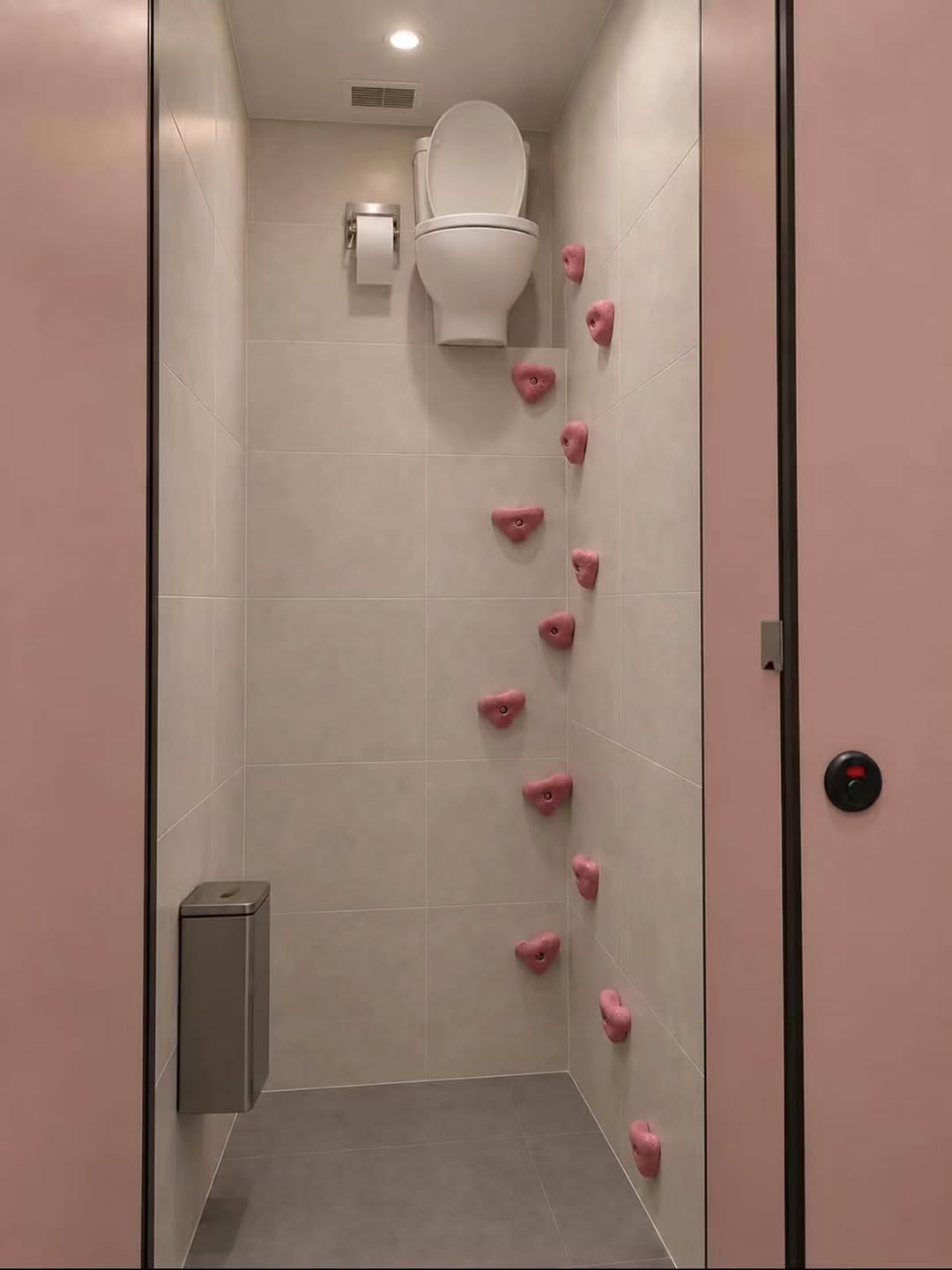
The shadows don’t match the light fixture’s position
No reflection of the photographer in the metal finish on the hygiene disposal bin.
Wall starts turning into an alcove in the upper right corner.
The toilet’s height leaves no room for the sitter on the shitter.
It’s a public toilet only accessible by rock-climbing. If it were real, it would be at an art museum and therefore findable with a search engine, with the name of an artist and the name of the museum where it’s displayed.


How do you know it’s AI?
Rather than giving a subjective answer -
It contains a SynthID watermark.
Ooh. Sounds useful. Where can I see that?
https://openai.com/research/verify/
Supposedly this only checks OpenAI tools, you have to check Gemini separately and unfortunately the only way to do it is to use Gemini and type @Verify AI and attach the file
When someone posts slop on Lemmy, I give them an “AI” user tag. It becomes that much easier to identify in the future if I don’t block them. But it also tells me who to block when I keep seeing slop.
And when I see all the people pointing out it’s AI (including me), I sometimes think about the calories and time wasted collectively by all of us looking at it, figuring what’s unusual and writing it all down and it makes me sad
The toilets with the ceramic bottom exist to hide the pipes in the bowl. It makes no sense to keep that if it’s not attached to the bottom.
It makes sense for an AI because that’s probably 80% of their training data.
The tiles have completely random sizes
This is some Escher style BS:
This makes no sense: