

You must log in or register to comment.
I really like these kind of games where you have to figure out things more by yourself and not have everything clearly laid out for you already.
In the past I definitely liked to have more guidance, so I think the modern AAA design can be good for some people. But I also noticed that my own capabilities were declining the more I leaned on these mechanics and indicators.
When playing these older games, It’s suddenly as if a part of my brain that I neglected starts working again. And it’s amazing what it can do. Remembering small relevant details and navigating a game-world without maps or markers.
A bit like driving with GPS all the time vs having the ability to ‘feel’ that you are going in the right direction. (especially if it’s a place you have been before or close to places you’ve been before)
It’s a great feeling when your brain shows what it’s capable of.
Does anybody know more games like thief that have such design?
Its the wide net issue. They want to capture as many possible players as possible so through stealth and loud combat in there but that comes at the cost of depth. It can be fixed. But it only ever will be done by passion projects.
The fascinating thing to be reminded of by seeing this video so many years later is that this cycle will repeat over and over again. “Thing I liked years ago is better than thing people like today,” says essayist. Some of it was, but it came at a cost, so we then valued other things in response to those costs/flaws.
Eh, I dunno, I think it’s possible to be fairly objective about the merits and downfalls of newer or older designs without nostalgia influencing it too much.
A different essayist made a semi-related point that there was a certain period in the late 90’s and early 2000’s where games were getting bigger budgets and better tech that allowed them to really expand their scope and possibilities, but with relatively little oversight from shareholders/CEO’s who would in later years essentially force higher budget games to fit a more generic mold for mass appeal. That era did seem to have a more risk-taking nature to it, which at least in the AAA space today, is a bit more muted.
That’s not to say there weren’t plenty of janky flops, if anything most of them probably don’t hold up, but the ones that do really show off what creative freedom combined with higher budgets could bring.
Today we have the indies who’ve brought back that creative freedom and resulted in some real bangers, and there are still some AAA stuff that slips through the cracks with some more risk-taking stuff (Death Stranding would be a good example, I suppose), but it does seem for the most part that AAA today is very much tending toward playing it safe, which can make things feel a bit samey or stagnant in that space.
Movies are mostly settled science at this point, right? From the invention of the camera, there were decades of experimenting with what could be done on film, and eventually we arrived at feature length and a toolbox of techniques to use within it. Now and then some other innovation comes along and blows people away, but it’s not every year. Most of the time, it’s adhering mostly to a formula and tweaking it, or just telling a different story in the same constraints. Likewise, I don’t think games will ever advance as fast as they did in most of our lifetimes, but we’ll still get new stuff here and there.
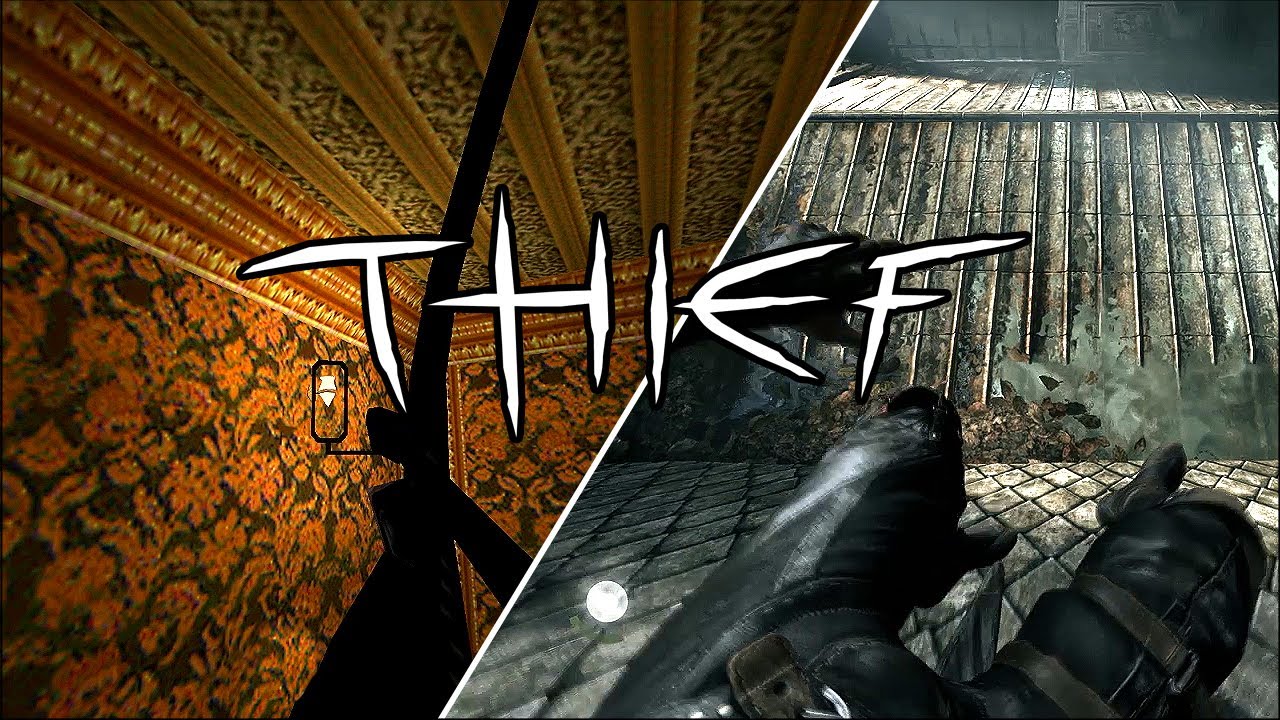
As far as “AAA” goes, the AAA of Thief 1’s day is barely bigger than most indie teams today. Shareholders or not, you can’t experiment with $100M (or as high as a few billion if you’re making Grand Theft Auto VI) like you can with $1M or even $10M. As much as the author puts Thief on a pedestal, I bounced off of it for not strictly adhering to stealth, like when it takes a detour into the undead and other monsters; and for the constraints of its own technology at the time, like geometry being so simple and textures being so reused that I found the levels tedious to navigate by way of lacking identifiable landmarks. Thief 1 loaded the entire level at once because there was no asset streaming. Thief 2014 had load-bearing walls demoed in the video because they couldn’t keep up the fidelity they targeted without dynamically unloading one part of the level and loading another from a hard drive.
Anyway, Project Shadowglass looks awesome. Hopefully there are no zombies.