I was also going to use aspirin as an example, there is also psychedelics as a treatment for various psychological ailments.
I’m also going to post a response i made to a comment further up.
I need to be more specific in how I mean “alternative” here.
What I mean is “not of the current scientific consensus” , which I realise isn’t exactly the same wording as the wikipedia definition
Thats my bad.
I also failed to mention that it also works the other way as well, where current science is discredited(fully or partially) , due to flaws in it’s methodology, reproducibility or some other reason.
In generalities i was thinking more of how certain branches or offshoots of what was considered to be mainstream ( or mainstream adjacent ) science were later found to be scientifically provable.
They were posited over the years in varied forms by multiple independent people, but they weren’t really fully accepted until the invention of a way of actually observing them.
This is largely what medicine was prior to the current , formal scientific method.
Local “medicine people” would have salves, cures, potions and other such concoctions passed down to apprentices, they might have some knowledge of how it works, but most of that knowledge would be in the practical application and treatment using said concoctions.
That’s not to dismiss this practice, the years of experience and experimentation (of a kind) was, in some cases, essentially a precursor to modern scientific method.
There are ways of analysing effects and positing theories without fully understanding how the underlying mechanism works.
Sometimes that leads to legitimate data around the effects of a medicine or treatment being dismissed as “alternative”, at least until formal experimentation is done and verified
As i said in another reply, I’m not saying it’s common, all i was saying was that it’s a possibility.
Nowadays we can potentially evaluate what is considered “alternative” for actual benefit, and if benefit is found then elevate it to actual medical science.
Formal science isn’t the only source of potential hypotheses.
If it’s not considered beneficial we can discard (for now), perhaps a fresh look later when our tooling and understanding has improved.
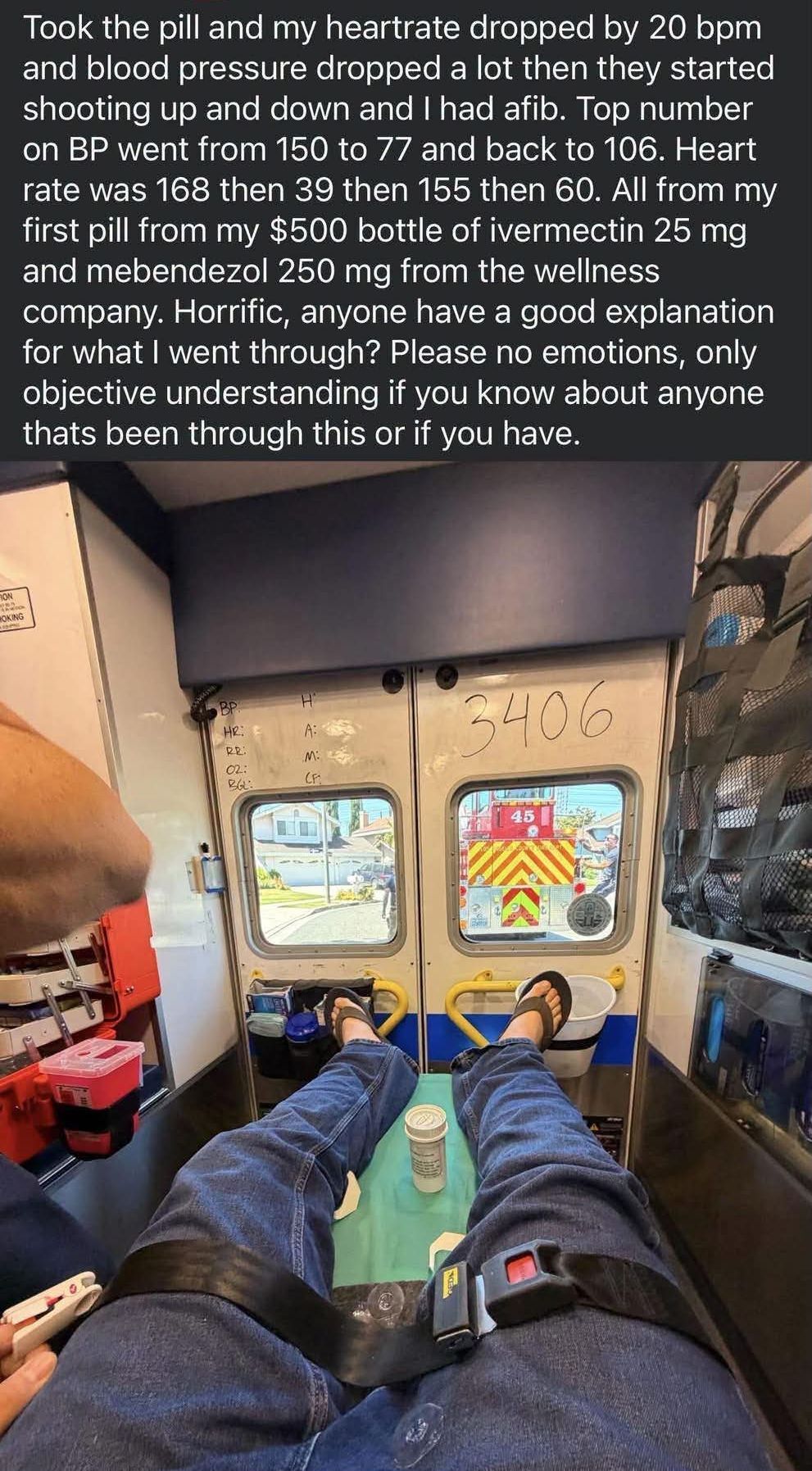
That way we can try to gain benefit where possible, and definitively ( for the current level of technology and resource ) suggest people kindly not overdose on de-wormer because we’ve scientifically determined it’s stupid and potentially lethal.
Formal science isn’t the only source of potential hypotheses.
It’s hard to believe that, considering all low hanging fruits were picked already and now new hypotheses are obtained through hard work of teams of scientists.


I was also going to use aspirin as an example, there is also psychedelics as a treatment for various psychological ailments.
I’m also going to post a response i made to a comment further up.
In generalities i was thinking more of how certain branches or offshoots of what was considered to be mainstream ( or mainstream adjacent ) science were later found to be scientifically provable.
An example of this is microbes.
They were posited over the years in varied forms by multiple independent people, but they weren’t really fully accepted until the invention of a way of actually observing them.
This is largely what medicine was prior to the current , formal scientific method. Local “medicine people” would have salves, cures, potions and other such concoctions passed down to apprentices, they might have some knowledge of how it works, but most of that knowledge would be in the practical application and treatment using said concoctions.
That’s not to dismiss this practice, the years of experience and experimentation (of a kind) was, in some cases, essentially a precursor to modern scientific method.
There are ways of analysing effects and positing theories without fully understanding how the underlying mechanism works.
Sometimes that leads to legitimate data around the effects of a medicine or treatment being dismissed as “alternative”, at least until formal experimentation is done and verified
As i said in another reply, I’m not saying it’s common, all i was saying was that it’s a possibility.
I think it’s safe to say nowadays we can rely on scientific method to find new cures, and completely abandon “alternative” medicine.
that’s the exact opposite of what i was saying.
Nowadays we can potentially evaluate what is considered “alternative” for actual benefit, and if benefit is found then elevate it to actual medical science.
Formal science isn’t the only source of potential hypotheses.
If it’s not considered beneficial we can discard (for now), perhaps a fresh look later when our tooling and understanding has improved.
That way we can try to gain benefit where possible, and definitively ( for the current level of technology and resource ) suggest people kindly not overdose on de-wormer because we’ve scientifically determined it’s stupid and potentially lethal.
It’s hard to believe that, considering all low hanging fruits were picked already and now new hypotheses are obtained through hard work of teams of scientists.
All low hanging fruits we know of.
This is one of those unknown unknown situations where there are things were don’t even know to be looking for.
Like microbes, yes we posited something like them, but the full implications the confirmation weren’t understood until after.
You believe a layman is still able to discover something in medicine. We’ll see.
Various new snake oils (ivermectin or urine for cancer , COVID and whatnot) sure aren’t it.
I think the belief that “the only place innovation can come from is trained scientists” is arrogant and unscientific, even in specialised fields.
Im not suggesting people will be producing testable medical end- products on the weekends.
Just that some things are worth testing/looking into, even if its suggested by someone not wearing a white coat.
If anything, the lack of low hanging fruit in the current common knowledge base should be an incentive to look in unorthodox places.
In addition there’s a wealth of historical information that is siloed by culture, language and accessibility (among other things).
That includes dusty old tomes in buried cities but also folk remedies passed down among small villages or families and everything in-between.
Absolutely agree.