There’s a lot of similarities between Brazilian Portuguese and Spanish. Most Portuguese speaking people can understand basic Spanish but it’s harder for Spanish speaking people to understand Portuguese.
At least that’s what my wife tells me as a Spanish native ~150 days into learning Portuguese.
IMO (formal) American Portuguese and Spanish are pretty close to mutually intelligible, especially in writing. There’s a surprisingly consistent “system” for converting words between them and once you notice it, it’s pretty easy to tell what a sentence should be in the other language, if it’s even spelled differently in the first place. The grammar is also very similar. The biggest difference that gets me is how Portuguese tends to shift past tense conjugations further into the past vs Spanish.
portguese brazillian has a ridiculous number of diphtongs? havr you seen english? it could be my bias as a native speaker but I don’t really see many diphtongs in brazillian portuguese
There’s the /ɔɪ/ in “choice”, and /aʊ/ in “mouth”.
There’s /aɪ/ in “light”.
Sometimes you hear a distinct /ʊ/ in “slow”, but again meaning there’s an /oʊ/ diphthong. But, if you dropped that sound and just pronounced it /o/, I think nobody would notice. I think you could argue that many dialects of English do that already.
There’s also a claim that /eɪ/ is heard in words like “play”, and I can maybe see that, but there’s also a claim that it’s how you pronounce “face”, and everyone I know just uses /e/.
There’s /juː/ as used in words like “music”. But, many of the words where that one was once used just use a /uː/ like “student” or “tune”.
So, that’s only /juː/, /ɔɪ/, /aɪ/ and /aʊ/ where the word sounds completely wrong if you don’t use the diphthong, and a number of other cases where some dialiects use a diphthong, or some people claim to hear a diphthong.
Meanwhiile in Portuguese you have:
/aj/ - pai
/ɐj/ - leite
/ej/ - rei
/oj/ - dois
/uj/ - fui
/aw/ - mau / mal
/ɐw/ - saudade
/ew/ - seu
/iw/ - viu
And then add to that all the nasal diphthongs like mão or não. There are a lot of other weird things going on with Portuguese, but really the only English dialect(s) with a similar amount of vowel sounds is Aussie / Kiwi English.
It’s often said that a language is just a dialect with an army.
Portuguese and Spanish (Castilian) are more closely related than Castilian is to Catalan. Yet Catalan is often classified as a dialect of Spanish than a language in its own right.


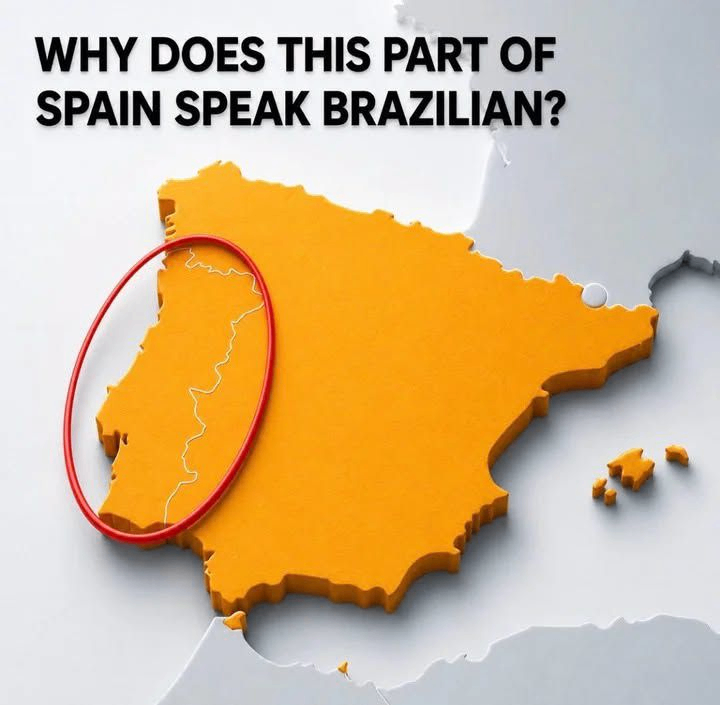
Better question why does a country sharing two land borders speak a completely different language to any other country.
Edit: Y’all forget the French
There’s a lot of similarities between Brazilian Portuguese and Spanish. Most Portuguese speaking people can understand basic Spanish but it’s harder for Spanish speaking people to understand Portuguese.
At least that’s what my wife tells me as a Spanish native ~150 days into learning Portuguese.
IMO (formal) American Portuguese and Spanish are pretty close to mutually intelligible, especially in writing. There’s a surprisingly consistent “system” for converting words between them and once you notice it, it’s pretty easy to tell what a sentence should be in the other language, if it’s even spelled differently in the first place. The grammar is also very similar. The biggest difference that gets me is how Portuguese tends to shift past tense conjugations further into the past vs Spanish.
I’m just curious, do you speak Portuguese or Spanish?
Português, filho da puta, dizes isso?
Caralho, coitado do cara.
Vê-se logo que é um carioca e nao um tuga, para tar a usar “cara”. Cara é a gasolina
Não precisa me ofender não, brasileiro sim, carioca… Deus me livre.
Digo o que me apetecer. Qual é o teu problema? Lava a boca.
Chamas-te @[email protected]?
Because Portuguese has many more vowels than Spanish and there are a lot of false friends between the two.
To me, it sounds like Brazilian Portuguese (dunno about European Portuguese) has a ridiculous number of diphthongs.
portguese brazillian has a ridiculous number of diphtongs? havr you seen english? it could be my bias as a native speaker but I don’t really see many diphtongs in brazillian portuguese
Which English diphthongs are you talking about?
There’s the /ɔɪ/ in “choice”, and /aʊ/ in “mouth”.
There’s /aɪ/ in “light”.
Sometimes you hear a distinct /ʊ/ in “slow”, but again meaning there’s an /oʊ/ diphthong. But, if you dropped that sound and just pronounced it /o/, I think nobody would notice. I think you could argue that many dialects of English do that already.
There’s also a claim that /eɪ/ is heard in words like “play”, and I can maybe see that, but there’s also a claim that it’s how you pronounce “face”, and everyone I know just uses /e/.
There’s /juː/ as used in words like “music”. But, many of the words where that one was once used just use a /uː/ like “student” or “tune”.
So, that’s only /juː/, /ɔɪ/, /aɪ/ and /aʊ/ where the word sounds completely wrong if you don’t use the diphthong, and a number of other cases where some dialiects use a diphthong, or some people claim to hear a diphthong.
Meanwhiile in Portuguese you have:
And then add to that all the nasal diphthongs like mão or não. There are a lot of other weird things going on with Portuguese, but really the only English dialect(s) with a similar amount of vowel sounds is Aussie / Kiwi English.
Hungary opens a beer and smiles…
The Euskera guys bring the popcorn…
Basque is also there and a completely different language family.
It’s often said that a language is just a dialect with an army.
Portuguese and Spanish (Castilian) are more closely related than Castilian is to Catalan. Yet Catalan is often classified as a dialect of Spanish than a language in its own right.
I have no idea which language you’re referring to!