

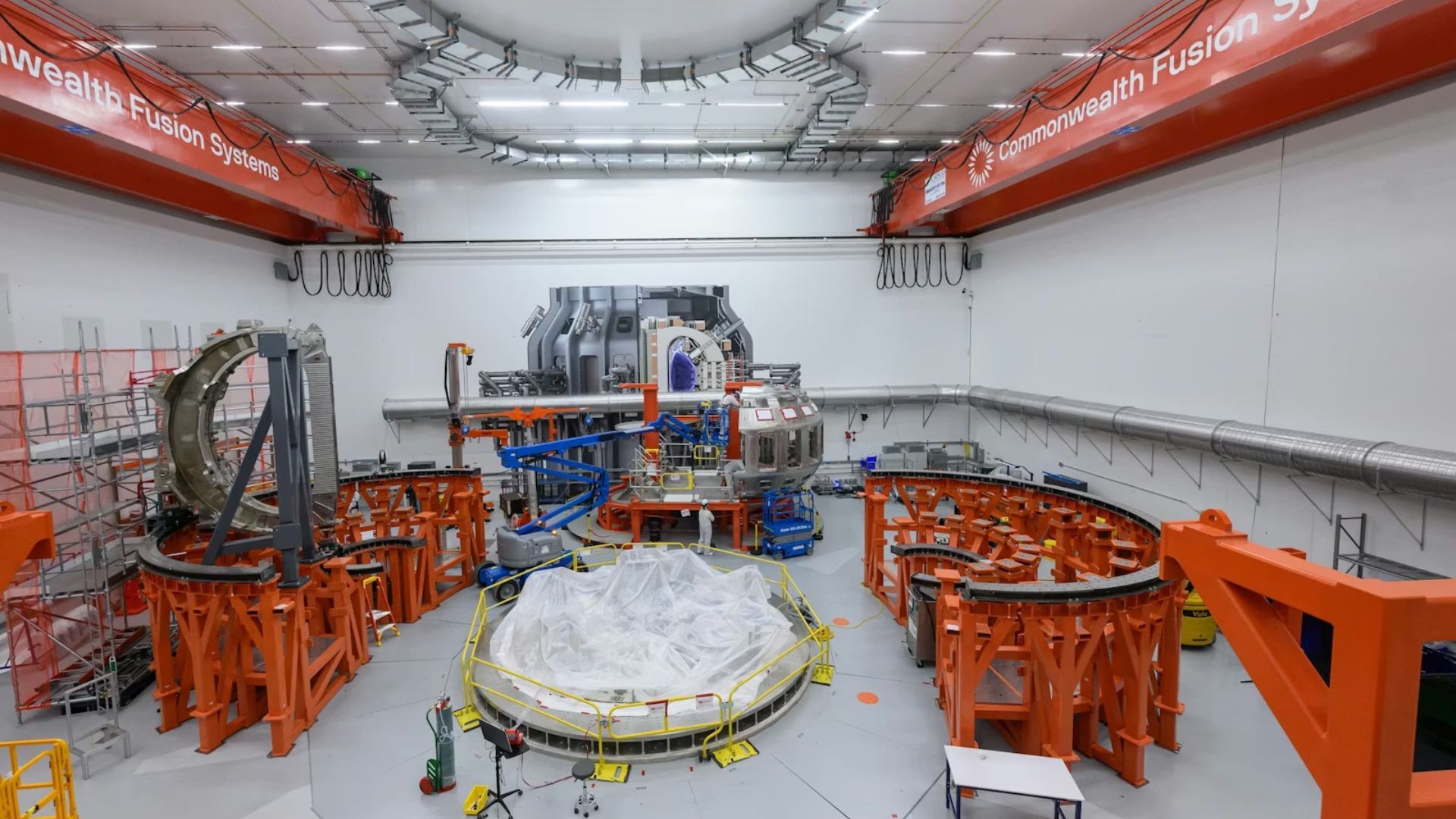
Commonwealth Fusion Systems (CFS) has verified the core plasma physics assumptions for its upcoming ARC fusion power plant following a peer-reviewed study published in the Journal of Plasma Physics.
The research confirms the ARC reactor design aligns with known physics, allowing the company to shift its focus toward detailed hardware engineering…
According to the validated models, the ARC plant will produce approximately 1.1 gigawatts (GW) of fusion power to generate 400 megawatts (MW) of net electricity for the grid…
CFS engineers are using this simulation framework to optimize upcoming design iterations, adjusting dimensions like tokamak width and divertor length to refine reactor performance before manufacturing begins.
Well, it’s not really an “efficiency” number.
For instance, we’re definitely concerned with efficiency when burning gas, we want to get as much energy as we can out of it per unit of fuel. But with fusion, the fuel cost is negligible, so you can treat it as essential free and in infinite supply. And because maintaining the magnetic containment simply costs electricity, you basically just take the net excess power as the output rating of the plant.
Probably the most useful way to compare these two technologies is by cost per MW. That said, early fusion reactors will not be in any way cheap. Working fusion may be around the corner, but it will in fact be a long time before fusion is really “a good choice” economically.