Unless they use salt water they draw from the same supply of groundwater or surface water as drinking water.
Drinking water is usually surface water or groundwater pumped from a lake/river or a drilled hole in the ground passed through a filter, an UV light to kill bacteria, and possibly some chemicals added to get the correct pH.
The limiting factor for how much drinking water you can make is how much you can pump out of the ground/lake before it dries up.
You don’t know much about irrigation or farming do you? I don’t know about the US but here in the EU, at least where I live, there is like a 2 magnitude difference between pumping water from a channel versus buying tap water.
Its like ploting the number of people buying food at a fast food joint and a Michelin star restaurant. While both serv food it’s weird and misleading to compare it…
And why do you mention salt water? How is that a factor? Neither uses salt water.


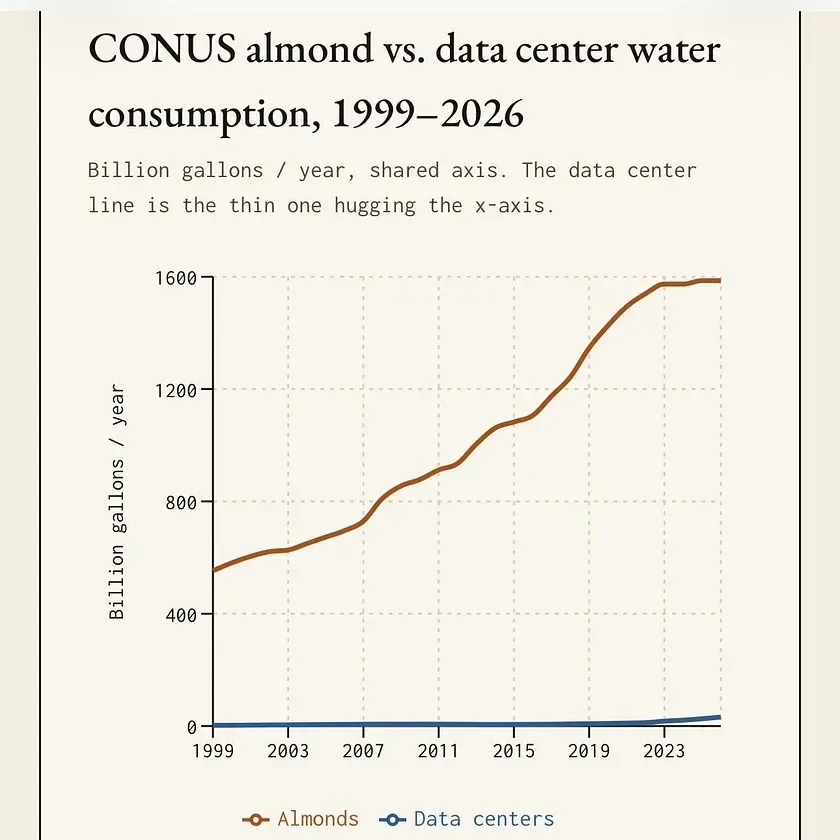
I’m sure people don’t irrigate almonds with drinking water. The comparison is kind of meaningless…
Unless they use salt water they draw from the same supply of groundwater or surface water as drinking water.
Drinking water is usually surface water or groundwater pumped from a lake/river or a drilled hole in the ground passed through a filter, an UV light to kill bacteria, and possibly some chemicals added to get the correct pH.
The limiting factor for how much drinking water you can make is how much you can pump out of the ground/lake before it dries up.
You don’t know much about irrigation or farming do you? I don’t know about the US but here in the EU, at least where I live, there is like a 2 magnitude difference between pumping water from a channel versus buying tap water.
Its like ploting the number of people buying food at a fast food joint and a Michelin star restaurant. While both serv food it’s weird and misleading to compare it…
And why do you mention salt water? How is that a factor? Neither uses salt water.
80% of Almonds are grown in California. Your turn.
And your point is?
In California, water is so inaccessible as tap water is where the data centers are?? If so, then OK it would makes sense to compare it.
But then California wouldn’t be the top almond producer, would it now?
Your turn ;)
It all still comes from the same aquifers or lakes in the end.