I don’t think anybody, other than maybe high-school kids, thought Wikipedia was some perfect site with no flaws. Even with these flaws, it’s really an amazing achievement and deserves massive amounts of praise.
Just compare it to what came before: Encyclopaedia Britannica and the like. Wikipedia is estimated to be about 95x bigger than Encyclopedia Britannica. So, it goes more in depth on almost everything, and has orders of magnitude more articles than Britannica had. And, do you think Britannica didn’t face pressure to not publish controversial or unflattering information on rich people? It was probably much, much easier for the rich to get things their way when it was a single, for-profit publisher, rather than a worldwide group of volunteers. And then there’s the issue with being factual or having a neutral point of view. That’s always going to be a challenge, but it’s much more likely there will be systemic bias for an American-owned for-profit company than it is for a volunteer-based non-profit with editors worldwide.
Also, the way Wikipedia works, it’s much harder for these PR firms to completely hide things they don’t like. Nearly all of Wikipedia’s edit history is easily visible just by clicking a link on the page you’re reading. If someone removed something unflattering, you can often find it just by going through the edits. It would be nice if the rich couldn’t adjust the main pages, but at least it’s extremely hard for them to make unflattering information completely disappear just due to how the editing process for Wikis works.
Finally, paid PR professionals can’t just edit whatever they like. Wikipedia editors are notoriously proud of what they do, and annoyed at seeing their site vandalized. Often edits will be rolled back, or pages will be locked. Eventually a billionaire might get what they want, but to get a fact changed on Wikipedia they’ll probably need to pay a reputable news site to make a counter claim, then have one of their paid PR flacks to use that news article as a primary source to allow it to be used on Wikipedia. That’s an expensive and fragile process. Do it too often and you damage the reputation of the news site so it can no longer be used for that kind of thing. And, all it takes to undo that is a good journalist doing their job and reporting the truth and a volunteer Wikipedia editor updating the page.
So, don’t lose hope, just think that billionaires are spending millions to try to launder their reputations, and often those attempts are being undone by some girl in sweatpants casually updating Wikipedia on her phone while she binges Critical Role.

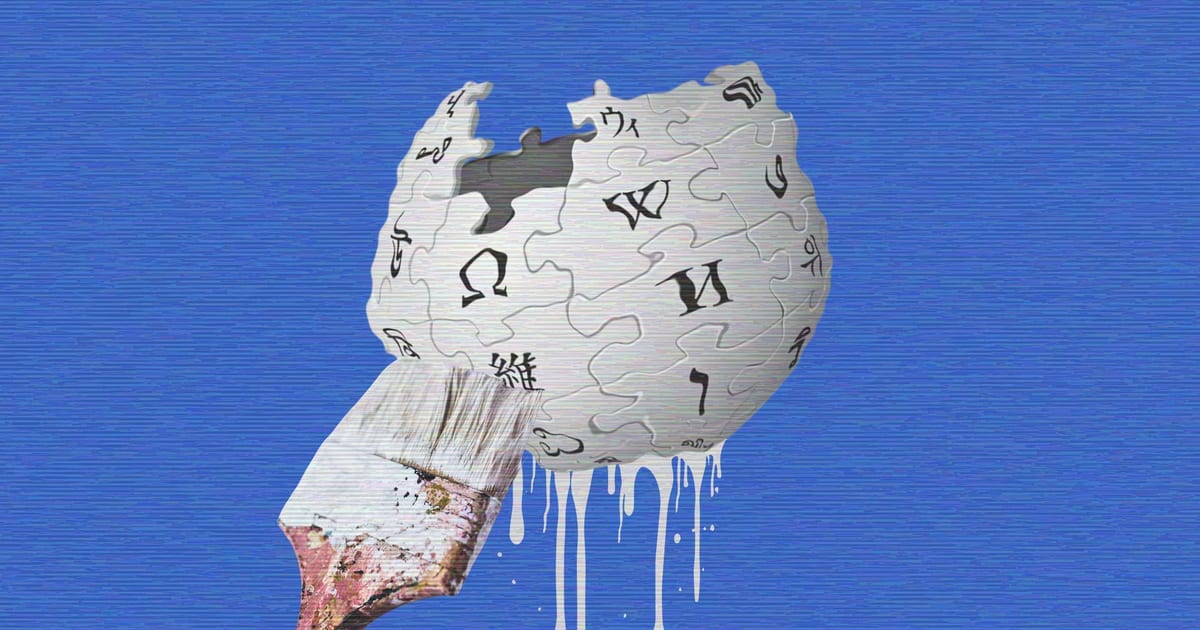
I don’t think anybody, other than maybe high-school kids, thought Wikipedia was some perfect site with no flaws. Even with these flaws, it’s really an amazing achievement and deserves massive amounts of praise.
Just compare it to what came before: Encyclopaedia Britannica and the like. Wikipedia is estimated to be about 95x bigger than Encyclopedia Britannica. So, it goes more in depth on almost everything, and has orders of magnitude more articles than Britannica had. And, do you think Britannica didn’t face pressure to not publish controversial or unflattering information on rich people? It was probably much, much easier for the rich to get things their way when it was a single, for-profit publisher, rather than a worldwide group of volunteers. And then there’s the issue with being factual or having a neutral point of view. That’s always going to be a challenge, but it’s much more likely there will be systemic bias for an American-owned for-profit company than it is for a volunteer-based non-profit with editors worldwide.
Also, the way Wikipedia works, it’s much harder for these PR firms to completely hide things they don’t like. Nearly all of Wikipedia’s edit history is easily visible just by clicking a link on the page you’re reading. If someone removed something unflattering, you can often find it just by going through the edits. It would be nice if the rich couldn’t adjust the main pages, but at least it’s extremely hard for them to make unflattering information completely disappear just due to how the editing process for Wikis works.
Finally, paid PR professionals can’t just edit whatever they like. Wikipedia editors are notoriously proud of what they do, and annoyed at seeing their site vandalized. Often edits will be rolled back, or pages will be locked. Eventually a billionaire might get what they want, but to get a fact changed on Wikipedia they’ll probably need to pay a reputable news site to make a counter claim, then have one of their paid PR flacks to use that news article as a primary source to allow it to be used on Wikipedia. That’s an expensive and fragile process. Do it too often and you damage the reputation of the news site so it can no longer be used for that kind of thing. And, all it takes to undo that is a good journalist doing their job and reporting the truth and a volunteer Wikipedia editor updating the page.
So, don’t lose hope, just think that billionaires are spending millions to try to launder their reputations, and often those attempts are being undone by some girl in sweatpants casually updating Wikipedia on her phone while she binges Critical Role.