

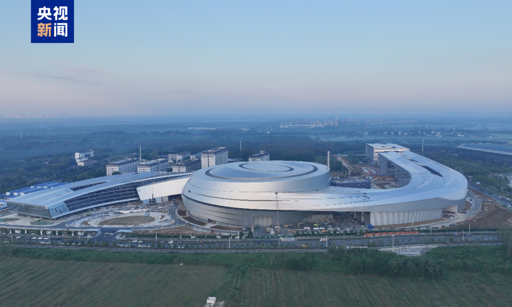
Nothing special, just continuing plasma tokamak research.
Red Sun
Overin ChinaThis thread is a worse dumpster fire than I thought. I figured people would just make the obvious Spiderman 2 joke.
Awesome. Advancing the forces of production in this area can mean better energy sources and other technological advancements in the long run.
Electrical power generation from fusion will be orders of magnitude more expensive that from fission, and will be even more material intensive.
Imagine thinking that all the scientists and engineers in China just haven’t considered these basic things before embarking on a huge megaproject.
It’s neat science and tech and a nice paycheck. So enough motivation. Few people are aware that our high technology civilisation has an expiration date, so let them party while they still can.
I absolutely love how you think you know more than everyone else. Enjoy living in your doomer cult.
In my experience, only a small set of people thoroughly understand limits to growth on a finite planet. Most of them figure it out on their own. And it is a profoundly depressing experience.
Enjoy living in your gaudy pollyanna bubble.
Funny how you just happen to be one of these people, while the entire leadership of China, a nation best known for its long term planning, is just completely ignorant of all this. 🤣
Perhaps China’s long term planning is not as good as you think it is. And arguments from authority ain’t.
Perhaps, or perhaps you’re just some clueless troll. Given respective track records I’ll go with the latter.
And arguments from authority ain’t.
What’s the point of this argument?
Your theory presumes that people will continue to sustain grain on finite resources, to the point of collapse when those resources are gone. Do you have any evidence supporting such a specific outcome, or are you glooming over theoretical possibilities that would require a consensus in ignorance toward sustainability up to the very end?
No risk of a meltdown, doesn’t produce nuclear waste, doesn’t need uranium as fuel. Also produces helium securing the balloons for future generations.
It does produce nuclear waste…
Just beacause the fuel isn’t radioactive doesn’t mean the whole reactor becomes nuclear waste since it’s constantly bombarded with radiation.
I don’t know why this marketing lie is always presented as fact.
Is it really waste if you can use all of its “waste” outputs for useful things? Tritium can just be rebreeded into the fusion process, so its 12 year half life will rarely come up. Molybdenum-99 is used in medical imaging and is frankly in short supply, we would eat that up instantly and the world would be better off for it. Tritium is also just very useful medically in general. The largest stable byproduct by far is non-radioactive helium which has many thousands of use cases.

Even your link says that it is not long time waste. Which does not make it zero, but magnitudes better compared to the “usual” waste
No risk of a meltdown, yes, but diamond encrusted platinum infrastructure. Doesn’t produce nuclear waste, no: high neutron flux on the inner wall will activate materials, and limit lifetime. Doesn’t need uranium, needs to breed tritium (plus excess) literally by the ton, in the lithium blanket. Helium, what, have you smoked waccy tobaccy today?
Yes you’ve provided a list of engineering challenges that everyone is aware of. It doesn’t change the potential.
Helium, what, have you smoked waccy tobaccy today?
It was a joke, but fusion technically produces helium even if it also consumes it for cooling.
https://nomad-laboratory.de/uploads/publications/th/Fusion-Helium_supply_20131213.pdf
In the case of the HCLL reactor with lead as multiplier, various Pb isotopes are produced in the (n, 2n) reaction [26], and there is no α-particle emission. The amount of helium produced annually remains at 0.39 t.
Fusion reactors need to use helium as a coolant too though if they’re high temperature (like gas reactors) and they don’t produce shit except waste.
I would like to push back on the “waste” production of nuclear fission. Much of that “waste” contains useful, fissile material that could be used in breeder reactors for even more power and lower half life “waste” further down the chain. We don’t do this in America because we mostly care about the military benefits of nuclear fission production and eschewed research funding for breeder reactors. China and Russia are much better in this regard and have a handful of functional breeders.
Here’s a thing about potential: you can only be certain of it after you’ve solved these “engineering challenges”. Does tritium breeding factor, EROEI and material footprint (all mined, transported and processed using fossil fuels) mean a thing to you? These factors are not specific to fusion, but they’re the most challenging for fusion reactors of currently known designs.
You’re right, but simultaneously your rhetoric is completely defeatist before we’ve even identified what can be solved. We won’t know the potential until it’s solved but you also can’t be sure of the cost.
Collapse is called a predicament rather than merely a problem, precisely because it is a tangled complex of problems that has no solution. See https://escholarship.org/uc/energy_ambitions for why it is so. Or, rather, don’t, since if you get it, all you get is a massive depression for your pains.
Notice that we’re also running out of time, so things feasible in principle are not reachable in the time window still at our disposal. The next 2-3 decades should make that clearer.
Fuel wont be the expensive part. Materials engineering constraints will mean most of the heat sink will need replacing with essentially bespoke parts on a regular basis. No other energy source puts materials under the same trauma as fusion does.
No other energy source puts materials under the same trauma
I’m sure people said the same thing the first time we thought about turning a piston with literal explosions.
The engineering challenges are immense, but these challenges shouldn’t be an excuse we use to prop up inferior, dirtier power generation.
We didn’t really, steel is a phenomenal material at retaining strength at high temperatures with minimal long-cycle damage and was well industrially established at the time.
The issue with fusion and especially tokamaks is the triple challenge of mechanical loads + radiation loads + high heat flux. There’s really no material known to mankind which can maintain the necessary high-temperature strength, while moving enough heat out of the reactor to keep it economical, without critically degrading in a matter of weeks/months due to fast neutron irradiation. Hence, the heat sink will need to be replaced regularly.
Add to that the fact that fusion companies are essentially giant bubbles of debt owed to venture capital currently and you don’t have a formula for a successful and cheap energy source.
But anyway, we already have fusion energy and it was probably partly used to charge your phone! It comes from the big floating fusion reactor in the sky, only requires a few panels of silicon, and is the cheapest and greenest energy source in existence.
I love solar, but we can’t pretend it’s without its own challenges.
A utility scale solar installation comparable to an average fission plant would take 15 square kilometers. Not to mention how complicated the infrastructure to actually transmit that power is.
Space is only one challenge though. You have no energy production at night, and energy generation can drop by half to almost three quarters during winter at higher latitudes.
fusion companies are essentially giant bubbles of debt owed to venture capital currently
There’s a couple of loud, commercial fusion companies sucking up VC money, but all the serious projects are nationalized (China) or are projects run by public institutes with government funding (EU).
It’s called energy storage technology.
So then you need 15km² to cover the day, another 5-10km² to cover the night, and then however much space and lithium it’s going to take to store all that energy.
And this still doesn’t solve the problem once you’re a little too far off the equator.
Agreed, a 100% solar grid is unrealistic. A healthy mix of nuclear and reneweables with a strong energy storage buffer is the way forward imo.
In principle this is correct, but the plant itself is becoming nuclear waste. Not saying this is a deal breaker, just something to keep in mind


