What I don’t understand us why they had to go and write a totally new OS instead using Linux. They might be able to sell it to a bunch of Chinese, but how will it fare globally? Now there’ll be yet another platform to develop apps for. It’s like that xkcd comic about standards: there are now X competing standards
I think it is exciting that they came up with their own stack from the kernel up to the programming environment. Plus, we all saw Russian developers being locked away from contributing to the Linux kernel, who says something similar won’t happen to Chinese developers?
the only problem is its proprietary codebase.
It is mixed source. It is based on OpenHarmony but with proprietary extensions.
Is this surprising? Weren’t there really just two? Isn’t harmony a form of android?
Maybe I’m way out of date on this.
It’s not android based anymore.
huh. it’s based on what now?
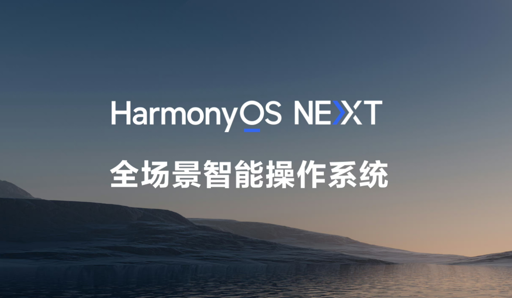
From 2019 to 2024, versions 1 to 4.3 (4.5 TV) of the operating system were built by integrating the Android Open Source Project (AOSP) with OpenHarmony, allowing it to support both HarmonyOS and Android apps.[11] The current iteration of HarmonyOS became known as HarmonyOS NEXT (later it was renamed HarmonyOS 5 in launched of Pura X). HarmonyOS NEXT was announced on August 4, 2023, and officially launched on October 22, 2024.[12] It also replaced the OpenHarmony multi-kernel system with its own HongMeng Kernel at its core and removed all Android code. Since version 5, HarmonyOS only supports apps in its native “App” format.[13][14]
HarmonyOS 5.x+ both discards the common Unix-like Linux kernel and replaces the previous multiple-kernel, kernel agnostic system from OpenHarmony with its own bespoke HarmonyOS microkernel as a single framework.
it was cool that they used to support multiple kernels!
also sad it is proprietary.