

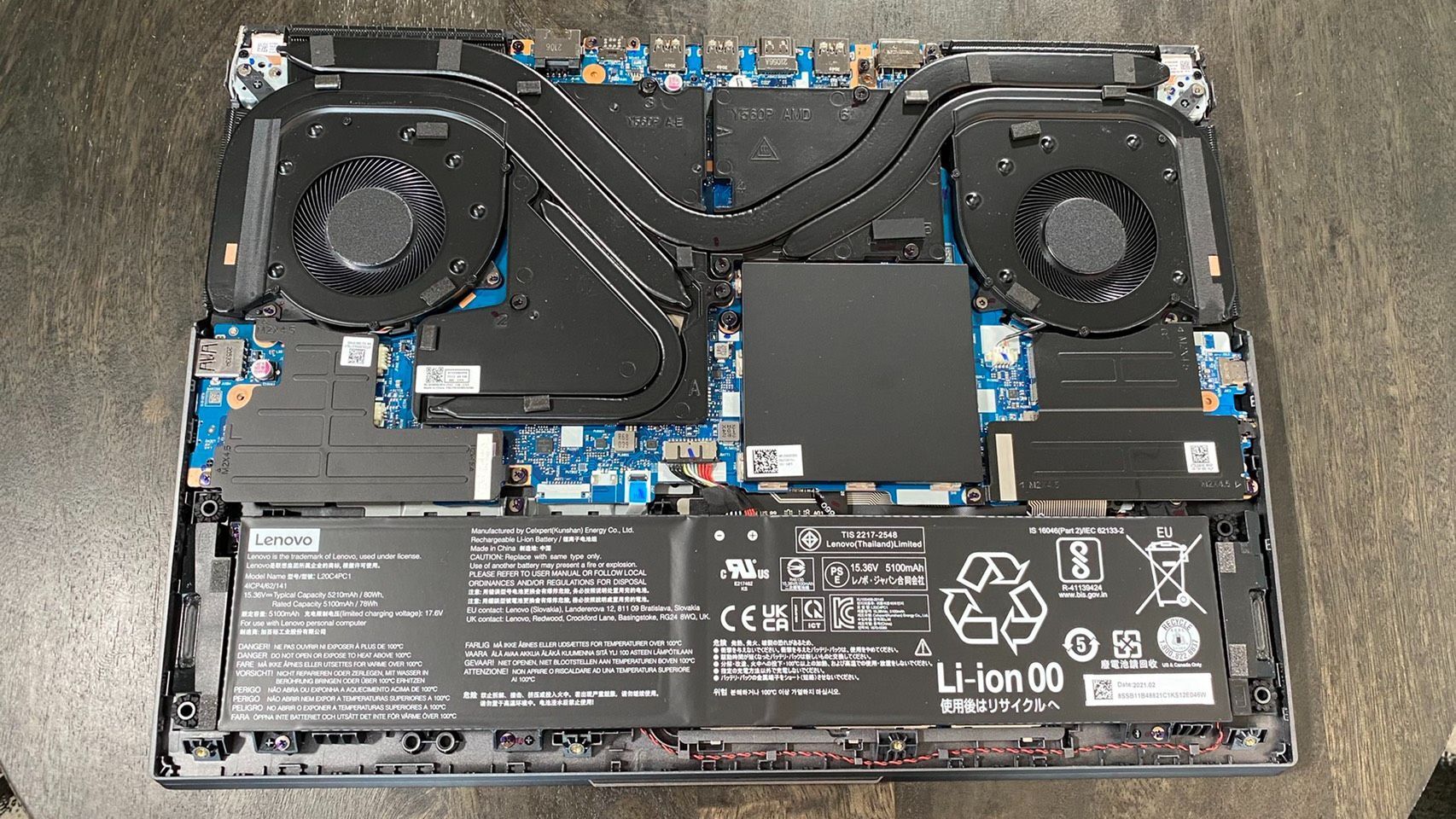
Best Buy Removed Half The RAM From A Gaming Laptop Because It Said The Laptop Only Supports 32GB
A customer sent a Lenovo Legion 5 in for warranty service with 64GB of RAM.
The Best Buy repair report confirmed the laptop had two 32GB RAM sticks, but the technician said the laptop “only accepts 32GB RAM maximum.”
The removed RAM was sent back to the customer with the laptop.
Original Source: https://www.reddit.com/r/mildlyinfuriating/comments/1vpew29/best_buy_sold_me_a_64_gb_ram_laptop_and_it_worked/
_**Laptop specs(it supports 64 GB): https://psref.lenovo.com/product/legion_5_16irx9?tab=spec**_
I’m not sure if this is still a thing or not, but about a decade ago there was this whole “dual channel memory access” mode that accelerated memory access for the CPU by accessing data from 2 DIMMs in parallel.
In motherboards capable of doing this, memory slots would come in multiples of 2, with specific slots being paired and if both slots of such a pair had memory DIMMs of the same size, the motherboard would use “dual channel” mode, otherwise it would use the slower “single channel” mode (it could also be forced by configuration to always use “single channel” mode)
Dual channel only really worked well if the timings on both DIMMs were pretty much the same, so people wanting to take advantage of this mode would buy memory sticks as pairs, not just having the same size and brand but even from the same manufacturing batch so that both had data access timings as close as possible.
If you occupied one of those “paired” slots with mismatched memory of the same size as the other slot of the pair and did not explicitly disable “dual channel” access on the BIOS, you could get memory problems because accessing both DIMMs in parallel had problems when they returned the memory contents at different rates or with different delays.
All this to say that maybe what the Lenovo started trying to do with the BIOS update was dual channel mode or similar, only it was pairing a soldered memory module with a memory module in a SODIMM slot and those have different memory access speeds because physical contacts and directly soldered pins have quite different electrical characteristics for high speed signals, so the former simply can’t safelly handle as high frequencies (and hence data rates) as the latter.