According to Pew Research Center, 77% of US adults now support in-classroom phone bans for middle and high school students, marking the second consecutive year that support...
I teach middle school in a state with a cell phone ban. We had our first year with the phone ban last year, and I thought it was an improvement.
Phones can be very detrimental to the school experience. For one, it is very difficult to teach kids who are already unwilling or resistant to learning while they have a piece of technology they are literally addicted to in their hand. Secondly, phones and social media contribute to a lot to the bullying, violence, and general misbehavior that occurs at schools.
My school district also provides all students with an iPad, so they have their own school-provided tech. In my experience, this comes with their own problems though. I often feel like I am playing “whack-a-mole” keeping kids off their iPads (playing games, etc.) during instruction. It’s nice to be able to incorporate technology into lessons, and it definitely is more convenient for teaching, but I don’t think the trade off is worth it. For example, the cheating with A.I. was off the charts for me last year.
This coming school year, I am looking to incorporate more paper and pencil assignments into my teaching. A lot of my students seem to favor assignments where they aren’t using their iPads. I think most agree that these kids’ eyeballs need a break from the screens.
Also, to people with concerns about the phone ban, students are allowed to bring their phone to school. My state’s law states that the phone must be turned off and in the student’s backpack during instructional hours. Students may be on their phone at school before and after classes start. In the event of an emergency, no one is going to care if the students get their phone out their bag to call their adult. So, kids will retain access to their phone. In fact, most of the students carry their phones around in the pocket and none of the teachers generally care as long as the student isn’t blatantly using their phone during class time. If a kid is caught using their phone during class time, they have to turn it in to the main office for the remainder of the day will escalating consequences for repeat offenses.
Also, I’m sure it varies from teacher to teacher, but I am very understanding when a kid needs to contact a parent/guardian. I will always allow my students to use the phone in my classroom, call a parent from the main office, or use their cell phone in the hall as long as the kid asks permission and explains the situation.
How long have you been a teacher? Just curious. I agree with your points, and they also make me glad I left the profession after 15 years. I taught internationally and in both private and public schools in the US, and cell phones were a scourge at all of them. AI is the bigger issue in my opinion, and I’m super happy I quit right when it was taking off. Teaching is becoming more and more pointless, and everyone is getting passed along, etc. There needs to be an overhaul on standards to become an administrator and teachers should be required to have masters degrees. I couldn’t believe how many teachers I worked with who weren’t curious about anything—didn’t read, didn’t study, and were not that intelligent. In fact, it got to a point where I just left the profession, and life has been infinitely better since.
Totally. But that has been around since Bush, and 15 years ago it wasn’t as bad as it is today. It’s no child left behind on crack now. It’s absolutely insane. A lot of the blame lies on the obnoxious parents and admins who have no spines. Oh, and the shitty teachers who don’t teach but babysit. The whole industry is fucked.
that has been around since Bush, and 15 years ago it wasn’t as bad as it is today.
Real change takes time. Trickle down started with Reagan and it’s still getting worse.
no child left behind on crack now.
Revenge of the Nerds came out in 1984. 40 years later we’ve got revenge of the stupid and proud of it. NCLB started the threats of de-funding failing schools, now we’re just defunding all the schools.
obnoxious parents and admins who have no spines. Oh, and the shitty teachers who don’t teach but babysit. The whole industry is fucked.
Those issues were around in the 1970s, and probably for hundreds of years before as well - I just didn’t experience any of it personally until the 1970s - both my parents were young teachers. Obnoxious parents aren’t actually as bad as apathetic parents in a lot of ways and apathetic parents have dominated throughout history - 90%+ Admins with no spines, admins who serve the almighty dollar first last and always - I met plenty of those throughout my schooling from 2nd grade through my Masters’ degree. Shitty teachers who just babysit, plenty of those 50 years ago. And to hear my parents tell it every day after work in the car, the whole industry was fucked then too. Sexism and racism was alive and well in Florida in those years I was in school, intolerance for gays was the norm, complete denial that lesbians actually existed was another norm… there has been actual progress on those fronts, but now the revenge of the proudly stupid is trying to push back. And the proudly stupid were always there, they just didn’t have enough self-esteem to stand up for themselves as a group in the past.
I agree teaching often feels totally pointless. I have to remind myself, as a teacher in a low-socioeconomic status school, that I could very well be one of the most responsible and accessible adults in some of these kids lives and take solace in that. I try to at the very least be a positive male role model (the boys need one) for my students even if they aren’t necessarily always learning the content I’m trying to teach them.
I totally agree on your last point as well. The standards to be a teacher are way too low. I work with several adults that should never be allowed to be responsible for educating children. Those people make all the rest of us look bad.
Keep up the good fight, and since you seem like a thoughtful intelligent person, don’t forget you can transition out of the profession. When the inevitable furloughs, increased class sizes, further lowering of standards, etc happen, don’t let them convince you that you have to stay a teacher. At some point the parents of the kids have to step up because they are the most influential, even if the kids have shitty home lives. The parent-child bond is different than the teacher-student, and its a shame so many parents are shitty, but that doesn’t change that they are their parents.
I agree with all your points, but want to add one: cheating with AI should be redirected to effective use of AI as a tool. I would approach a writing class topic like this:
Welcome… as our first assignment you are going to switch off all technological assistance and write a paper for me on XYZ, just using what you know off the top of your head here during class. Turn this in and keep a copy.
In classroom, tech limited to non-AI research - read and cite original sources, improve your paper with the research, check all of your assumptions, correct them when appropriate, cite backup when you find it. Does your conclusion change? Again, freeze a copy of this iteration.
Homework “use AI” (with no instructor direction as to how). Write the paper using all available technological resources (including AI) now, provide helpful starter links to AI resources that “can help,” then compare that to your previous versions.
Instructor / teaching assistants now grade papers 1, 2 and 3 with maybe 10% total weight in the final grade for each.
In classroom guidance on how to use AI well, with copious embarassing examples of AI used poorly (names withheld, but students might recognize their work…)
Homework: for any students who turned in “less than ideal” papers in 3), try again. Fail again. Fail better this time.
In classroom pop-quiz: just like the first assignment, switch off all technological assistance and write the paper on XYZ just using what you know during class.
Grade 5 and 6 for points, 30 points for 5, and 40 points for 6.
In mandatory attendance schools, some will do more poorly on 6) than 1), that’s just the nature of the setting. Those who want to learn should be able to improve along the way, rather dramatically.


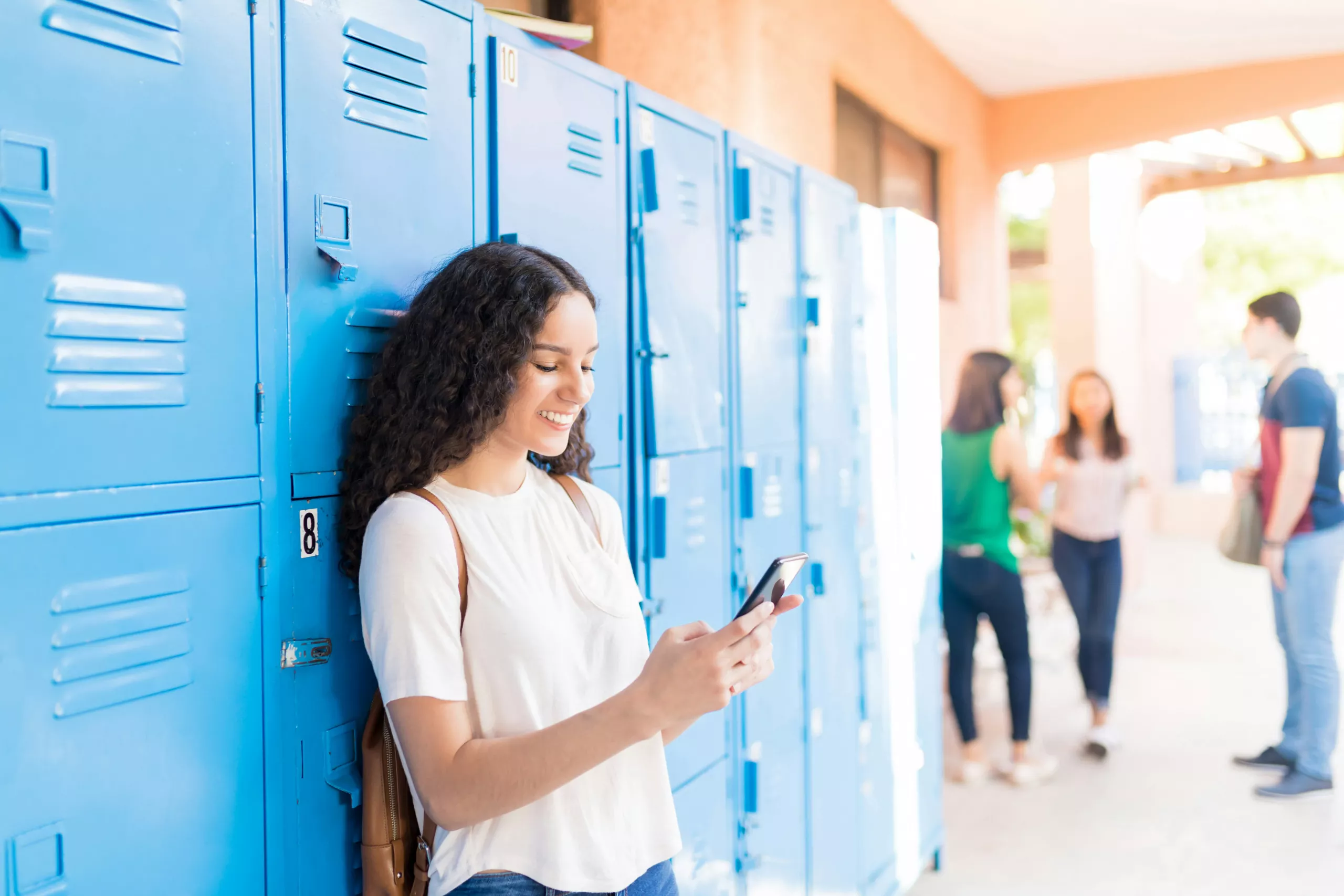
I teach middle school in a state with a cell phone ban. We had our first year with the phone ban last year, and I thought it was an improvement.
Phones can be very detrimental to the school experience. For one, it is very difficult to teach kids who are already unwilling or resistant to learning while they have a piece of technology they are literally addicted to in their hand. Secondly, phones and social media contribute to a lot to the bullying, violence, and general misbehavior that occurs at schools.
My school district also provides all students with an iPad, so they have their own school-provided tech. In my experience, this comes with their own problems though. I often feel like I am playing “whack-a-mole” keeping kids off their iPads (playing games, etc.) during instruction. It’s nice to be able to incorporate technology into lessons, and it definitely is more convenient for teaching, but I don’t think the trade off is worth it. For example, the cheating with A.I. was off the charts for me last year.
This coming school year, I am looking to incorporate more paper and pencil assignments into my teaching. A lot of my students seem to favor assignments where they aren’t using their iPads. I think most agree that these kids’ eyeballs need a break from the screens.
Also, to people with concerns about the phone ban, students are allowed to bring their phone to school. My state’s law states that the phone must be turned off and in the student’s backpack during instructional hours. Students may be on their phone at school before and after classes start. In the event of an emergency, no one is going to care if the students get their phone out their bag to call their adult. So, kids will retain access to their phone. In fact, most of the students carry their phones around in the pocket and none of the teachers generally care as long as the student isn’t blatantly using their phone during class time. If a kid is caught using their phone during class time, they have to turn it in to the main office for the remainder of the day will escalating consequences for repeat offenses.
Also, I’m sure it varies from teacher to teacher, but I am very understanding when a kid needs to contact a parent/guardian. I will always allow my students to use the phone in my classroom, call a parent from the main office, or use their cell phone in the hall as long as the kid asks permission and explains the situation.
How long have you been a teacher? Just curious. I agree with your points, and they also make me glad I left the profession after 15 years. I taught internationally and in both private and public schools in the US, and cell phones were a scourge at all of them. AI is the bigger issue in my opinion, and I’m super happy I quit right when it was taking off. Teaching is becoming more and more pointless, and everyone is getting passed along, etc. There needs to be an overhaul on standards to become an administrator and teachers should be required to have masters degrees. I couldn’t believe how many teachers I worked with who weren’t curious about anything—didn’t read, didn’t study, and were not that intelligent. In fact, it got to a point where I just left the profession, and life has been infinitely better since.
In the US that was codified into “No Child Left Behind” - one of the worst things to happen to US education, ever.
Totally. But that has been around since Bush, and 15 years ago it wasn’t as bad as it is today. It’s no child left behind on crack now. It’s absolutely insane. A lot of the blame lies on the obnoxious parents and admins who have no spines. Oh, and the shitty teachers who don’t teach but babysit. The whole industry is fucked.
Real change takes time. Trickle down started with Reagan and it’s still getting worse.
Revenge of the Nerds came out in 1984. 40 years later we’ve got revenge of the stupid and proud of it. NCLB started the threats of de-funding failing schools, now we’re just defunding all the schools.
Those issues were around in the 1970s, and probably for hundreds of years before as well - I just didn’t experience any of it personally until the 1970s - both my parents were young teachers. Obnoxious parents aren’t actually as bad as apathetic parents in a lot of ways and apathetic parents have dominated throughout history - 90%+ Admins with no spines, admins who serve the almighty dollar first last and always - I met plenty of those throughout my schooling from 2nd grade through my Masters’ degree. Shitty teachers who just babysit, plenty of those 50 years ago. And to hear my parents tell it every day after work in the car, the whole industry was fucked then too. Sexism and racism was alive and well in Florida in those years I was in school, intolerance for gays was the norm, complete denial that lesbians actually existed was another norm… there has been actual progress on those fronts, but now the revenge of the proudly stupid is trying to push back. And the proudly stupid were always there, they just didn’t have enough self-esteem to stand up for themselves as a group in the past.
This will be my 6th year working in education.
I agree teaching often feels totally pointless. I have to remind myself, as a teacher in a low-socioeconomic status school, that I could very well be one of the most responsible and accessible adults in some of these kids lives and take solace in that. I try to at the very least be a positive male role model (the boys need one) for my students even if they aren’t necessarily always learning the content I’m trying to teach them.
I totally agree on your last point as well. The standards to be a teacher are way too low. I work with several adults that should never be allowed to be responsible for educating children. Those people make all the rest of us look bad.
Keep up the good fight, and since you seem like a thoughtful intelligent person, don’t forget you can transition out of the profession. When the inevitable furloughs, increased class sizes, further lowering of standards, etc happen, don’t let them convince you that you have to stay a teacher. At some point the parents of the kids have to step up because they are the most influential, even if the kids have shitty home lives. The parent-child bond is different than the teacher-student, and its a shame so many parents are shitty, but that doesn’t change that they are their parents.
I agree with all your points, but want to add one: cheating with AI should be redirected to effective use of AI as a tool. I would approach a writing class topic like this:
Welcome… as our first assignment you are going to switch off all technological assistance and write a paper for me on XYZ, just using what you know off the top of your head here during class. Turn this in and keep a copy.
In classroom, tech limited to non-AI research - read and cite original sources, improve your paper with the research, check all of your assumptions, correct them when appropriate, cite backup when you find it. Does your conclusion change? Again, freeze a copy of this iteration.
Homework “use AI” (with no instructor direction as to how). Write the paper using all available technological resources (including AI) now, provide helpful starter links to AI resources that “can help,” then compare that to your previous versions.
Instructor / teaching assistants now grade papers 1, 2 and 3 with maybe 10% total weight in the final grade for each.
In classroom guidance on how to use AI well, with copious embarassing examples of AI used poorly (names withheld, but students might recognize their work…)
Homework: for any students who turned in “less than ideal” papers in 3), try again. Fail again. Fail better this time.
In classroom pop-quiz: just like the first assignment, switch off all technological assistance and write the paper on XYZ just using what you know during class.
Grade 5 and 6 for points, 30 points for 5, and 40 points for 6.
In mandatory attendance schools, some will do more poorly on 6) than 1), that’s just the nature of the setting. Those who want to learn should be able to improve along the way, rather dramatically.