

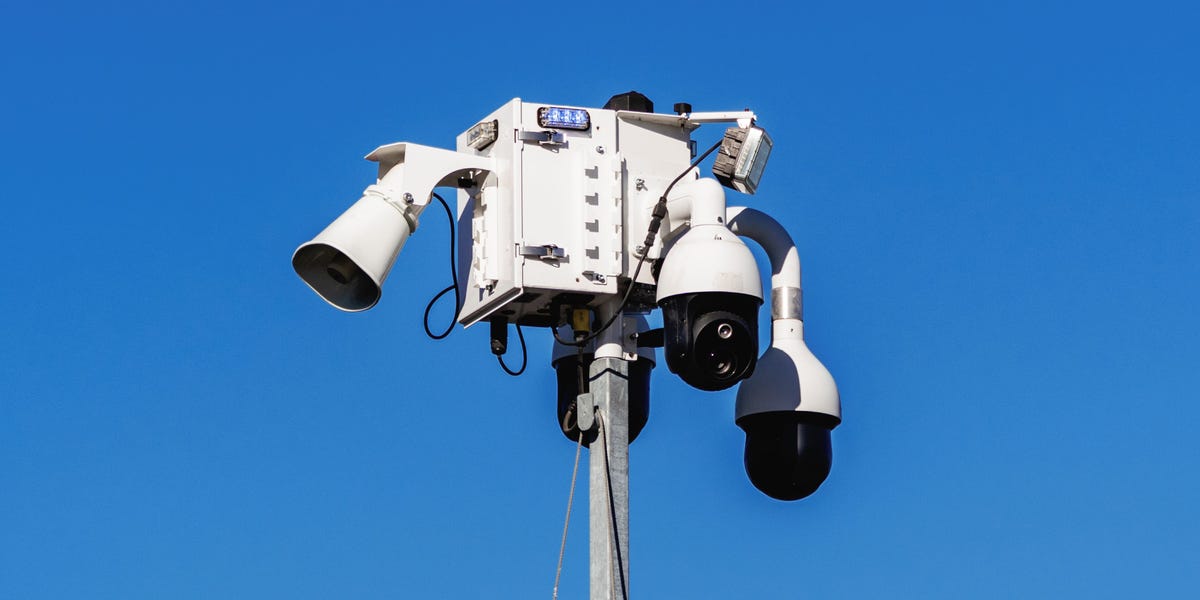
In 2023 and 2024, Flock sent 1,427 alerts to the Roseville [CA] Police Department.
Roseville police found that Flock misread license plates in 71% of those alerts.
Max Isaacs, director of technology law and policy with the Policing Project at New York University’s School of Law, described Roseville’s misread data as “stunning.”
“A 71% misread rate is really beyond the pale,” he told Business Insider, referring to Roseville’s reported error rate for stolen and felony vehicle alerts. He added that “in the absence of concrete rules that directly address the problem of misreads, this technology is not safe to be deployed in communities.”
How can they suck that bad? A 29€ raspberry pi with a basic ML model can get 90% accurate results
That’s probably exactly what they did, deployed a sbc + some off the shelf model and increased the price 300x by making a black plastic shell.
I guess that they are implementing crappy cameras? Not sure about american plates, but in most jurisdictions licence plates are optimized for easy OCR:
Note how each letter is unique and can’t be transformed with a sharpie into another. That also makes OCR easy. If you use a crappy dashcam, you will get problems regardless. Esp. in low light situations at higher speeds.
So I would guess that Flock uses cheap sensors and cheap lenses. Which kind of makes sense when they are putting out thousands of scanners.
in my area I struggle to distinguish D, O, and 0. Idk if someone was paid to design that, but they did an awful job
Never seen letters like that on license plates in Quebec.
Are they? Off the top of my head Germany is the only country I can think of that uses such a font (FE-Schrift).
German wiki mentiones 42 countries that also adapted the FE Schrift and 7 that use some adaptions:
https://de.wikipedia.org/wiki/FE-Schrift
I see. I’m in Europe and it’s not very common there so that’s why.
If you have a pi reading license plates, you are probably scanning a few dozen different plates a day, looking if they match a handful of possibilities. If the only plate that opens the gate is ABC123, nothing happens if it accidentally reads anything else, and I’ll probably get it right a second later.
When Flock scans plates, it reads thousand of them every second looking to read and match every possible plate variation from every state (which there are over 8000 of) to every reported stolen plate, in all weather and lighting conditions. It’s really no wonder if 71% of the times it reports it found a stolen plate it had got it wrong.
I highly doubt a single flock camera would scan thousands of plates per second lol
There is no good reason for sending images of plates to the cloud for alpr when the camera can do it locally
I did not know there was only one single Flock camera in the city of 150 000 people, or in California, or the USA in general. lol.
Oh, kinda looks like they have more. 20 billion reads a month, huh. That’s 7610 scan a second. Fancy that.
Flock cameras process the images locally for plate recognition. It’s only after the image of the plate has been converted into text that the plate number (or in this instance the number it has misinterpreted) is sent to AWS for matches and alerts. The issue sounds like it’s at the individual camera level.
…yes?
The cameras around the US scan 7000 plates per second, trying to figure out what they say with 8000 different possible plate designs around the country, and those results are then matched to a database of stolen vehicles and other plates , which there’s roughly 600k reported stolen in the US each year so. That database is going to be massive.
That means every second, 7000 strings of letters and numbers OCR’d at unknown conditions and accuracy are being compared to hundreds of thousands of stolen plates. They are guaranteed to get a number of “matches” constantly, most of them from reads that were not accurate.
And specifically because they aren’t sent anywhere, nobody can double check the picture to see if the camera got it anywhere right at all.
Holy fuck you’re daft, good luck
What does any of this have to do with the cameras from one specific town being wrong a majority of the time? Not that it would be better if it wad the average across the nation. It would be much, much worse actually.