

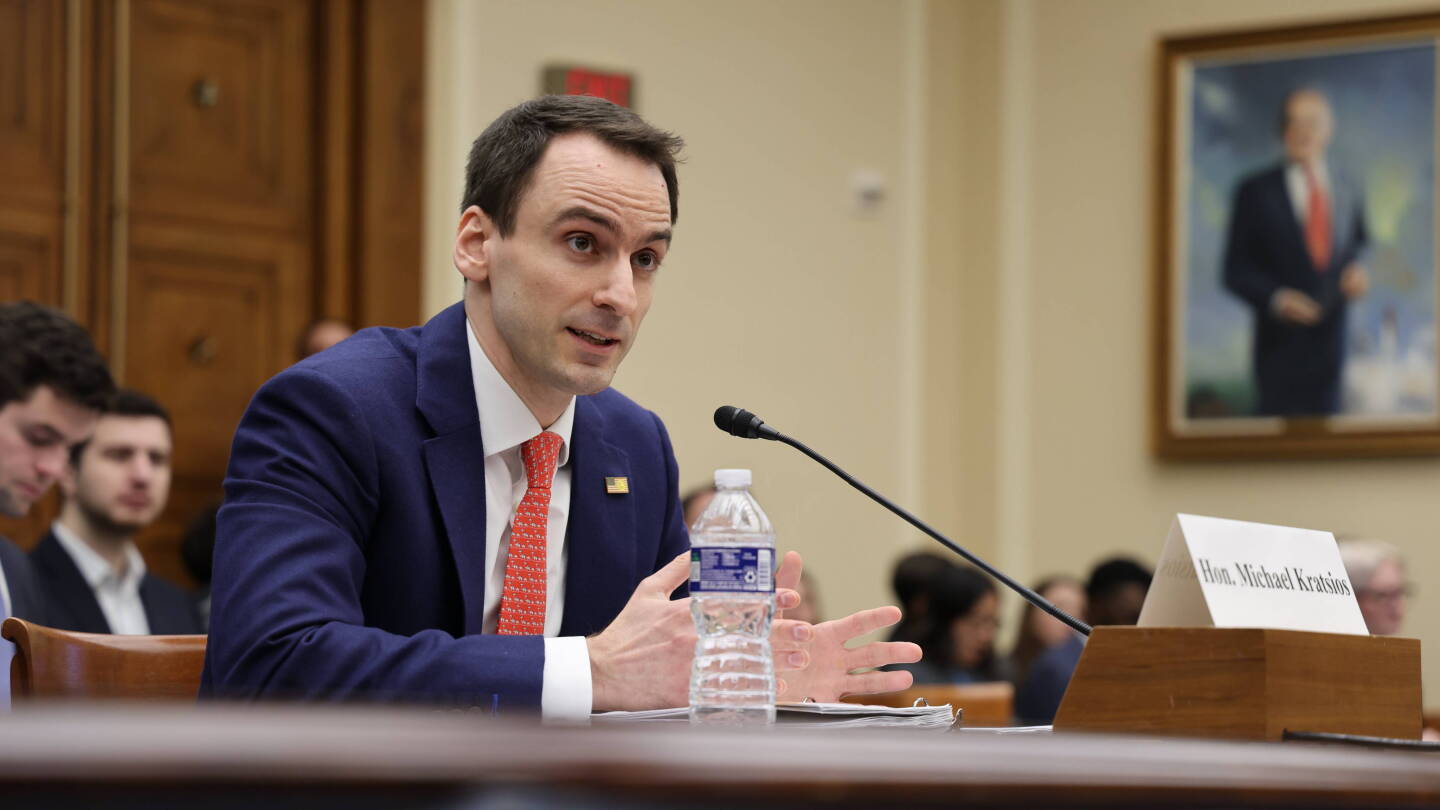
The US research enterprise too heavily centers on elite research institutions, and fails individual researchers with bold ideas, suggests the White House Office of Science and Technology in a new report. The office recommends sweeping changes to where federal funding is spent and how it should be awarded.
Released on July 21, the Science: A New Golden Age report seeks to update Vannevar Bush’s landmark 1945 report Science: The Endless Frontier for the modern era. In the report, OSTP Director Michael Kratsios argues that today’s scientific landscape — shaped by AI, global competition, and private-sector investment — requires a fundamental redesign of how the federal government funds research.
Also on July 21, Kratsios and White House Office of Management and Budget Director Russ Vought jointly published a memorandum on the Trump administration’s R&D budget priorities for fiscal year 2028. The memo instructs science agencies to incorporate the administration’s priorities into their forthcoming budget requests, as well as develop implementation plans within 90 days for a series of “R&D priority practices.” Those include:
Developing new research funding mechanisms; Identifying and supporting top tech talent through, for example, early career and STEM-learning opportunities; Boosting the “science of science-funding” to evaluate which programs have the greatest impact; And collaborating with industry to drive greater private investment in R&D.
The memo directs agencies to rebalance their portfolios toward foundational research, and prioritize physical science over life science. Many of the administration’s priorities, including AI and nuclear fission, are dependent on computer science, physical science, and engineering, but the report notes that the latter two fields’ share of the federal research portfolio has declined over time, even as their strategic importance has grown.
Yes? My admittedly limited understanding says yes anyway. If Congress budgets $100m for cancer research, then all $100m needs to go to cancer research. But, the executive branch gets some freedom to decide what qualifies as cancer research. Cancer cures? Enhanced treatment? Earlier detection? Prevention? Environmental factors?
I do research into human computer interaction, and I know exactly how I’d hitch my wagon onto this. My research improves the usability of machines used in the diagnosis and treatment of cancer patients. BAM! Now my research into virtual buttons qualifies as cancer research.
Now, I would never do that scenario IRL because I have a conscious, but I know how the games like this are played when it comes time to apply for obscure grants that need to go to someone.