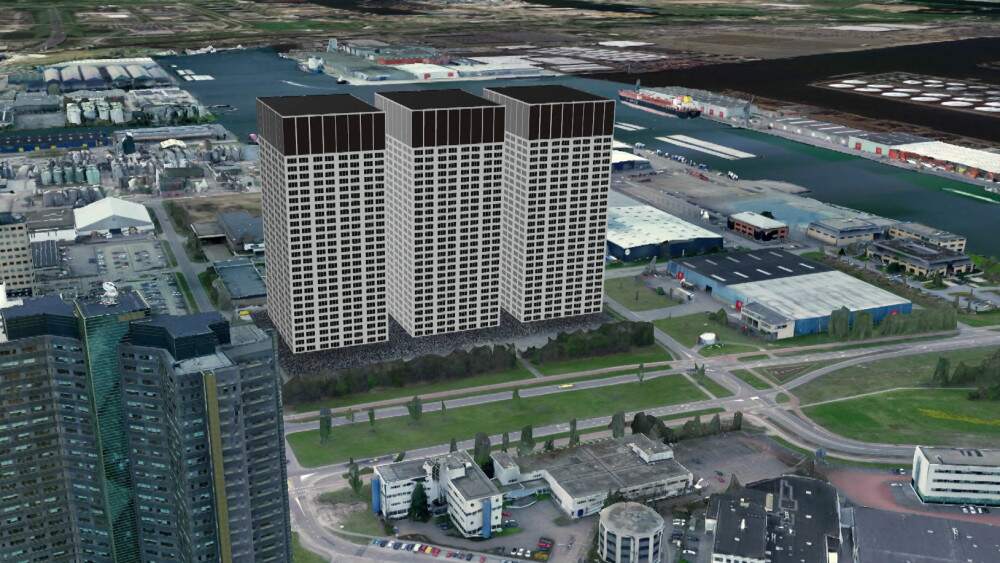
Climate action group Extinction Rebellion attacks Microsoft data centre construction site, amid growing worker opposition to AI facilities in the Netherlands.
calcium carbonate is still basic and even hydrogen carbonate is basic enough to be protective against steel corrosion
The Calcium Carbonate once dissolved in water will start to form the Calcium Hydroxide layer on the surface, thats the alkaline layer, and deeper in the carbonation creates acidity.
100% wrong, how come there’s more carbon dioxide inside than outside, you’re starting from calcium hydroxide and silicate. on the surface there’s some carbonate formation from carbon dioxide, but when it can’t get there calcium silicate forms instead. either way both are basic
Well, now you’re contradicting yourself from earlier when you stated we were discussing Calcium Carbonate and Silicate.
The Calcium Carbonate degrades into Calcium Oxide. Calcium Oxide will form Calcium Hydroxide on the cured surface.
The only reliable way to seperate the Calcium from the oxidation afaik would be the introduction of Chlorine, so you’re definitely not seeing the reverse happening regardless of how much carbon dioxide there is.
you see, you can be as wrong as you want to be. i won’t be teaching you middle school level chemistry against your will in a comment section. in concrete Ca2+ remains Ca2+, be it as hydroxide or carbonate or silicate and it cannot become reduced in normal concrete conditions and definitely it can’t be oxidized.
The Calcium Carbonate degrades into Calcium Oxide
no it fucking doesn’t, this is what happens when cement is prepared in a kiln. near surface of curing concrete calcium hydroxide captures carbon dioxide from air, then this crust of precipitate blocks it from moving deeper. which is why the rest of calcium hydroxide reacts with silica forming calcium silicate, which takes more time and is responsible for late strengthening. before you lost plot i was talking about oxidation of steel rebar, and it depends on many things, but for regular carbon steel if there’s no oxygen then it’s much slower. and because concrete is not very permeable to oxygen, there are all these engineering requirements about how deep rebar has to be. anyway, a little bit of vinegar would be just neutralized by calcium hydroxide from concrete and won’t do anything, a little bit of salt would be diluted massively and also won’t do anything, hydrogen peroxide would decompose because anything will do that


calcium carbonate is still basic and even hydrogen carbonate is basic enough to be protective against steel corrosion
100% wrong, how come there’s more carbon dioxide inside than outside, you’re starting from calcium hydroxide and silicate. on the surface there’s some carbonate formation from carbon dioxide, but when it can’t get there calcium silicate forms instead. either way both are basic
Well, now you’re contradicting yourself from earlier when you stated we were discussing Calcium Carbonate and Silicate.
The Calcium Carbonate degrades into Calcium Oxide. Calcium Oxide will form Calcium Hydroxide on the cured surface.
The only reliable way to seperate the Calcium from the oxidation afaik would be the introduction of Chlorine, so you’re definitely not seeing the reverse happening regardless of how much carbon dioxide there is.
you see, you can be as wrong as you want to be. i won’t be teaching you middle school level chemistry against your will in a comment section. in concrete Ca2+ remains Ca2+, be it as hydroxide or carbonate or silicate and it cannot become reduced in normal concrete conditions and definitely it can’t be oxidized.
no it fucking doesn’t, this is what happens when cement is prepared in a kiln. near surface of curing concrete calcium hydroxide captures carbon dioxide from air, then this crust of precipitate blocks it from moving deeper. which is why the rest of calcium hydroxide reacts with silica forming calcium silicate, which takes more time and is responsible for late strengthening. before you lost plot i was talking about oxidation of steel rebar, and it depends on many things, but for regular carbon steel if there’s no oxygen then it’s much slower. and because concrete is not very permeable to oxygen, there are all these engineering requirements about how deep rebar has to be. anyway, a little bit of vinegar would be just neutralized by calcium hydroxide from concrete and won’t do anything, a little bit of salt would be diluted massively and also won’t do anything, hydrogen peroxide would decompose because anything will do that
You can make it happen faster in a furnace but it will happen regardless.