And I don’t see why that is a problem.
If a company is doing good thing and sustaining itself, I don’t see why they will need to be the next dell, hp, or lenovo.
That feels like the toxicity of “endless growth” in the capitalistic view of the world.
Not to mention in most of the place I go to, these are the most popular laptops only behind macbooks. In many situations, they are even more popular than macbooks.
I have never seen a Framework in the wild, however I applaud their approach, but even when taking repair costs in consideration, Frameworks are more expensive than simply upgrading to a newer laptop and using the old laptop for some other purpose. I can’t imagine with the rampocalypse that they easily survive, but I hope they do, I wish other manufacturers would make repair a higher priority.
My anecdotal experience - my Asus gaming laptop died about 6 months ago. with a lot of trouble shooting, I determined it was most likely the mobo. I decided to go with a framework, and was able to bring over my hard drive and ram, saving me like $400.
Getting the framework driver’s was painful. I needed to download them over wifi, but wifi wasn’t working because it needed the driver. okay, download on another computer and install via USB, nope. USB drivers aren’t working either. I ended up spotting my hard drive into my desktop, downloading the drivers that way, and then moving it back to the framework laptop to install.
If you have a desktop with internet connection, maybe a USB stick would suffice?
There is also USB tethering from a phone that could work.
I am not defending framework. They should try to do better (maybe windows is the bottleneck? not sure).
Just offering solutions to people who might encounter this problem later.
I’ve literally never had a computer need drivers to make basic USB work in the past probably 20 years. I had a bleeding edge ai 350 framework right even when it came out. Linux was a little flaky with my sound but everything else worked. Same in Windows. Maybe I needed Wi-Fi drivers, don’t recall, but I know USB worked without any. I’m really curious how you needed USB drivers of all things genuinely. I mean you installed the OS presumably from a thumb drive so how would that not work in the same os after installing? Lol.
It may be a separate issue to drivers, because I have this other issue where after waking up from sleep, I have to either reboot or physically remove the USB port and plug it back in to make the USB work. I’ve disabled “allow windows to put this device to sleep” for every single USB titled thing in device manager, so I’m not sure what the issue is. I plan on installing a small linux partition at some point to play around and see if I like it.
If you really moved the hard drive from one laptop to another without reinstalling the OS, that’s probably going to cause issues. It’ll “work” seemingly but it’s gonna be messy like this. You’re going to spend more time hunting weird shit than you would just doing a reinstall imo.
I’d backup what you need to and start over or you’re probably going to keep having strange issues.
I would like to offer a slightly different perspective: I believe framework is uniquely positioned to survive the ram apocalypse (at least respect to their scale).
In the sense that, framework user can keep purchasing and upgrading components, like battery, screen, speaker, hinge, expansion card, without needing to worry about ram prices, and framework can profit from these component without needing to subsidize ram prices.
That being said, as a smaller company, they certainly don’t have the same amount of bargaining power on ram as most big players, and the launch of LPCAM2 is a bit risky, since that pervents people from purchasing new ram/board/laptops given the current ram prices.
Nope, not on intel core ultra 3 unfortunately (unless you have LPCAMM2 lying around, which is unlikely), that is the risky part I mentioned in the end.
Umm, not sure if you have seen Framework’s prices.
The current 13in with a weak intel processor is $1850 (and you can’t get it until October). To buy an equivalent Dell? Around $1,000 and you can get it tomorrow.
The upgrade cost for the motherboard (say you want to switch to AMD), will cost you $900. For that $3k you can buy 3 Dells all with ram and storage.
And no, they aren’t positioned well without RAM as their newer ones use LPCAMM2. You don’t have that just lying around.
The current 13in with a weak intel processor is $1850
Is not at all a weak processor. Intel currently makes the best x86 mobile processors on the market. The entire point is that you don’t have to buy a whole new computer when you upgrade. You just get an updated motherboard and slap it into the existing chassis.
The upgrade cost for the motherboard (say you want to switch to AMD), will cost you $900. For that $3k you can buy 3 Dells all with ram and storage.
And all 3 will be outdated when it comes time to upgrade. And they’ll all be shittier than the Framework.
they aren’t positioned well without RAM as their newer ones use LPCAMM2
Umm that intel processor is the weakest of the bunch. The i9 version you can’t even buy from Framework currently. I get the homerism for Framework, but I guarantee you that they will be out of business within 5 years.
I don’t think you get the point. To upgrade a Framework, even if you are able to move the ram and SSD over, you literally can get an equivalent laptop from another manufacturer with new RAM, SSD and the screen, battery and everything else, and still use the old laptop. With Framework, you move parts over and slowly upgrade. It’s not sustainable at the current costing for anyone except for people who are very into home repair.
Framework is moving all over their laptops to LPCAMM2 because the newer platforms require it for faster RAM, the alternative would be soldered on RAM which defeats the entire purpose of Framework, as you wouldn’t be able to ‘upgrade’ your laptop or repair it.
Umm that intel processor is the weakest of the bunch
Brother, what Intel processor are you talking about? They sell the latest gen of processors, which are the best you can buy.
guarantee you that they will be out of business within 5 years.
LOL based on what? They sell more computers than they can produce.
you literally can get an equivalent laptop from another manufacturer with new RAM, SSD and the screen, battery and everything else, and still use the old laptop
For a lot more money, yes. I don’t think you get it. You can just upgrade the motherboard. You don’t need to replace anything else. You can upgrade the display, you can upgrade the RAM, you can actually repair the battery, the keyboard, the trackpad, etc. etc.
the alternative would be soldered on RAM
…nope? Not correct. They can continue using regular old SODIMM RAM like they already are in the FW13. Don’t know where you’re getting this from.
That is just plain not true. If you are a enthusiast and know where to look then you definitely can find better deal than framework, but getting a dell (or even better dell?) for half of the price is simple not true.
Framework is cheaper than dell if you don’t try to find deals or buy older models.
If you buy older models, then framework don’t need to replace ram, I can upgrade my laptop to kitted out ryzen AI 9 for only 849$, https://frame.work/products/mainboard-amd-ai300?v=FRANTE0009 with my existing 64GB of ram.
I don’t think you can get any laptop close to that quality with this price.
It’s very true. You recognize that Dell always runs discounts and the only people paying full price would be corporations or ignorant people such as yourself? Literally Dell is running a discount to bring the price down to $1,300. Wild how price inefficient Framework is, for something you can’t get until at least October, when every other manufacturer you can get now.


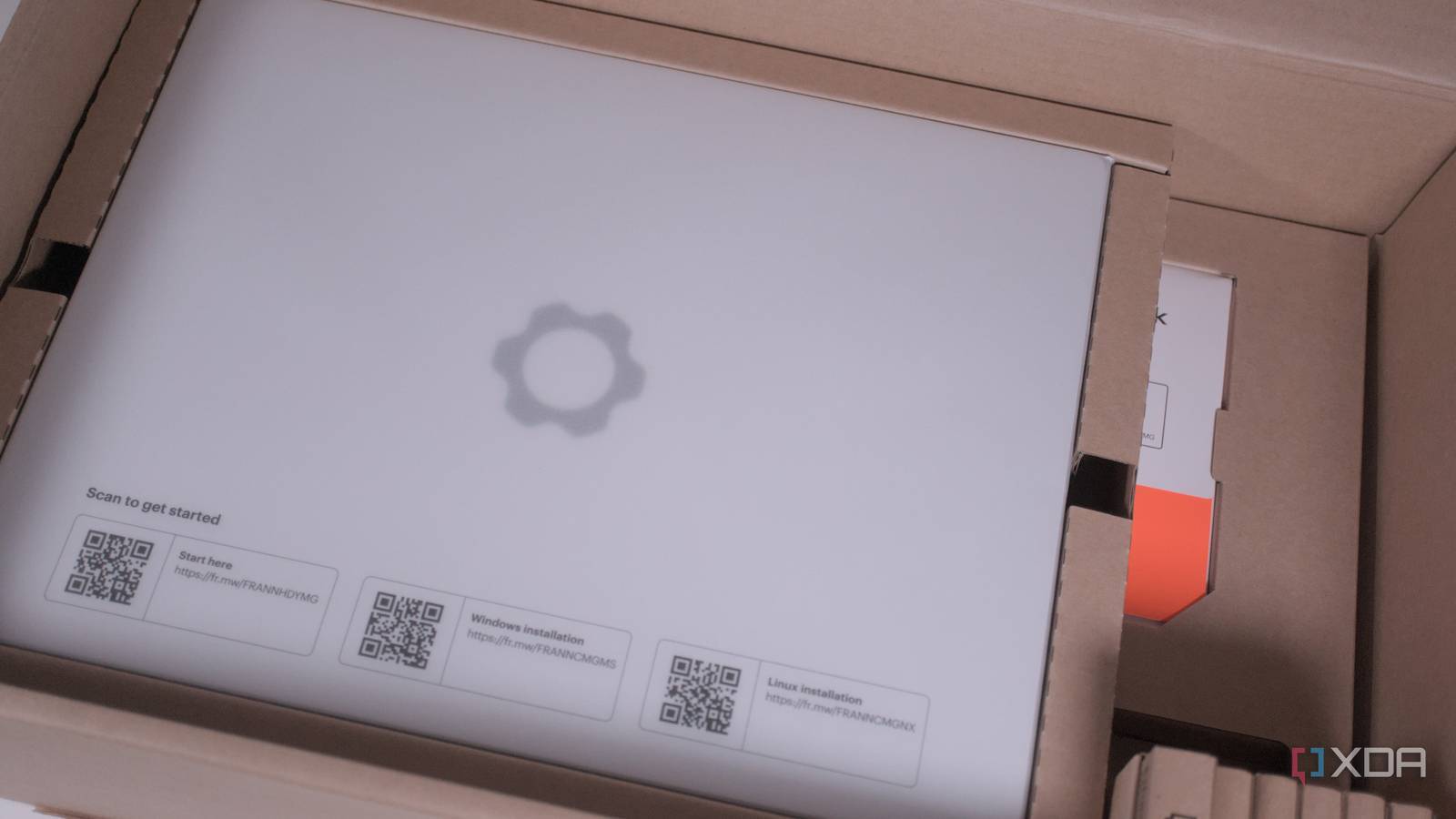
And I don’t see why that is a problem. If a company is doing good thing and sustaining itself, I don’t see why they will need to be the next dell, hp, or lenovo. That feels like the toxicity of “endless growth” in the capitalistic view of the world.
Not to mention in most of the place I go to, these are the most popular laptops only behind macbooks. In many situations, they are even more popular than macbooks.
I have never seen a Framework in the wild, however I applaud their approach, but even when taking repair costs in consideration, Frameworks are more expensive than simply upgrading to a newer laptop and using the old laptop for some other purpose. I can’t imagine with the rampocalypse that they easily survive, but I hope they do, I wish other manufacturers would make repair a higher priority.
My anecdotal experience - my Asus gaming laptop died about 6 months ago. with a lot of trouble shooting, I determined it was most likely the mobo. I decided to go with a framework, and was able to bring over my hard drive and ram, saving me like $400.
You also likely don’t need to reinstall/resetup everything, which is absolutely painful.
Getting the framework driver’s was painful. I needed to download them over wifi, but wifi wasn’t working because it needed the driver. okay, download on another computer and install via USB, nope. USB drivers aren’t working either. I ended up spotting my hard drive into my desktop, downloading the drivers that way, and then moving it back to the framework laptop to install.
If you have a desktop with internet connection, maybe a USB stick would suffice?
There is also USB tethering from a phone that could work.
I am not defending framework. They should try to do better (maybe windows is the bottleneck? not sure). Just offering solutions to people who might encounter this problem later.
They said the USB ports didn’t work as they didn’t have the drivers.
oh Sorry, bad at reading comprehensions :(
What the hell do you mean, USB drivers need to be downloaded? Isn’t that standardized and included with the system?
I’ve literally never had a computer need drivers to make basic USB work in the past probably 20 years. I had a bleeding edge ai 350 framework right even when it came out. Linux was a little flaky with my sound but everything else worked. Same in Windows. Maybe I needed Wi-Fi drivers, don’t recall, but I know USB worked without any. I’m really curious how you needed USB drivers of all things genuinely. I mean you installed the OS presumably from a thumb drive so how would that not work in the same os after installing? Lol.
It may be a separate issue to drivers, because I have this other issue where after waking up from sleep, I have to either reboot or physically remove the USB port and plug it back in to make the USB work. I’ve disabled “allow windows to put this device to sleep” for every single USB titled thing in device manager, so I’m not sure what the issue is. I plan on installing a small linux partition at some point to play around and see if I like it.
If you really moved the hard drive from one laptop to another without reinstalling the OS, that’s probably going to cause issues. It’ll “work” seemingly but it’s gonna be messy like this. You’re going to spend more time hunting weird shit than you would just doing a reinstall imo.
I’d backup what you need to and start over or you’re probably going to keep having strange issues.
I took the working hard drive, OS and all, from my previous laptop and slotted into the framework. No OS installation needed.
I would like to offer a slightly different perspective: I believe framework is uniquely positioned to survive the ram apocalypse (at least respect to their scale).
In the sense that, framework user can keep purchasing and upgrading components, like battery, screen, speaker, hinge, expansion card, without needing to worry about ram prices, and framework can profit from these component without needing to subsidize ram prices.
That being said, as a smaller company, they certainly don’t have the same amount of bargaining power on ram as most big players, and the launch of LPCAM2 is a bit risky, since that pervents people from purchasing new ram/board/laptops given the current ram prices.
Does a new generation mobo/chip combination generally still support the older generation of RAM?
Nope, not on intel core ultra 3 unfortunately (unless you have LPCAMM2 lying around, which is unlikely), that is the risky part I mentioned in the end.
That’s what I get for only reading 2/3 of your comment before responding.
They’re absolutely not.
Being that you can and have been able to buy them without RAM or storage, I’d say they’re better-positioned than anyone.
Umm, not sure if you have seen Framework’s prices.
The current 13in with a weak intel processor is $1850 (and you can’t get it until October). To buy an equivalent Dell? Around $1,000 and you can get it tomorrow. The upgrade cost for the motherboard (say you want to switch to AMD), will cost you $900. For that $3k you can buy 3 Dells all with ram and storage.
And no, they aren’t positioned well without RAM as their newer ones use LPCAMM2. You don’t have that just lying around.
Is not at all a weak processor. Intel currently makes the best x86 mobile processors on the market. The entire point is that you don’t have to buy a whole new computer when you upgrade. You just get an updated motherboard and slap it into the existing chassis.
And all 3 will be outdated when it comes time to upgrade. And they’ll all be shittier than the Framework.
That is 1 of 5 computers they sell.
Umm that intel processor is the weakest of the bunch. The i9 version you can’t even buy from Framework currently. I get the homerism for Framework, but I guarantee you that they will be out of business within 5 years.
I don’t think you get the point. To upgrade a Framework, even if you are able to move the ram and SSD over, you literally can get an equivalent laptop from another manufacturer with new RAM, SSD and the screen, battery and everything else, and still use the old laptop. With Framework, you move parts over and slowly upgrade. It’s not sustainable at the current costing for anyone except for people who are very into home repair.
Framework is moving all over their laptops to LPCAMM2 because the newer platforms require it for faster RAM, the alternative would be soldered on RAM which defeats the entire purpose of Framework, as you wouldn’t be able to ‘upgrade’ your laptop or repair it.
Brother, what Intel processor are you talking about? They sell the latest gen of processors, which are the best you can buy.
LOL based on what? They sell more computers than they can produce.
For a lot more money, yes. I don’t think you get it. You can just upgrade the motherboard. You don’t need to replace anything else. You can upgrade the display, you can upgrade the RAM, you can actually repair the battery, the keyboard, the trackpad, etc. etc.
…nope? Not correct. They can continue using regular old SODIMM RAM like they already are in the FW13. Don’t know where you’re getting this from.
That is just plain not true. If you are a enthusiast and know where to look then you definitely can find better deal than framework, but getting a dell (or even better dell?) for half of the price is simple not true.
On Dell website https://www.dell.com/en-us/shop/dell-laptops/new-xps-14-laptop/spd/xps-da14260-laptop, a core ultra 7 358H with 32GB Ram and 1TB SDD is 2749$ with no touch screen and a 2K display and windows Home.
On framework website https://frame.work/products/laptop13pro-intel-ultra-3/configuration/new, the same processor, ram, storage, with 2.8k touch screen, plus windows pro cost 2299$
Framework is cheaper than dell if you don’t try to find deals or buy older models.
If you buy older models, then framework don’t need to replace ram, I can upgrade my laptop to kitted out ryzen AI 9 for only 849$, https://frame.work/products/mainboard-amd-ai300?v=FRANTE0009 with my existing 64GB of ram. I don’t think you can get any laptop close to that quality with this price.
It’s very true. You recognize that Dell always runs discounts and the only people paying full price would be corporations or ignorant people such as yourself? Literally Dell is running a discount to bring the price down to $1,300. Wild how price inefficient Framework is, for something you can’t get until at least October, when every other manufacturer you can get now.