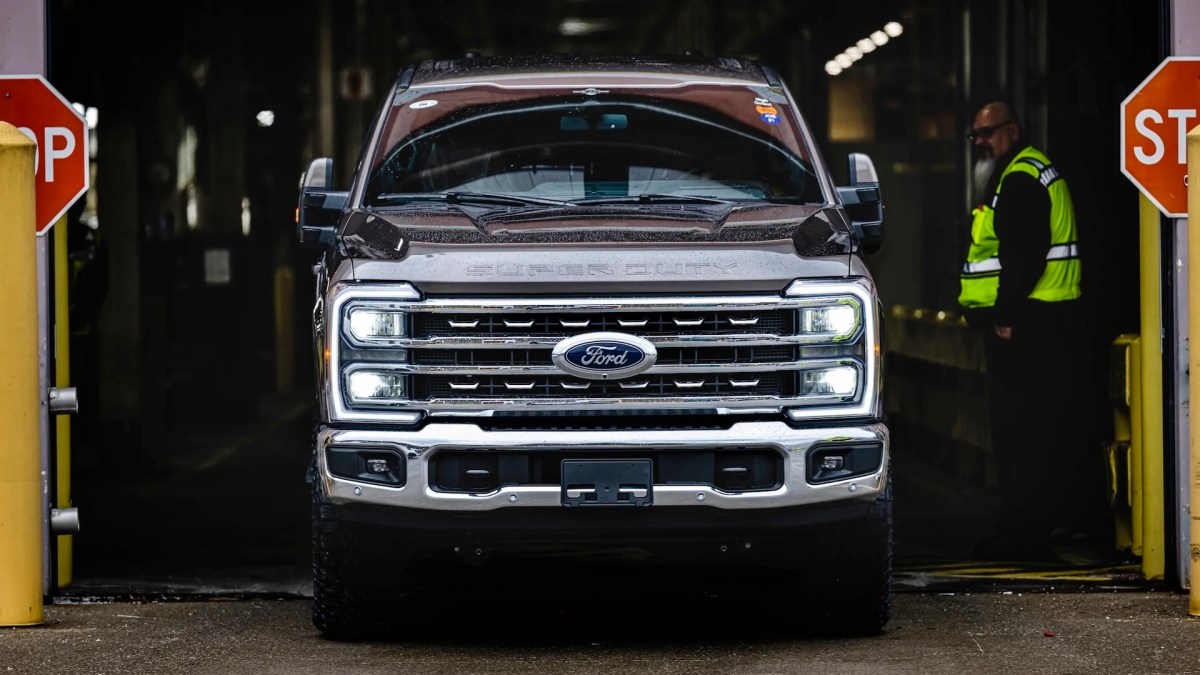
A new NYT analysis found that anyone shorter than 5-foot-6 — about half of American adults — would frequently be knocked to the ground in front of today's average vehicle.
You have it backwards. Larger vehicles of course have more energy, but pedestrians are too light for that to make a difference.
If you get hit by an oil tanker ship going ~1 kmh, that ship has orders of magnitude more kinetic energy than a car at highway speed, yet, unless theres a wall or something, the ship will merely push you harmlessly aside.
Its about the manner of delivery, not the vehicles energy.
Larger cars are more dangerous because they hit you higher up, where you have more vital organs.
The danger from higher kinetic energy comes from the longer break distance and time to stop: given the same driver reaction time and distance to the pedestrian, a heavier vehicle will take longer to break to a stop and thus have a higher velocity when it collides with that pedestrian than a lighter vehicle.
This is not to deny the difference that a higher front makes, just pointing out that kinetic energy does in fact make a difference, though of course as you point out not because of any “higher energy transmission on collision” or such, but rather indirectly because the vehicle is more likely to collide at a higher speed because it takes longer to break.
I couldn’t find info on this for explicitly for light trucks, but here’s some for trucks.


Kinetic energy is related to mass and the square of velocity
A heavier vehicle absolutely has more killing power against a pedestrian…
You’re right. The mass of the pedestrian makes no difference… any vehicle is going to turn them into a red mist
You have it backwards. Larger vehicles of course have more energy, but pedestrians are too light for that to make a difference.
If you get hit by an oil tanker ship going ~1 kmh, that ship has orders of magnitude more kinetic energy than a car at highway speed, yet, unless theres a wall or something, the ship will merely push you harmlessly aside.
Its about the manner of delivery, not the vehicles energy.
Larger cars are more dangerous because they hit you higher up, where you have more vital organs.
The danger from higher kinetic energy comes from the longer break distance and time to stop: given the same driver reaction time and distance to the pedestrian, a heavier vehicle will take longer to break to a stop and thus have a higher velocity when it collides with that pedestrian than a lighter vehicle.
This is not to deny the difference that a higher front makes, just pointing out that kinetic energy does in fact make a difference, though of course as you point out not because of any “higher energy transmission on collision” or such, but rather indirectly because the vehicle is more likely to collide at a higher speed because it takes longer to break.
I couldn’t find info on this for explicitly for light trucks, but here’s some for trucks.