

- cross-posted to:
- [email protected]
- cross-posted to:
- [email protected]
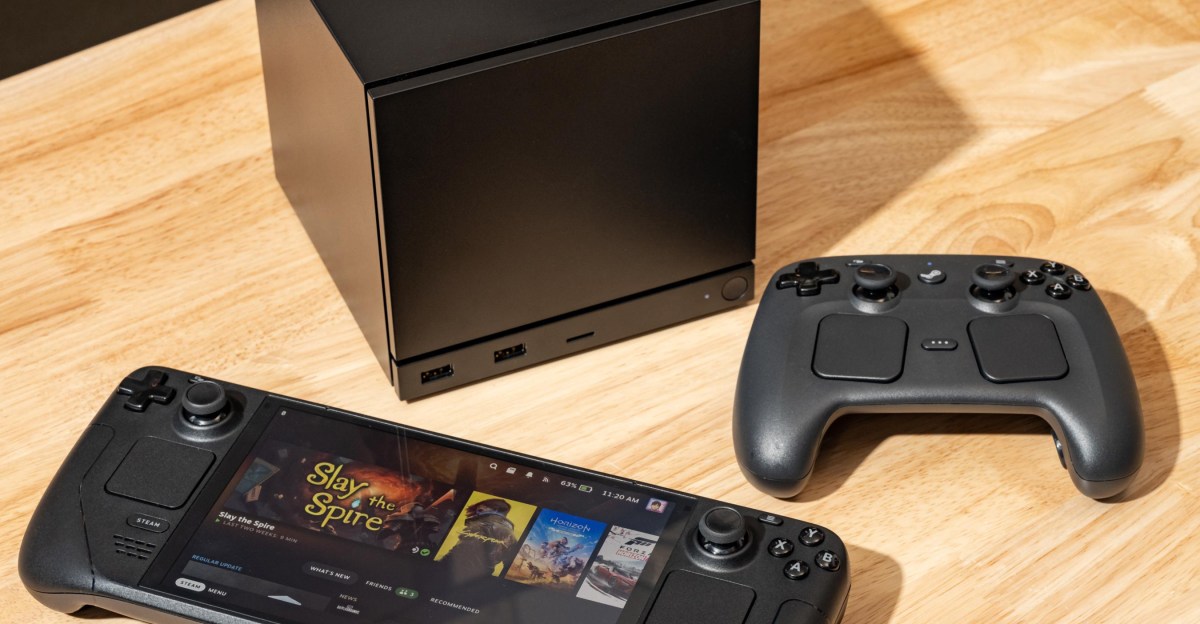
Valve’s Steam Machine finally has a price: a whopping $1,049 for the 512GB configuration or $1,349 for the 2TB version. And those are without bundled controllers, which drive up the cost more.
The prices are so high in part because Valve isn’t subsidizing the hardware, and the company has already indicated that the component crisis forced it to reconsider its initial pricing plans. In an interview with the YouTube channel Gamers Nexus, Valve engineers discussed the reality of sourcing RAM in 2026, with take-it-or-leave-it prices as memory and other components remain in short supply, from only a few vendors like Samsung, Micron, and SK Hynix.
[…]
Valve, of course, isn’t the only company in a bind over memory shortages, as the crunch is forcing many hardware makers to make significant pricing changes. Even Apple CEO Tim Cook is warning of incoming price hikes for iPhones, Macs, and other devices. And the RAM crunch isn’t projected to get better anytime soon.
Yeah, the weakness of the “this is all a massive conspiracy to force consumers to rent all their computing power” theory is that old computers work just fine as long as you don’t try and install a newer Windows.
We’re maybe 2 decades past the point were you had to upgrade your PC every 5 years for it to be suitable for everyday computing usage. There are only two things pushing PC hardware upgrades nowadays:
Now, for Games, all attempts at getting gamers to have their games hosted in servers and playing on light PCs - most notably Stadia - failed miserably.
As for OS, how successful has Microsoft been at getting people to actually upgrade to Windows 11, especially since hardware prices shot up?
I think it’s far more likely that people just keep on using their aged hardware more often than not with no longer updated OS versions, than it is for them to actually start paying subscriptions to use remote computing power to browse the web and read their e-mails, especially since that still needs some form of local hardware so doesn’t totally solve their problem with expensive hardware.