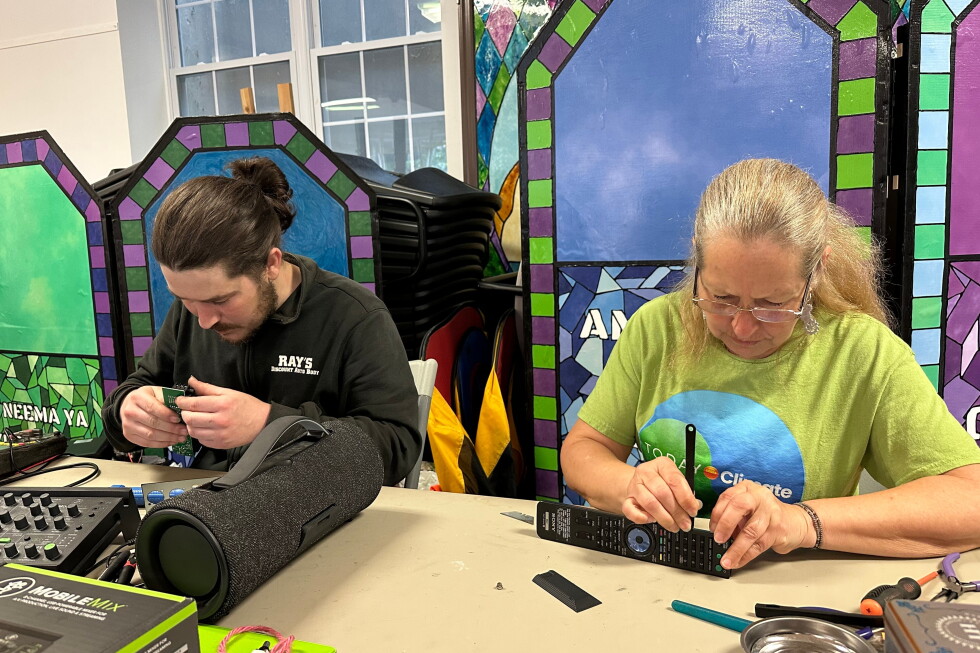
Repair Cafes are part of a new brand of anticonsumerism. The cafes and other efforts try to offer an alternative to mass-produced, disposable goods that have dominated the economy for the last half-century.
Sure, the wires are larger because they needed to be, but they are still functional, which is what matters.
I’d say one of the issues with repairing things these days is that everything is getting smaller and smaller. Where thick gauge wires were required before, now they use much thinner wire. Where thinner wires were used before, printed circuit boards are often used now. New circuit boards are chock full of miniature surface-mount components which are much more difficult to replace compared to the much larger circuit boards of the olden days. Every step of miniaturisation makes repairs require more skill.
Ugh, that description triggered my PTSD acquired during the latest repairs on a Lenovo Yoga. Tons of printed and taped-on PCB in place of once solid construction.
I guess that’s why nowadays, whenever I need to buy new, I first watch a teardown video to see the insides. If things look finicky and hard to access/repair, I’m not buying. Refuse > repair.
Mmmmh! And ribbon cables that you need to manually fold so they’ll fit into the slot - what a great chance to break the sub-millimeter copper wiring inside!


Sure, the wires are larger because they needed to be, but they are still functional, which is what matters.
I’d say one of the issues with repairing things these days is that everything is getting smaller and smaller. Where thick gauge wires were required before, now they use much thinner wire. Where thinner wires were used before, printed circuit boards are often used now. New circuit boards are chock full of miniature surface-mount components which are much more difficult to replace compared to the much larger circuit boards of the olden days. Every step of miniaturisation makes repairs require more skill.
Ugh, that description triggered my PTSD acquired during the latest repairs on a Lenovo Yoga. Tons of printed and taped-on PCB in place of once solid construction.
I guess that’s why nowadays, whenever I need to buy new, I first watch a teardown video to see the insides. If things look finicky and hard to access/repair, I’m not buying. Refuse > repair.
Ribbon cables with sub-millimeter slots to insert them into
Mmmmh! And ribbon cables that you need to manually fold so they’ll fit into the slot - what a great chance to break the sub-millimeter copper wiring inside!