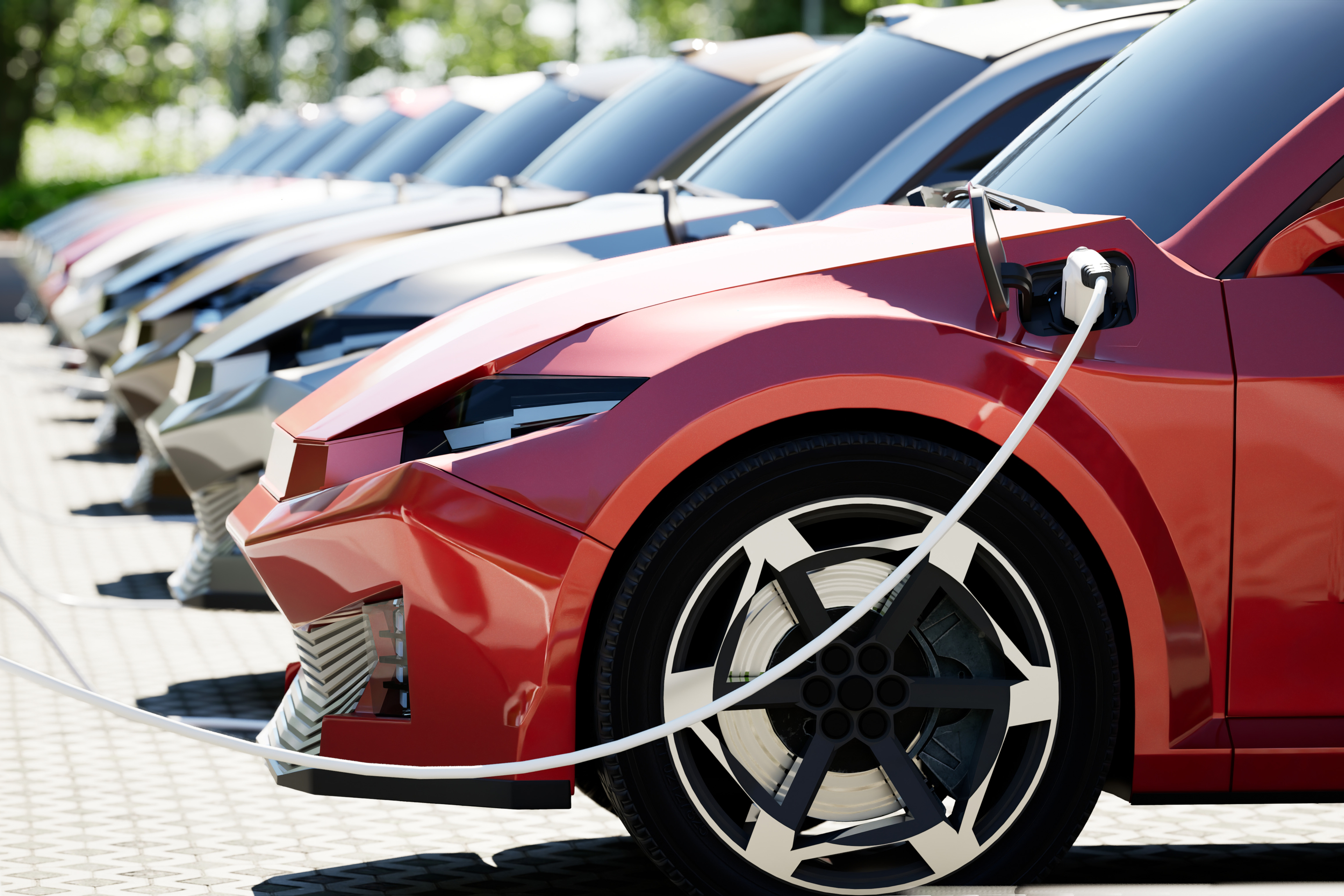
In most U.S. zip codes, electric vehicles are cost-competitive with their gas-powered counterparts, according to a new study. And regarding emissions benefits of EVs, individual driving patterns matter as much as regional factors like the local electricity mix.
My salvage title 2006 Honda Accord cost me $3200 in cash over 3 years ago.
Since then, I’ve spent maybe another $2000 total on ALL service and maintenance. Including a full set of tires, an alignment, oil changes, brake pads and rotors. A pair of wheel bearings, a new radiator, and a pair of tie rod ends.
All of which I did myself.
Oh, and my monthly insurance premium for this car?
$32 a month. No car note. “But electric cars don’t buy gas either” No. They use electricity. And my average monthly power bill is already over $400 a month. You think I want that to be even higher? No way.
Yea, I get that EVs are better.
But I don’t do car notes. I can’t AFFORD to do car notes.
So until I can buy a 17 year old EV for $3200 cash and only need another couple thousand to keep it running for an additional 3 years, I will stick to the used ICE market.
They use electricity. And my average monthly power bill is already over $400 a month. You think I want that to be even higher?
Some of your concerns may be valid, but I pay relatively high prices for electricity, 35¢/kWH, and even at that price, the hit to my electric bill is half what I used to spend on gasoline. Current gas price make that even better
Note = loan in this context. OP is saying he doesn’t want the burden of a monthly payment on a new car, and would rather buy a cheaper car that he doesn’t need to borrow for. (Although these are becoming harder to find, at least in the US…)
Actually lack of that is one of the reasons we have high electricity prices. There was an expectation to buy cheap and clean electricity from Quebec, that kept getting blocked for reasons outside our control. I suppose at the moment with the political BS it’s just as well we were never able to get connected.
…. But our planned wind farms have also been blocked for many years. We finally got one open despite the federal government. It’s not even directly for us but is expected to cut 1.5¢/kWH off our overall cost of electricity
Yeah, your electric bill would be higher but the increase in electricity you’d pay will be less than what you currently pay for gas, saving money overall. Only issue is the up front cost to buy one in the first place. And all the spying shit recent cars come with.
Yeah this and all the infotainment bullshit they’re putting in new cars is a huge incentive to just stick with my 15 year old ICE. If nothing changes I’m planning to drive this thing till it rusts to pieces. I don’t need or want all that extra crap. Just give me A/C, power locks and windows and a stereo and that’s it.
No. They use electricity. And my average monthly power bill is already over $400 a month. You think I want that to be even higher? No way.
Fueling costs per mile (using the term “fuel” rather loosely for EVs) are significantly lower for electric vehicles than combustion, even taking into account plugging the thing in at home with an extension cord. It’s going to be a rather long break even period when comparing to a salvage title clunker, but for someone shopping for a new car to begin with it makes sense.
It’s not costing anyone “less” to be paying at the pump. It’s just an easily forgotten regular expense that everyone is used to. Meanwhile, people have been conditioned to have a cow over seeing any increased number on their electricity bill even if it’s only a couple of bucks. Right now with local gasoline prices it costs something like $60 to fill up my Subaru from empty and nearly $150 for my truck (it has a 35 gallon tank!) and the former I could easily do twice a month if I weren’t riding so many motorcycles this time of year instead. In the Scoob, that’s around 784 miles of driving for $120 in fuel. That’s only be $47.04 if I had a reasonably recent EV and charged it at home.
I went through the same rigmarole replacing my house’s oil heat with mini splits. Yes, my electricity bill went up… On average something like $40 a month. Meanwhile I stopped paying $300 to $400 a month to my former oil company for five or six months out of the year. $2000 - $480 = a $1520 or so net yearly savings I proceeded to blow on camera lenses and more motorcycle parts.
That would be why I included the caveat about someone already shopping for a new car.
You have to understand that the majority of buyers will not countenance buying a salvage titled vehicle and restoring it, let alone doing the work on it themselves. You’re in a rather unique situation there which is not going to be applicable to most people.
The OP’s position is reasonable given their circumstances, and several people, including you, have clearly said as much. Even industry and financial experts acknowledge that if someone already owns a functioning vehicle, the most economical and environmentally responsible choice is often to continue driving it until replacement becomes necessary, regardless of whether it is ICE or EV.
OP seems less interested in discussing practicality than repeated reaffirmation of “I do not want an EV.”
Yes. The problem with that is of course that this is tacit FUD which reads, whether intentionally or not, “I don’t want an EV therefore it won’t make sense for anyone else to drive one, either.”
There’s more than enough misinformation floating around about electric cars already. I specifically want to address the “your electric [sic] will go up real high!!!” argument I hear on a seemingly weekly basis these days, which is something that seems to make people particularly antsy.
I get you. Thanks for the call out and clarifying. Decades of being on the internet has turned me into a grumpy pessimist🫥
EDIT: one of my best friends has a ~15 year old Toyota Yaris. He just replaced the clutch in it last year, and that was the first major work that it’s needed. That thing is going to outlive his kids. I think it’s great he (and you) are driving old cars that still work; it really is the most economical and ecologically sound thing to do.
I’ve looked at the leaf. The local container shipping port uses them inside the port.
The biggest issue I have with it is going to make me sound like I’m just making excuses. But I live 25ish miles, in each direction, from my job.
The “official” range is, if I recall right, about 70 miles. And I need about 50ish a day. that makes me extremely nervous, especially since the used market is very much “buyer beware”.
Is the 10+ year old battery going to have enough life in it for that to still be accurate?
Can’t plug in at work.
I would probably be happier if I could actually find a PHEV for about that, rather than a true hybrid.
Another issue is, those may exist in your market, but they don’t in mine. Out of curiosity, I looked. The only used EV I could find within 100 miles of me was a Ford C Max. For 7k.
I live in an area where the used market is full of used trucks that get worse mileage than even my V6 Honda, for 3 to 4x what I paid for it. And the occasional clapped out Nissan that looks like it was ran over by a train. And I won’t touch a Nissan made after 2004. POS CVT.
Most people can’t repair a car themselves, especially true if it’s something more complicated than brake pads and rotors. If you adjust your numbers to reflect what it would have cost if you had to pay someone for repairs I’m guessing it might seem a little crazy to invest that much in such an old car. If one were in a wreck and the car was totalled, insurance pay out wouldn’t get close to the amount invested.
Me… I’m still driving a 20 yr old car. Low mileage since I’ve worked from home most the time I’ve owned it, but it’s definitely showing its age. I can afford a new one but why would I want to right now? It still runs well and I have no desire to drop $50k on something to replace it. Happy now to keep my money saved.
Oh I get it. But not everyone has the aptitude, the tools and/or someone to teach them. Brakes and rotors aren’t too tough, and I taught my son and helped both my SILs but not everyone has that. I did ball joints a long time ago, starters, an alternator… but my dad helped and that gave me the confidence to attempt other stuff. But one expensive mistake can really cost you too and can discourage people from trying again.
Honestly we aren’t that far off from that. We don’t have many 15 year old EVs but you can get a 8 year old used EV for 8K. I think you got incredibly lucky to get a 15 year old car that doesn’t need it’s transmission or engine or some other significant part replaced. Like others said you doing it yourself is what made your repairs much cheaper and to be honest you would be able to do the same thing on EVs for everything other than the battery and motors but depending on the brand you could fix broken batteries as well.


My salvage title 2006 Honda Accord cost me $3200 in cash over 3 years ago.
Since then, I’ve spent maybe another $2000 total on ALL service and maintenance. Including a full set of tires, an alignment, oil changes, brake pads and rotors. A pair of wheel bearings, a new radiator, and a pair of tie rod ends.
All of which I did myself.
Oh, and my monthly insurance premium for this car?
$32 a month. No car note. “But electric cars don’t buy gas either” No. They use electricity. And my average monthly power bill is already over $400 a month. You think I want that to be even higher? No way.
Yea, I get that EVs are better.
But I don’t do car notes. I can’t AFFORD to do car notes.
So until I can buy a 17 year old EV for $3200 cash and only need another couple thousand to keep it running for an additional 3 years, I will stick to the used ICE market.
Some of your concerns may be valid, but I pay relatively high prices for electricity, 35¢/kWH, and even at that price, the hit to my electric bill is half what I used to spend on gasoline. Current gas price make that even better
It’s less about the gas and electricity than it is about adding a car note and higher insurance.
What’s car note?
Note = loan in this context. OP is saying he doesn’t want the burden of a monthly payment on a new car, and would rather buy a cheaper car that he doesn’t need to borrow for. (Although these are becoming harder to find, at least in the US…)
Exactly.
Come to Quebec, where electricity is about USD $0.05/kWh. And over 99% of that is renewable (hydroelectric)!
Actually lack of that is one of the reasons we have high electricity prices. There was an expectation to buy cheap and clean electricity from Quebec, that kept getting blocked for reasons outside our control. I suppose at the moment with the political BS it’s just as well we were never able to get connected.
…. But our planned wind farms have also been blocked for many years. We finally got one open despite the federal government. It’s not even directly for us but is expected to cut 1.5¢/kWH off our overall cost of electricity
Yeah, your electric bill would be higher but the increase in electricity you’d pay will be less than what you currently pay for gas, saving money overall. Only issue is the up front cost to buy one in the first place. And all the spying shit recent cars come with.
Yeah this and all the infotainment bullshit they’re putting in new cars is a huge incentive to just stick with my 15 year old ICE. If nothing changes I’m planning to drive this thing till it rusts to pieces. I don’t need or want all that extra crap. Just give me A/C, power locks and windows and a stereo and that’s it.
I live on the southern US coast. Unless I drive it straight into the Gulf, it isn’t likely to rust away. It’s a Honda, not a Dodge. 🤣
Fueling costs per mile (using the term “fuel” rather loosely for EVs) are significantly lower for electric vehicles than combustion, even taking into account plugging the thing in at home with an extension cord. It’s going to be a rather long break even period when comparing to a salvage title clunker, but for someone shopping for a new car to begin with it makes sense.
It’s not costing anyone “less” to be paying at the pump. It’s just an easily forgotten regular expense that everyone is used to. Meanwhile, people have been conditioned to have a cow over seeing any increased number on their electricity bill even if it’s only a couple of bucks. Right now with local gasoline prices it costs something like $60 to fill up my Subaru from empty and nearly $150 for my truck (it has a 35 gallon tank!) and the former I could easily do twice a month if I weren’t riding so many motorcycles this time of year instead. In the Scoob, that’s around 784 miles of driving for $120 in fuel. That’s only be $47.04 if I had a reasonably recent EV and charged it at home.
I went through the same rigmarole replacing my house’s oil heat with mini splits. Yes, my electricity bill went up… On average something like $40 a month. Meanwhile I stopped paying $300 to $400 a month to my former oil company for five or six months out of the year. $2000 - $480 = a $1520 or so net yearly savings I proceeded to blow on camera lenses and more motorcycle parts.
A hundred or two a month won’t help me afford a $300 car note and a much higher insurance premium.
That would be why I included the caveat about someone already shopping for a new car.
You have to understand that the majority of buyers will not countenance buying a salvage titled vehicle and restoring it, let alone doing the work on it themselves. You’re in a rather unique situation there which is not going to be applicable to most people.
The OP’s position is reasonable given their circumstances, and several people, including you, have clearly said as much. Even industry and financial experts acknowledge that if someone already owns a functioning vehicle, the most economical and environmentally responsible choice is often to continue driving it until replacement becomes necessary, regardless of whether it is ICE or EV.
OP seems less interested in discussing practicality than repeated reaffirmation of “I do not want an EV.”
Yes. The problem with that is of course that this is tacit FUD which reads, whether intentionally or not, “I don’t want an EV therefore it won’t make sense for anyone else to drive one, either.”
There’s more than enough misinformation floating around about electric cars already. I specifically want to address the “your electric [sic] will go up real high!!!” argument I hear on a seemingly weekly basis these days, which is something that seems to make people particularly antsy.
Obligatory Technology Connections video: https://www.youtube.com/watch?v=5NG4hycq8n0
Man, I would absolutely love an EV. As long as it’s paid off, and I can keep minimum liability insurance on it.
You completely missed my entire point.
They haven’t existed long enough for those of us struggling, and anyone who can afford one isn’t really struggling, they just think they are.
I get you. Thanks for the call out and clarifying. Decades of being on the internet has turned me into a grumpy pessimist🫥
EDIT: one of my best friends has a ~15 year old Toyota Yaris. He just replaced the clutch in it last year, and that was the first major work that it’s needed. That thing is going to outlive his kids. I think it’s great he (and you) are driving old cars that still work; it really is the most economical and ecologically sound thing to do.
You can buy a cheap used Nissan Leaf for less than 5000 bucks, that seems doable for most people
I’ve looked at the leaf. The local container shipping port uses them inside the port.
The biggest issue I have with it is going to make me sound like I’m just making excuses. But I live 25ish miles, in each direction, from my job.
The “official” range is, if I recall right, about 70 miles. And I need about 50ish a day. that makes me extremely nervous, especially since the used market is very much “buyer beware”.
Is the 10+ year old battery going to have enough life in it for that to still be accurate?
Can’t plug in at work.
I would probably be happier if I could actually find a PHEV for about that, rather than a true hybrid.
Another issue is, those may exist in your market, but they don’t in mine. Out of curiosity, I looked. The only used EV I could find within 100 miles of me was a Ford C Max. For 7k.
I live in an area where the used market is full of used trucks that get worse mileage than even my V6 Honda, for 3 to 4x what I paid for it. And the occasional clapped out Nissan that looks like it was ran over by a train. And I won’t touch a Nissan made after 2004. POS CVT.
Most people can’t repair a car themselves, especially true if it’s something more complicated than brake pads and rotors. If you adjust your numbers to reflect what it would have cost if you had to pay someone for repairs I’m guessing it might seem a little crazy to invest that much in such an old car. If one were in a wreck and the car was totalled, insurance pay out wouldn’t get close to the amount invested.
Me… I’m still driving a 20 yr old car. Low mileage since I’ve worked from home most the time I’ve owned it, but it’s definitely showing its age. I can afford a new one but why would I want to right now? It still runs well and I have no desire to drop $50k on something to replace it. Happy now to keep my money saved.
If you’re poor, you learn how to do these things.
Oh I get it. But not everyone has the aptitude, the tools and/or someone to teach them. Brakes and rotors aren’t too tough, and I taught my son and helped both my SILs but not everyone has that. I did ball joints a long time ago, starters, an alternator… but my dad helped and that gave me the confidence to attempt other stuff. But one expensive mistake can really cost you too and can discourage people from trying again.
Honestly we aren’t that far off from that. We don’t have many 15 year old EVs but you can get a 8 year old used EV for 8K. I think you got incredibly lucky to get a 15 year old car that doesn’t need it’s transmission or engine or some other significant part replaced. Like others said you doing it yourself is what made your repairs much cheaper and to be honest you would be able to do the same thing on EVs for everything other than the battery and motors but depending on the brand you could fix broken batteries as well.
Using an old car until it finally breaks down beyond repair is considered climate friendly. Less resources wasted on building a new car that way.
That said, I fucking love driving EVs. They’re just so much more fun.