In most U.S. zip codes, electric vehicles are cost-competitive with their gas-powered counterparts, according to a new study. And regarding emissions benefits of EVs, individual driving patterns matter as much as regional factors like the local electricity mix.
Others already addressed battery cost, so I will address charging time:
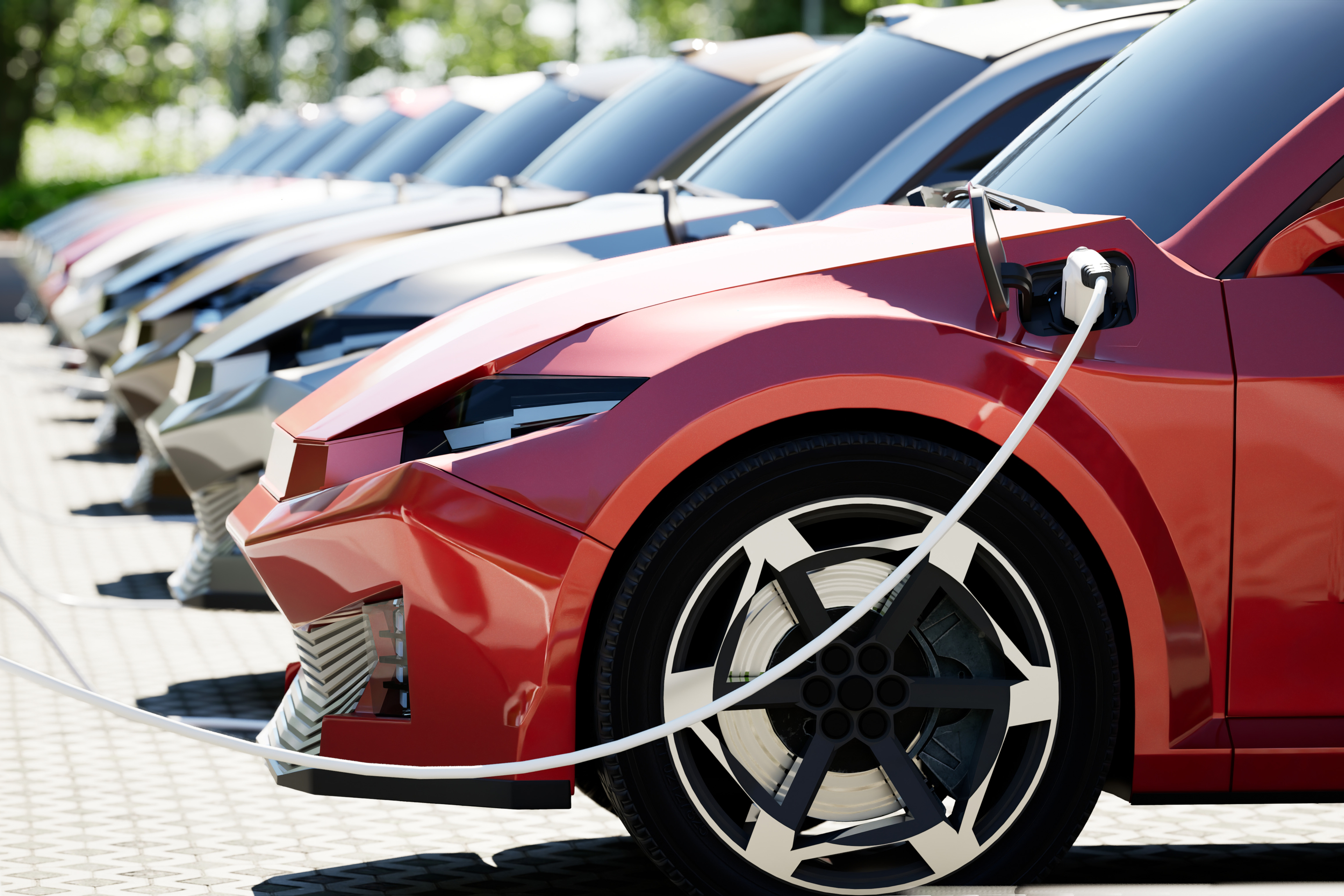
For modern EVs, charging time is basically a non-issue outside of longer road trips. Most EV owners utilize a slower (level 1 or level 2) charging station at home, which allows them to charge the car while they are at home/sleeping. EV owners can also use charging stations near/at their destination to charge while they are doing other things anyway. And assuming your daily commute isn’t like 100 miles/160 km, you really don’t need to stop at charging stations at all besides the one at home, which is cheaper. Obviously this does not apply if you rent a house or live in an apartment, etc.
Even road trips aren’t so bad assuming the car has an 800 volt battery pack instead of a 400 volt (higher voltage at same current = more power to charge and faster charge time). It also helps a lot if you only charge to 80 percent instead of 100 because that last 20 percent almost doubles your charge time and is harder on the battery. A lot of new EV owners don’t understand this and get frustrated when they are sitting there for 40 minutes getting almost no additional range compared to waiting for 20 minutes.
Yes it is. Out of curiosity, how many miles of range do you tend to get charging overnight? I’ve read that it’s about 20 miles per 12 hours, which for me would not be enough to cover my commute.
When I plug it in, it says it’s charging at 2.4KW, which I fuzzily convert to something like 7 or 8km per hour of charging. Note that this is on 220v on its own circuit.
The circuit could fit a full fat charging station, but I haven’t really gotten to it cause it works fine as is for my use.
Power is the rate of energy transfer and is in kW.
If 1kW flows for 1 hour it’s 1 kWh (power x time). A US 120V socket at 12 Amps is just under 1.5kW. A 240V socket will be double that.
1.5kW for 12 hours is 18kWh. That’s not half a battery, as most cars start at 60kWh batteries now. 18kWh will get 54-72 miles depending on the consumption of the car.


Others already addressed battery cost, so I will address charging time:
For modern EVs, charging time is basically a non-issue outside of longer road trips. Most EV owners utilize a slower (level 1 or level 2) charging station at home, which allows them to charge the car while they are at home/sleeping. EV owners can also use charging stations near/at their destination to charge while they are doing other things anyway. And assuming your daily commute isn’t like 100 miles/160 km, you really don’t need to stop at charging stations at all besides the one at home, which is cheaper. Obviously this does not apply if you rent a house or live in an apartment, etc.
Even road trips aren’t so bad assuming the car has an 800 volt battery pack instead of a 400 volt (higher voltage at same current = more power to charge and faster charge time). It also helps a lot if you only charge to 80 percent instead of 100 because that last 20 percent almost doubles your charge time and is harder on the battery. A lot of new EV owners don’t understand this and get frustrated when they are sitting there for 40 minutes getting almost no additional range compared to waiting for 20 minutes.
I don’t even have a charging station, I just plug that thing straight to the wall. I guess that’s a level 1?
Yes it is. Out of curiosity, how many miles of range do you tend to get charging overnight? I’ve read that it’s about 20 miles per 12 hours, which for me would not be enough to cover my commute.
When I plug it in, it says it’s charging at 2.4KW, which I fuzzily convert to something like 7 or 8km per hour of charging. Note that this is on 220v on its own circuit.
The circuit could fit a full fat charging station, but I haven’t really gotten to it cause it works fine as is for my use.
I level 1 charge and get 20 miles in 7 hours. So the average 40mi commute should be possible overnight.
1.5 kw per hour, or 30kw overnight. That’s about half charge of most battery packs.
Sigh… I’m going to have to be a unit nazi.
Power is the rate of energy transfer and is in kW. If 1kW flows for 1 hour it’s 1 kWh (power x time). A US 120V socket at 12 Amps is just under 1.5kW. A 240V socket will be double that.
1.5kW for 12 hours is 18kWh. That’s not half a battery, as most cars start at 60kWh batteries now. 18kWh will get 54-72 miles depending on the consumption of the car.
That’s some Alaska winter night with 20 hours!