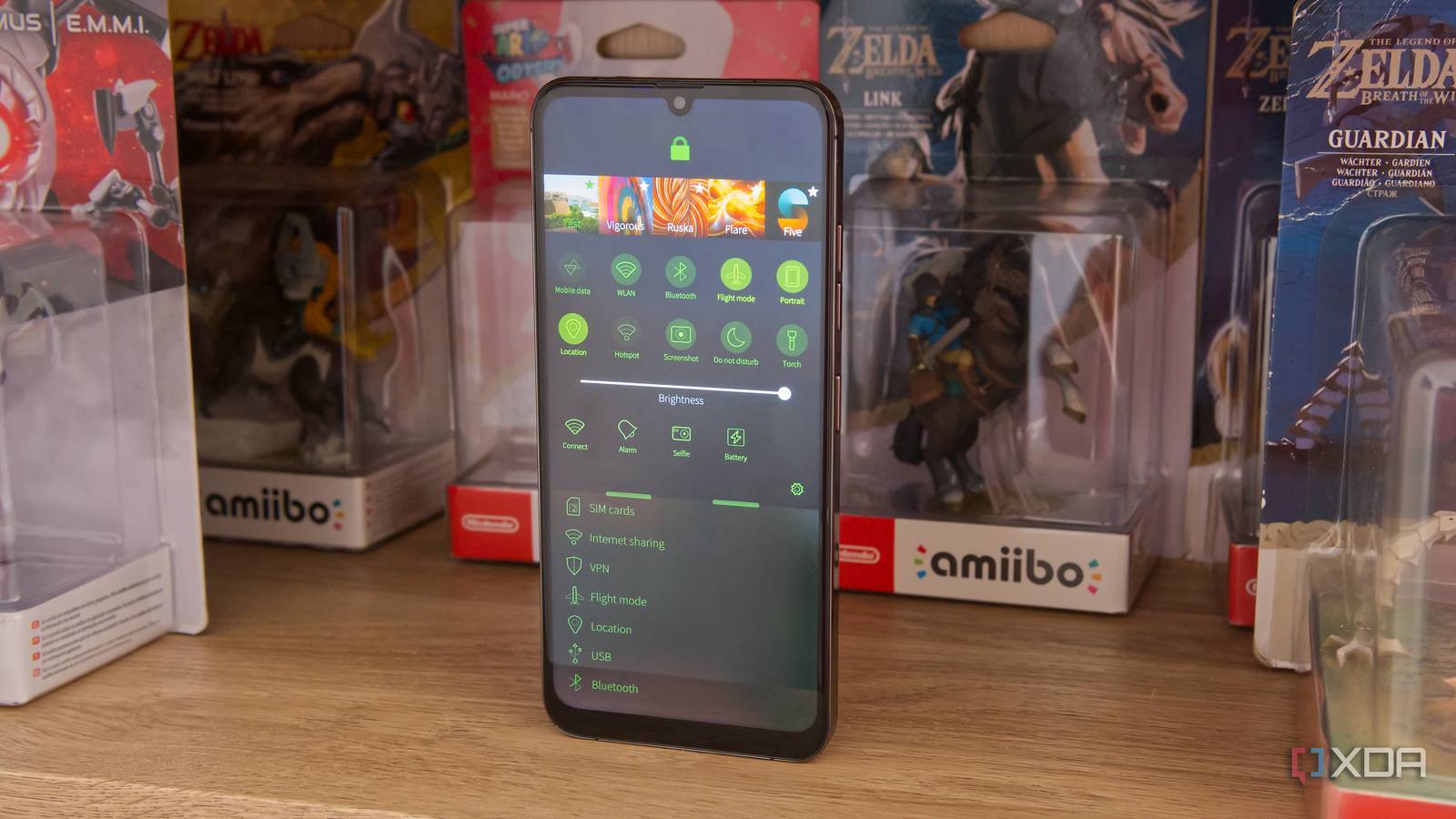
The biggest hurdle for a Linux phone is proprietary drivers. On a PC you can swap parts, you can add a USB wifi or sound card on a laptop, but on a phone you are kinda stuck with all the stuff on the phone, so the problem with binary blobs is so much worse, and untill we don’t have at least the full drivers source or datasheet as an normal part of phone releases it will always be an impossible to win catch-up race.
At least phones are not getting that much better anymore so is starting to be feasible to floss hackers to fully port Linux to some phones in time for them to still be usable (battery problems a part).
could actually be
But unfortunately aren’t currently…
I get (and share) the purist hate on saOS’s non OSS UI, but to get linux phones up and running you need app support1 and market adoption (people buying phones) to make it a viable switch from the walled gardens for more people to use it, to get more hardware made and so on. Chicken and egg deal, bootstrapping. As such anything that gets people in front of linux phones should be embraced at this point, as long as it can run linux native code2 . When the snowball is rolling, then push for full OSS.
Don’t let perfect be the enemy of good (enough for now).
1: There’s plenty of linux apps but few are designed for small touchscreens. Android emulation often takes us back to non open source anyway, even as it helps adoption.
2: and preferably can be re-flashed with something better later, which is becoming rare as bootloaders get locked down.
Is there a list of shit people need to develop for Linux phones? Drivers for xyz, reverse engineering something, something other, yada-yada? I see the argument a lot that Linux phones aren’t ready, but I’ve never seen a roadmap.
This project was started recently-ish and implies reverse engineering is the most important part. https://librephone.fsf.org/faq Haven’t seen much else listed out.
I’ve never seen a roadmap
Neither have I, sounds like a good project in itself if it doesn’t exist. ‘Drivers for xyz, reverse engineering something’ is part of the problem, phones usually (nearly always best I understand) have proprietary blobs of firmware to a greater or lesser degree and it’s a moving target different between manufacturers and most often models. Qualcomm modems are particularly egregious for patent reasons. US trade deal enforced global DMCA laws make reverse engineering legally tricky. Hence the desire for linux specific hardware platforms.
US trade deal enforced global DMCA laws make reverse engineering legally tricky
I love when the law concern itself with keeping the cat in the bag. The small anarchist in me wants to know what happens if someone reverse engineers something protected under DCMA, releases it, doesn’t claim credit. Now the software exists, so what does Uncle Sam do?
keeping the cat in the bag
Just the neoliberal instinct to promote monopoly.
what does Uncle Sam do?
If you have adequate opsec, nothing ;}. At the moment, them pursuing it might provoke other governments to dump those laws, after all the deal was for tariff free trade, turn around is fair play. But manufacturers won’t want to take the legal risk until it shakes out.
Nice to see the UI hasn’t changed much in the last 10 years.
If it’s not open source as much as reasonably possible, it’s ultimately no better than Android. Kind of annoyed that distinctions need to be made between “real” Linux and “fake” Linux.
It can’t be much poorer made than Android, so it sure is better.
Oh there’s a lot of room to the bottom, ask me about Windows CE on mobile phones back in the time.
No, now that I think back… please don’t ask. I want to forget.
This is how enshittification perpetuates.
SaOS is proprietary garbage, which crosses it out from any consideration.
Then use nuevNemo instead
Sounds like you’re letting ‘perfect’ be the enemy ‘good’.
An OS not being abused by Google or Apple to corral users is good enough for me.
I couldn’t care less whether it’s proprietary in this case.Give me a fully open source phone, that’s capable of being a daily driver without funneling data to Google or Apple and we’re talking!
How nice that people can have different requirements for their phones 😉I could agree with that argumentation if saOS was significantly better than it’s peers (pmOS, Ubuntu Touch and few more), but it isn’t. It is only slightly better and it has significant disadvantages (main one being lack of free (as in free beer) android app “emulation”)
Honestly wish they just supported us bands. The ui is, IMO, the best you can get.
It works on US bands! I have one! I’ve been able to send SMS and make phone calls fine on Mint Mobile.
(Still haven’t had time to fully switch over from my Fairphone 6 though.)
Wait! Sorry.
Uh, I think you’re talking about the Jolla C2 specifically. I can report that the Sony Xperia 10mk3 with SailfishOS works fine. Not sure about the C2.
https://commerce.jolla.com/products/jolla-phone-sep-ii-2026
Q:
Will the Jolla Phone work outside Europe, can I use it e.g. in the U.S.?
A:
Yes, we have designed the cellular band configuration to enable global traveling as much as possible, including e.g. roaming in the U.S. carrier networks.
4G & 5G global roaming modem configuration:
- LTE FDD: 1, 2, 3, 4, 5, 7, 8, 12, 17, 18, 19, 20, 25, 26, 28AB, 66
- LTE TDD: 34, 38, 39, 40, 41
- 5G NR: n1, n2, n3, n5, n7, n8, n12, n20, n26, n28, n38, n40, n41, n66, n77, n78
Back when VoLTE launched, they ran tests, and ever T-Mo based MVNO and T-Mo itself worked just fine.
The best supported third-party device is the Sony Xperia 10 mk3.
If you don’t want to install it yourself, you can buy the mk3 with SailfishOS already pre-installed here: https://buy.jolla-devices.com/product/sony-xperia-10-iii-sailfish-os/
They shipped to me in the US. It works on Mint Mobile.
Yes, it’s a little old, but it runs pretty smooth actually. So far at least.
No thanks.