The author misses a few key points about the American model:
First, in exchange for the local territorial monopoly, the providers are supposed to be heavily regulated by the local (or State) government, with controls in place to prevent abuse of the monopoly and promote the interests of its residents. Of course, we all know how business interests influence government to make business- friendly regulations. Governments have the ability to enforce more user-friendly practices, if they choose to do so.
But the more important point is that in the US, we hand out different monopolies based on the connection type. For instance, where I live we have one company that owns the twisted-pair POTS landlines, a different company that owns the coaxial cable TV service, and another company that owns the direct fiber to the home. Three companies, three connections to each home, all three (theoretically) capable of delivering the same services, since there is no longer any real differentiation between voice, video, and data service: it’s all just bits.
We just got our FTTH provider only recently. Before that, our choices were only the cable company or the telco’s astonishingly show DSL. So I subscribed to the Cable company, and their pricing model tried to force you into a bundle for the other services. Their speeds were also quite slow for broadband, until the Fiber company started digging. Then I got all sorts of emails saying “we’re increasing your speed – for free!” And sure enough, I was getting better bandwidth. But all that did was piss me off. These losers could have given me that better service all along, but didn’t bother until they were forced to.
So I’m on the fiber now. But I know how it works, this service will be awesome at first, but once this company finishes building out they won’t sign on any new capacity and it will gradually get shittier over time. It’s the American Way!
(And I still pay the local telco way too much money for a POTS landline. What can I say, I’m an old.)
Would it help if you knew we paid providers billions of dollars in the 90s for fiber and they ran off with the profits, and we got nothing? So it took almost 2 decades after we paid them, to finally get gigabit speeds, on top of paying them again to do it for reals this time.
Especially no, mostly because I actually finally got fiber when I lived in New York City, but, due to a family emergency, I recently had to move to Florida, where… Well… Florida…
Benefit of pots is it doesn’t go out when the Internet does (unless your provider has a VOIP backend, but usually those would be more robust than your home.)
It also is a second source of electricity coming into the house should there be a power outage.
I kind of wish I could have an old school pots line, even though I run my own VOIP system.
All those benefits mattered a lot more before everyone had a phone in their pocket. A power outage that takes out cell towers is also likely to take out the Telco central office.


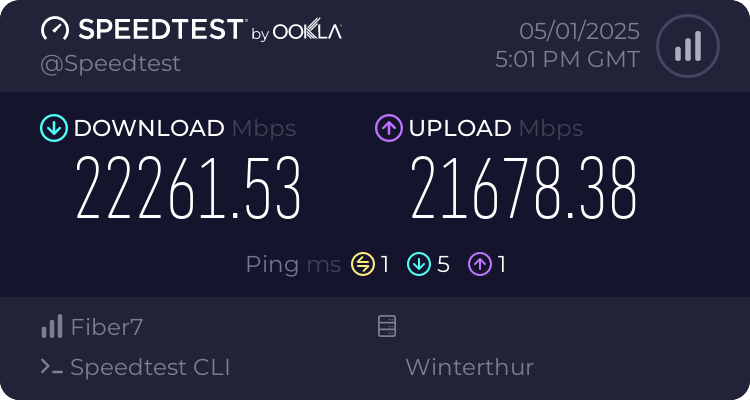
The author misses a few key points about the American model:
First, in exchange for the local territorial monopoly, the providers are supposed to be heavily regulated by the local (or State) government, with controls in place to prevent abuse of the monopoly and promote the interests of its residents. Of course, we all know how business interests influence government to make business- friendly regulations. Governments have the ability to enforce more user-friendly practices, if they choose to do so.
But the more important point is that in the US, we hand out different monopolies based on the connection type. For instance, where I live we have one company that owns the twisted-pair POTS landlines, a different company that owns the coaxial cable TV service, and another company that owns the direct fiber to the home. Three companies, three connections to each home, all three (theoretically) capable of delivering the same services, since there is no longer any real differentiation between voice, video, and data service: it’s all just bits.
We just got our FTTH provider only recently. Before that, our choices were only the cable company or the telco’s astonishingly show DSL. So I subscribed to the Cable company, and their pricing model tried to force you into a bundle for the other services. Their speeds were also quite slow for broadband, until the Fiber company started digging. Then I got all sorts of emails saying “we’re increasing your speed – for free!” And sure enough, I was getting better bandwidth. But all that did was piss me off. These losers could have given me that better service all along, but didn’t bother until they were forced to.
So I’m on the fiber now. But I know how it works, this service will be awesome at first, but once this company finishes building out they won’t sign on any new capacity and it will gradually get shittier over time. It’s the American Way!
(And I still pay the local telco way too much money for a POTS landline. What can I say, I’m an old.)
Thanks. I just woke up, and now I’m several different kinds of angry instead of just one kind of angry.
Why bother with coffee?
Would it help if you knew we paid providers billions of dollars in the 90s for fiber and they ran off with the profits, and we got nothing? So it took almost 2 decades after we paid them, to finally get gigabit speeds, on top of paying them again to do it for reals this time.
They didn’t respond due to aneurysm
Especially no, mostly because I actually finally got fiber when I lived in New York City, but, due to a family emergency, I recently had to move to Florida, where… Well… Florida…
Have you considered porting your landline to a VoIP provider?
Yes, I have. But when I noted I was old, I should have added I am also lazy.
😂 Haha, well I can’t help you there on account of my own!
Benefit of pots is it doesn’t go out when the Internet does (unless your provider has a VOIP backend, but usually those would be more robust than your home.)
It also is a second source of electricity coming into the house should there be a power outage.
I kind of wish I could have an old school pots line, even though I run my own VOIP system.
All those benefits mattered a lot more before everyone had a phone in their pocket. A power outage that takes out cell towers is also likely to take out the Telco central office.