

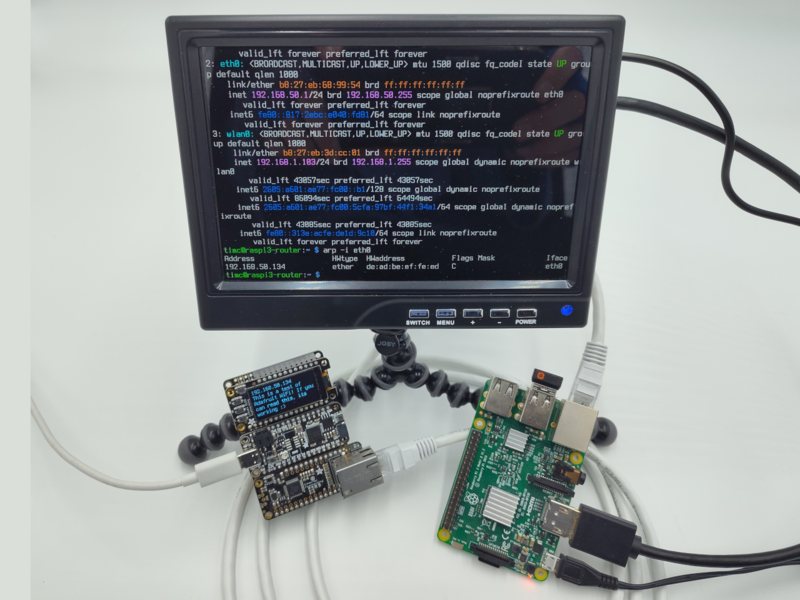
The United States FCC recently announced a ban on new consumer-grade routers produced outside of the US. This does not affect existing devices that were already authorized, and there is a carve-out for manufacturers to apply for a conditional approval. It’s difficult to say what the medium or longterm effects of the ban will be.
This got me thinking about what could be used as a makeshift router in a pinch. As it so happens, any computer that can run Linux and has networking interfaces can function as a router. This blog post by Noah Baily documents the process using various old computers and components as custom routers over the years.
These makeshift routers are not going to win any bandwidth speed races, but they’re perfectly capable of routing traffic for IoT devices or basic browsing. They’re also useful for capturing traffic to analyze or sharing internet access from WiFi to Ethernet or vice-versa.
This guide documents the setup process and capabilities of using a Raspberry Pi as a router. It does not require a particularly powerful computer, even the older Pi 3 B+ that lots of us have tucked away in an old parts bin works fine for this.
You might be better off using an old laptop you’ve got laying around than buying a Pi for it.
It’s relatively easy to add more NICs (use m.2/mpcie from the mainboard, if you don’t want wireless on it, just use the wifi m.2 and you’ve still got storage)
You can limit the power usage with sysfs, it’s got a built in UPS and a monitor/keyboard for troubleshooting if you really need to.