

OpenAI claims it has accomplished what Anthropic couldn’t: securing a Pentagon contract that won’t cross professed red lines against dragnet domestic spying and the use of artificial intelligence to order lethal military strikes. Just don’t expect any proof.
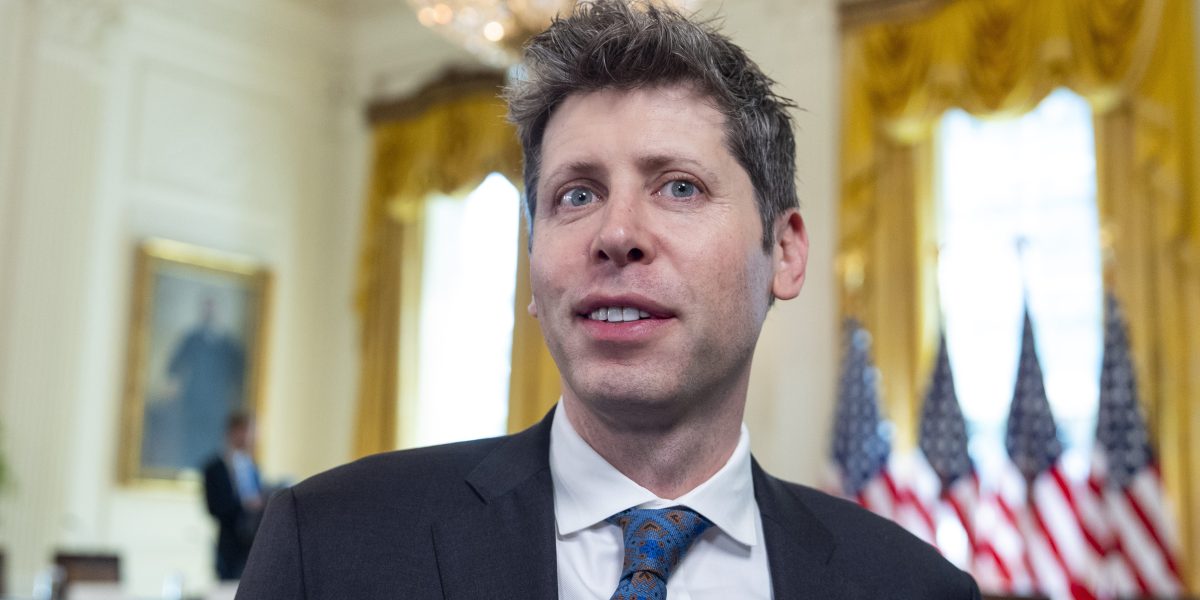
Sam Altman, OpenAI’s CEO, announced the company’s big win with the Defense Department in a post on X on February 27.
“Two of our most important safety principles are prohibitions on domestic mass surveillance and human responsibility for the use of force, including for autonomous weapon systems,” he wrote. The Pentagon “agrees with these principles, reflects them in law and policy, and we put them into our agreement.”
The deal came after the very public implosion of what was to be a similar contract between the U.S. military and Anthropic, one of OpenAI’s chief rivals. Anthropic had said negotiations collapsed because it could not enshrine prohibitions against killer robots and domestic spying in its contract. The company’s insistence on these two points earned it the wrath of the Pentagon and President Donald Trump, who ordered the government to phase out use of Anthropic’s tools within six months.
But if the government booted Anthropic for refusing mass surveillance and autonomous weapons, how could OpenAI take over the contract without having the same problem?
OpenAI has attempted to square this circle through a string of posts to X by company executives and researchers, including Katrina Mulligan, its national security chief, and a claim by Altman that the company negotiated stricter protections around domestic surveillance.
The company and the government, however, are not releasing the only proof that matters: the contract itself.
The Department of Defense did not respond to a request for comment.
Nuclear war, it’s gonna recommend nuclear war. Or at least threatening it at a bare minimum.