

Summary
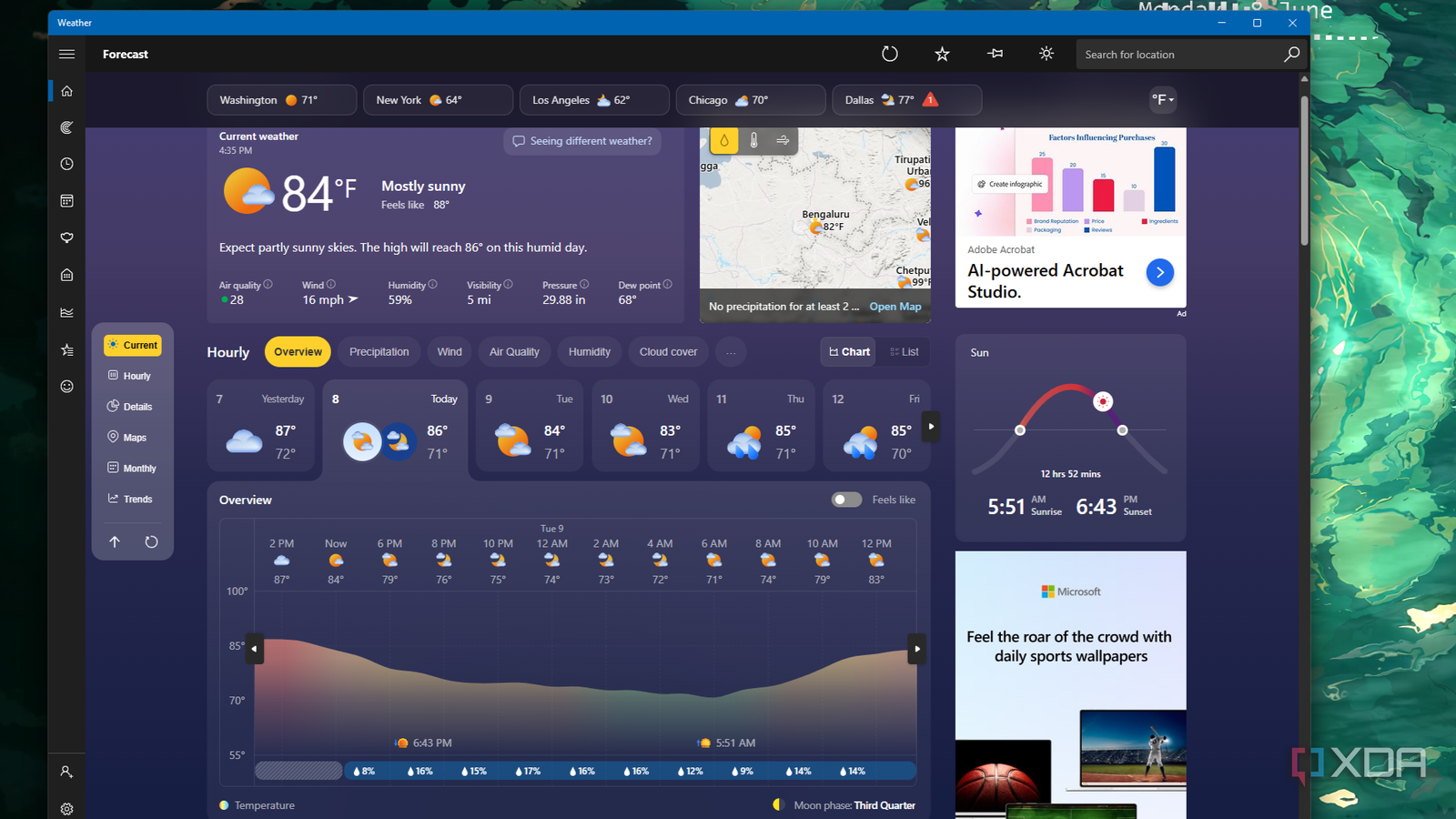
- Windows 11 Weather app hogs about 1.2GB RAM and spawns multiple Chromium processes.
- App displays ads because it wraps MSN weather in a WebView2/browser shell.
- Native macOS Weather uses ~247MB with no ads; Microsoft should port to WinUI 3.
Summary
- Windows 11 Weather app hogs about 1.2GB RAM and spawns multiple Chromium processes.
- App displays ads because it wraps MSN weather in a WebView2/browser shell.
- Native macOS Weather uses ~247MB with no ads; Microsoft should port to WinUI 3.
You’re not that far off, everything you’ve said about shared memory is true of writable shared memory, which is what is usually meant when talking about “shared memory” in user space.
When a program loads a .so a version of that file is loaded in the program’s virtual memory space so technically that same .so file exists in multiple virtual spaces, but that’s only a trick used by your MMU (memory management unit), the .so file is only loaded once in actual memory:
Let’s imagine some program loads opencl.so and no one else on the system uses it. The kernel will check all needed libs and loads that one at physical address 0x700. After loading it up it talks to the MMU and creates a virtual address space for said program, telling the hardware to create a read-only link between virtual address 0x100 and physical address 0x700, “loading” the library in virtual memory (without actually making a copy). If some other program then needs opencl.so the kernel will recognize that lib as already loaded so skips ahead to linking virtual adress 0x200 (or whatever really, virtual address space is specific to one instance of one program, it could be 0x100 again it doesn’t matter) to physical address 0x700, once again loading it in program memory without making a copy.